How to Contribute to Open Source Projects: A Guide for New Developers in 2026
In 2026, the global software infrastructure is built on open source. From the servers running your bank to the AI models on your smartphone, open source is the invisible engine of the world. For a new developer, contributing to these projects is not just about writing code; it is about building a reputation, learning from senior engineers, and proving your skills in a real-world environment. At TipsForAITech, we believe that open source is the ultimate university for the modern coder.
This 1500+ word guide provides a roadmap for your first contribution. Whether you are using GitHub Copilot to learn or mastering full-stack frameworks, open source is where you apply that knowledge.
1. Why Open Source Matters for Your Career
In 2026, recruiters often value a GitHub profile more than a traditional CV. Contributing shows that you can work with an existing codebase, follow style guides, and communicate effectively with a team. It is the best way to gain experience in global remote collaboration.
2. Finding the Right Project
Don't try to fix a major bug in the Linux kernel on your first day. Look for projects with the "Good First Issue" or "Help Wanted" labels. In 2026, GitHub’s AI-powered discovery engine can suggest projects based on the languages you use, a feature we explore in our IDE selection guide.
3. It’s Not Always About Code
Many beginners think they have to write complex algorithms to contribute. In reality, some of the most valuable contributions in 2026 are:
- Documentation: Fixing typos or clarifying instructions.
- Testing: Writing unit tests or reporting bugs found during usage.
- UI/UX: Suggesting improvements for accessibility or design using open-source design tools.
4. The Technical Workflow: Your First PR
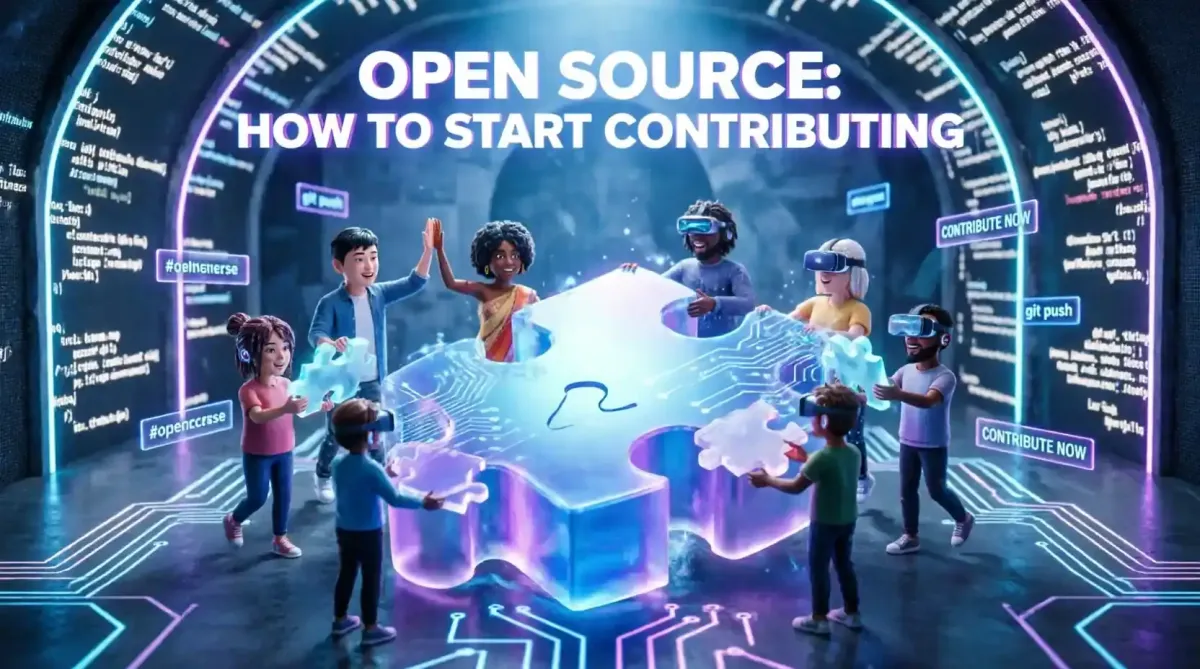
The standard process in 2026 involves:
- Fork: Create a copy of the project in your account.
- Clone: Bring the code to your local optimized workstation.
- Branch: Create a new branch for your specific fix.
- Commit and Push: Save your changes and send them back to GitHub.
- Pull Request (PR): Propose your changes to the project maintainers.
5. Mastering the Art of Communication
A Pull Request is a conversation. Be polite and explain *why* you made the change. In 2026, developers often use advanced writing assistants to ensure their PR descriptions are clear and professional, especially when English is not their first language.
6. Understanding Licenses
Every open-source project has a license (MIT, Apache, GPL). In 2026, understanding these is vital for legal compliance. Always check the LICENSE file to understand how the code can be used and shared.
7. Learning from Code Reviews
If a maintainer asks for changes, don't take it personally. Code reviews are where the real learning happens. Analyzing the feedback is like getting a free lesson from a pro, much like using AI-powered debugging tools to improve your logic.
8. Security and Open Source
In 2026, security is a top priority. Before submitting code, run it through a security linter to ensure you aren't introducing vulnerabilities. This is a practice we advocate for in our small business security guides.
9. Staying Consistent
One-off contributions are good, but becoming a regular contributor is better. Join the project’s Discord or Slack to stay updated on their virtual office discussions. Consistency is the key to professional growth.
10. Conclusion: Be Part of the Future
Contributing to open source in 2026 is an act of digital citizenship. You are giving back to the community that provides you with the tools to build your dreams. Start small, stay humble, and keep learning. Every great developer started with a single "Hello World" or a small typo fix. Your journey into the heart of the tech world begins with your first Pull Request.
Stay ahead of the development and AI revolution by following TipsForAITech. Whether you're looking for OS comparisons or advanced coding guides, we are your partner in the 2026 technology landscape.