How to Protect Your Small Business from Ransomware Attacks in 2026
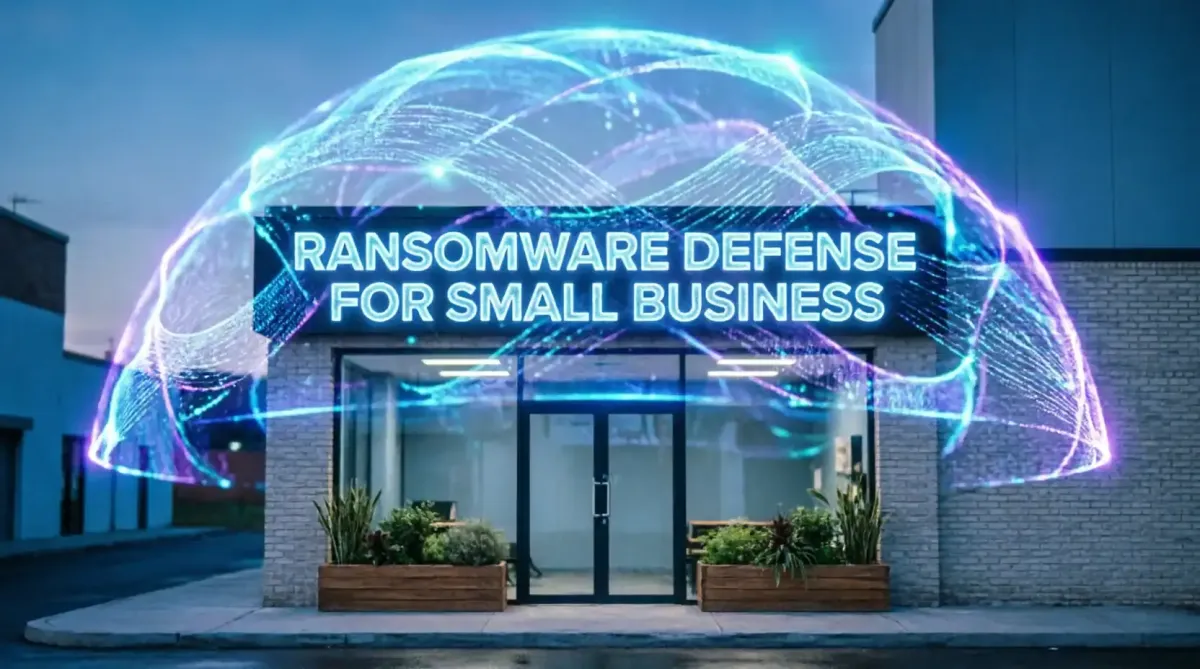
In 2026, ransomware has evolved into a highly automated, AI-powered industry. Small businesses are no longer "too small to notice"; in fact, they are now primary targets because hackers assume their defenses are weaker than major corporations. A single ransomware attack can paralyze your operations, leak sensitive customer data, and result in devastating financial loss. At TipsForAITech, we are committed to helping entrepreneurs build a digital fortress that can withstand the threats of the future.
This 1500+ word comprehensive guide provides a tactical roadmap for ransomware defense. Whether you are switching to passkeys or securing your mobile devices, protecting your business infrastructure is the ultimate priority.
1. The 3-2-1-1 Backup Strategy: Your Last Line of Defense
In 2026, simple backups are not enough because modern ransomware actively seeks out and encrypts your backup files first. You must implement the 3-2-1-1 Strategy:
- 3 copies of your data.
- 2 different media types (e.g., Cloud and Local SSD).
- 1 copy kept offsite.
- 1 copy kept IMMUTABLE (Air-gapped): This copy is disconnected from any network, making it physically impossible for ransomware to reach it.
2. Implementing AI-Driven Endpoint Protection (EDR)
Traditional antivirus relies on "signatures" of known viruses, but 2026's ransomware is "polymorphic"—it changes its code to avoid detection. You need Endpoint Detection and Response (EDR) tools that use AI to monitor "Behavior." If a program suddenly starts encrypting hundreds of files at once, the EDR will kill the process and isolate the machine instantly, even if the virus is brand new.
3. The Power of "Zero Trust" and Network Segmentation
Small businesses often have a "flat" network, meaning if one laptop is infected, the entire office is compromised. In 2026, you must use Network Segmentation. Keep your guest Wi-Fi, your office computers, and your critical data servers on separate "islands." This prevents the ransomware from "lateral movement" across your business.
4. Phishing Simulations and Employee Training
Human error remains the #1 entry point for ransomware. In 2026, phishing emails are generated by advanced LLMs that sound perfectly professional.
The Fix: Conduct monthly "Phishing Simulations" to train your staff. Teach them to verify any unusual request for sensitive data via a second channel—like a quick phone call or an internal message in your virtual office.
5. Patching and Vulnerability Management
Hackers exploit "holes" in outdated software. In 2026, small businesses should automate their software updates. Ensuring that your OS, browsers, and plugins are always on the latest version closes the door on many automated ransomware bots that scan the internet for vulnerable targets.
[Image showing a security dashboard blocking an unauthorized encryption attempt on a small business server]6. Multi-Factor Authentication (MFA) and Passkeys
Password theft is the easiest way for a hacker to plant ransomware. By enforcing MFA—and ideally transitioning to Passkeys—you make stolen credentials useless. As discussed in our passkeys guide, this removes the "behavioral" weak point of your business security.
7. Controlling Administrative Privileges
Not every employee needs "Admin" rights on their computer. In 2026, follow the Principle of Least Privilege (PoLP). Most ransomware needs administrative permissions to execute. By restricting these rights, you significantly limit the damage a single infected machine can do to your network.
8. Establishing a Ransomware Incident Response Plan
Don't wait for an attack to decide what to do. Create a written Incident Response Plan. Who is the first person to call? Which systems should be shut down first? How will you communicate with customers if your email is down? Having a clear plan reduces panic and can save your business from total collapse. This is a vital part of professional risk management.
9. Cyber Insurance: The Financial Safety Net
In 2026, cyber insurance is as necessary as fire insurance for a small business. However, insurers now require you to prove you have MFA, Backups, and EDR in place before they will cover you. Investing in security doesn't just protect your data; it lowers your insurance premiums and protects your professional investments.
10. Conclusion: Resilience Over Ransom
Protecting a small business from ransomware in 2026 is about being proactive rather than reactive. By building a culture of security and leveraging the latest AI-driven defense tools, you ensure that an attempted attack is merely a minor inconvenience rather than a business-ending event. Never pay the ransom; instead, invest in the resilience that makes the ransom irrelevant.
Stay ahead of the cyber threat landscape by following TipsForAITech. Whether you're looking for biometric security advice or development guides, we are your partner in 2026 business technology.