10 Ways AI is Transforming Technology in 2026: The Future is Here
As we navigate through the mid-2020s, the rapid evolution of artificial intelligence has transcended beyond mere hype. In 2026, AI is no longer just a tool; it is the foundational architecture of the modern digital world. From autonomous coding agents to hyper-personalized healthcare, the impact of AI is visible in every facet of our lives. At TipsForAITech, we have been tracking these developments closely to provide you with the most up-to-date insights.
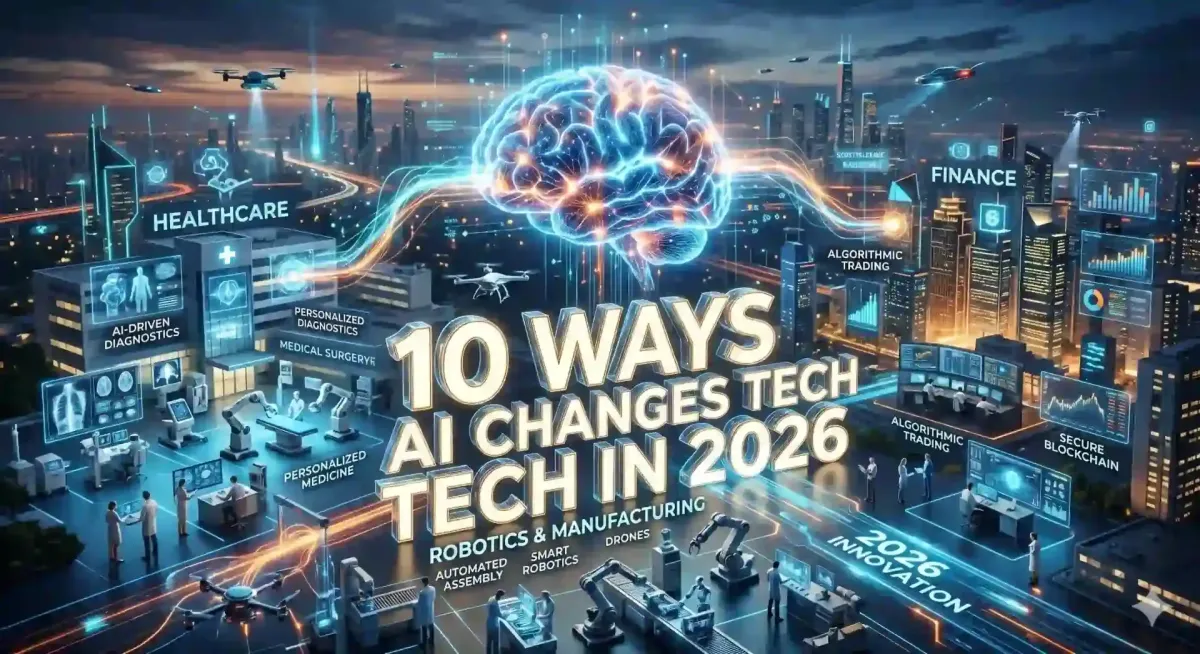
This long-form guide explores the 10 most significant ways AI is reshaping technology this year, ensuring you stay ahead in this fast-paced ecosystem. Whether you are a developer, a business leader, or a tech enthusiast, understanding these shifts is crucial for survival and growth.
1. The Rise of Autonomous AI Coding Agents
In 2026, software development has shifted from "writing code" to "orchestrating AI." Tools like GitHub Copilot 5 and specialized autonomous coding agents can now handle end-to-end feature implementations. These agents don't just suggest snippets; they read Jira tickets, write tests, refactor legacy code, and deploy to staging environments.
Developers now act as System Architects. Instead of spending hours debugging syntax, they focus on higher-level logic and security audits. This shift has accelerated the software development lifecycle (SDLC) by nearly 60%, making digital transformation more accessible for startups.
2. Hyper-Personalized AI Healthcare and Diagnostics
Health technology in 2026 is driven by predictive AI. Gone are the days of reactive medicine. AI models integrated into wearable devices can now predict potential cardiac events or metabolic shifts 48 hours before they occur. By analyzing vast datasets of genomic information and real-time biometric data, AI provides treatment plans tailored specifically to an individual's DNA.
Learn more about how Advanced NLP is helping doctors interact with medical databases more intuitively than ever before.
3. Generative Video and the Death of Traditional Stock Media
Generative AI for video has reached a level of photorealism that makes it indistinguishable from real footage. In 2026, marketing agencies no longer spend thousands on stock footage. Instead, they use text-to-video models to generate high-definition, 8K marketing videos in minutes. This has democratized content creation, allowing small businesses to produce cinematic-quality advertisements at a fraction of the previous cost.
4. Quantum AI Integration: Solving the Unsolvable
2026 marks the year where Quantum Computing and AI finally met at a commercial scale. Quantum-AI hybrids are now solving complex optimization problems—such as global logistics and climate modeling—that would have taken traditional supercomputers decades. This synergy is particularly impactful in drug discovery, where new chemical compounds are being identified in weeks rather than years.
5. AI-Driven Cybersecurity: Proactive Defense
As cyber threats become more sophisticated, traditional firewalls are no longer sufficient. In 2026, cybersecurity is "AI vs. AI." Defensive AI systems use Anomalous Behavior Detection to identify zero-day vulnerabilities in real-time. These systems can self-patch and isolate infected network segments within milliseconds, significantly reducing the impact of ransomware attacks globally.
6. The Proliferation of Edge AI and Local LLMs
Privacy concerns have led to a massive shift toward Edge AI. In 2026, most Large Language Models (LLMs) run locally on smartphones and laptops rather than in the cloud. This ensures that sensitive user data never leaves the device. The new generation of "AI-Native" hardware features dedicated NPU (Neural Processing Unit) chips that offer incredible performance without sacrificing battery life.
7. Spatial Computing and AI-Augmented Reality
With the mainstream adoption of spatial computing devices, AI has become the "eyes" of the user. In 2026, AR glasses use AI to identify objects, translate foreign languages in real-time on your lens, and provide step-by-step repair instructions for household appliances. AI-driven Object Recognition has made the physical world as searchable as the web.
8. Ethical AI Governance and Compliance
2026 is the year of Responsible AI. Global governments have implemented strict regulations, requiring companies to provide "Explainable AI" (XAI). This means AI models must be able to explain the reasoning behind their decisions, especially in critical areas like mortgage approvals or legal judgments. Bias-detection algorithms are now mandatory in all enterprise AI deployments.
9. AI in Sustainable Energy Management
Technology is playing a pivotal role in the green transition. Smart grids powered by AI now manage 70% of renewable energy distribution in developed cities. AI predicts energy surges and optimizes storage in massive battery arrays, ensuring zero waste. This has led to a 15% reduction in global carbon emissions within the tech sector alone.
10. Collaborative AI: The Era of Human-AI Teams
The most profound change in 2026 is the normalization of Human-AI Collaboration. AI is no longer seen as a replacement but as a "co-pilot" in every profession. In creative fields, AI assists in brainstorming; in research, it synthesizes millions of papers into actionable summaries. The most successful professionals in 2026 are those who have mastered the art of AI Prompt Engineering and orchestration.
Conclusion: Preparing for the AI-Native Era
The technological landscape of 2026 is defined by intelligence that is ubiquitous, invisible, and incredibly powerful. As AI continues to transform every industry, staying informed is your best defense and your greatest opportunity. At TipsForAITech, we are committed to helping you navigate this journey with expert guides and the latest tech trends.
The future isn't about AI replacing humans; it's about humans with AI replacing those without it. Start your AI journey today by exploring our latest tutorials on Building AI-Powered Apps and mastering the tools of tomorrow.