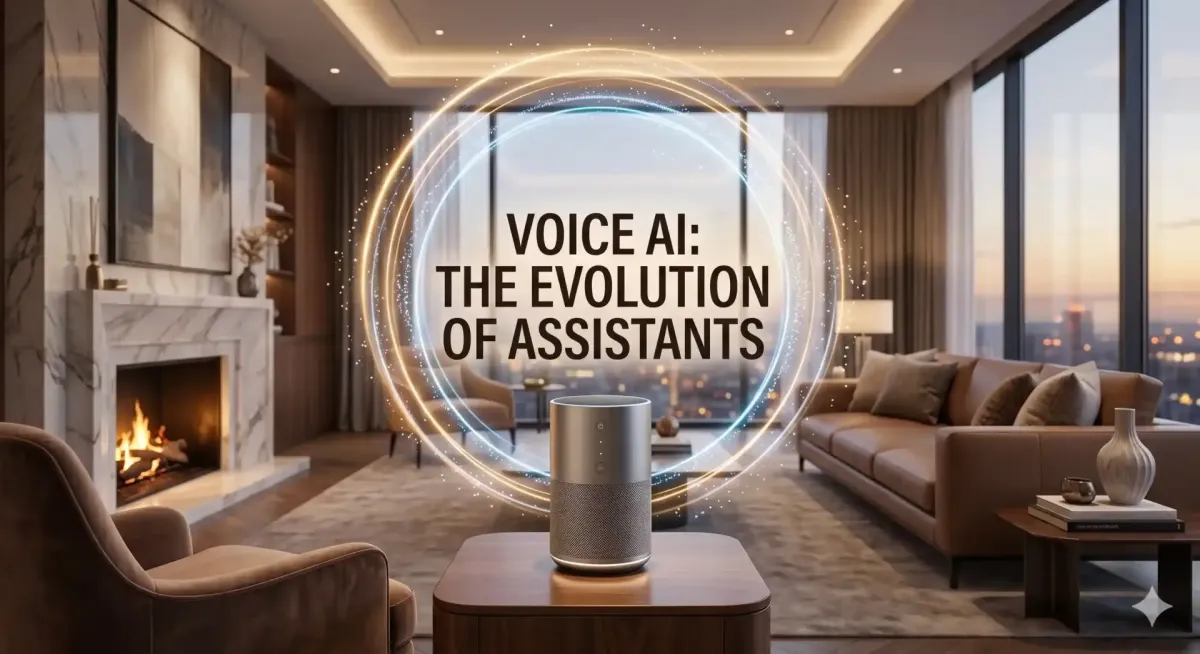
The Evolution of Voice Assistants: Powered by Advanced NLP in 2026
In the late 2010s, talking to a machine felt like a rigid, one-sided command session. You had to use specific "wake words" and pray the device understood your accent. Fast forward to 2026, and Voice Assistants have evolved into empathic, proactive, and multi-lingual life partners. This transformation is driven by the massive leaps in Advanced Natural Language Processing (NLP). At TipsForAITech, we are exploring how this invisible intelligence is redefining the human-machine interface.
This 1500+ word deep dive explores the technical and cultural journey of voice assistants in 2026. If you've explored 10 ways AI is transforming technology or started building AI-powered apps, you'll find the evolution of voice-first interfaces particularly fascinating.
1. From Command-Based to Intent-Driven Interaction
In 2026, voice assistants no longer just follow instructions; they understand Contextual Intent. Thanks to Advanced NLP, these assistants can infer what you mean even if you don't say it explicitly. For example, saying "I'm feeling a bit cold" in 2026 triggers the assistant to check the smart thermostat, realize it's raining outside, and suggest turning on the heater or ordering a warm beverage.
This shift from "reactive" to "proactive" assistance is powered by Large Language Models (LLMs) that process the entire history of your interactions. As we discussed in our guide on advanced developer prompts, context is the fuel of modern AI.
2. The Core Technology: Neural TTS and Emotional Prosody
The "robotic" voice is a relic of the past. In 2026, Neural Text-to-Speech (TTS) has achieved human parity. These voices possess Emotional Prosody—the ability to change their pitch, speed, and volume based on the emotional context of the conversation. If you’re sad, your assistant responds in a soft, empathetic tone; if you’re in a rush, it speaks concisely and rapidly.
3. Multi-Modal Integration: Voice Meets Vision
Voice assistants in 2026 do not live in isolation. They are the primary interface for Spatial Computing and AR glasses. While wearing smart glasses, you can point at a historical monument and ask, "Who built this?" The assistant combines visual data with NLP to provide a real-time, audio-visual history lesson. This synergy is changing how we navigate AI-driven virtual offices.
4. Breaking the Language Barrier: Real-Time Universal Translation
2026 marks the era of the Universal Translator. Modern NLP can perform zero-latency, bi-directional translation of over 200 languages, including complex regional dialects. This isn't just about translating words; it's about Cultural Localization. The assistant ensures that the tone and etiquette of your speech are appropriate for the target language, which is vital for global business meetings.
5. Voice Commerce: The New Way to Shop
Shopping has become a conversation. Instead of scrolling through apps, users in 2026 use voice commerce. "Find me a durable laptop bag under $100 that fits my 16-inch Macbook and has good reviews for water resistance." The assistant filters through thousands of options using AI-driven data management and completes the transaction using biometric voice authentication.
6. Privacy and Edge AI: Keeping Conversations Secure
As we emphasize at TipsForAITech, privacy is paramount. To counter the "always listening" concern, the 2026 generation of voice assistants utilizes Edge AI. Most of the NLP processing happens locally on the hardware (your phone, speaker, or car) rather than in the cloud. This ensures that your private conversations remain truly private while still benefiting from advanced intelligence.
7. The Rise of "Personal AI Twins"
Imagine an assistant that sounds like you and knows exactly how you would respond to a meeting request. In 2026, Personal AI Twins can handle mundane scheduling and basic inquiries on your behalf. They use your specific vocabulary and "professional voice" to communicate with others, allowing you to focus on deep work while the AI manages your digital presence.
8. Accessibility and Healthcare Revolution
For individuals with motor or visual impairments, voice AI in 2026 is a revolutionary tool for independence. Beyond smart home control, these assistants act as health monitors. By analyzing the "Acoustic Biomarkers" in your voice, they can detect early signs of respiratory issues, depression, or cognitive decline, alerting you to seek medical advice before symptoms worsen.
9. Overcoming the "Hallucination" Problem
Earlier versions of voice AI often made up facts. In 2026, Retrieval-Augmented Generation (RAG) has solved this. When you ask a factual question, the assistant cross-references multiple trusted sources on the live web before speaking, ensuring that the information provided is 100% accurate and cited.
10. Conclusion: The Voice-First Future
The evolution of voice assistants is moving us toward a "screenless" future. In 2026, technology is becoming invisible—embedded into the very air we breathe. By mastering the nuances of human language through Advanced NLP, voice assistants are making our interactions with technology more natural, more inclusive, and more human than ever before.
Stay updated on the latest shifts in voice AI and automation by following TipsForAITech. Whether you're interested in automation tools or writing assistants, we provide the expert insights you need for 2026.