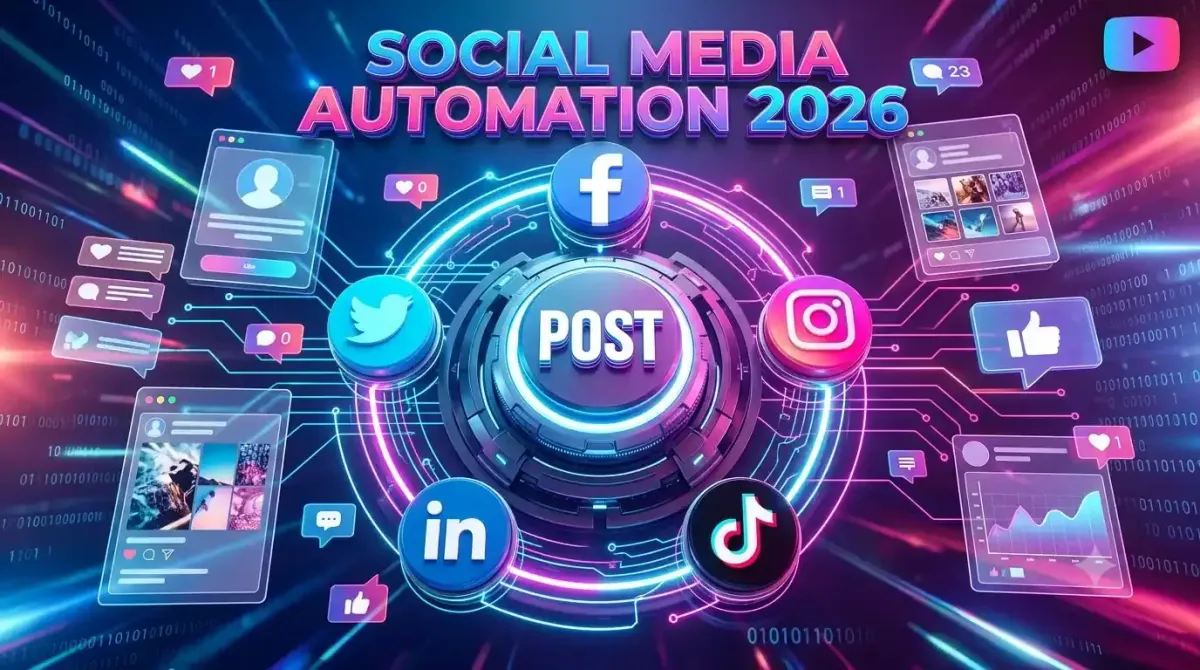
Automating social media posting across multiple platforms with a single click has become the cornerstone of efficient digital marketing in 2026. Modern automation tools now enable content creators, marketing teams, and business owners to publish simultaneously to Facebook, Instagram, Twitter, LinkedIn, and TikTok without manual repetition. This comprehensive guide will walk you through the exact workflows, tools, and strategies to implement one-click social media automation that saves hours of daily work while maintaining platform-specific optimization. Whether you are managing personal brands or enterprise-level campaigns, mastering cross-platform automation will multiply your reach while minimizing time investment.
Why Multi-Platform Social Media Automation Matters in 2026
The social media landscape has fragmented across numerous platforms, each with unique audiences, algorithms, and content formats. Managing presence across five or more platforms manually is no longer sustainable for serious content creators and businesses. Automation addresses this challenge by centralizing content distribution while respecting each platform's nuances.
Time Efficiency and Consistency
Manual posting across multiple platforms consumes 2-3 hours daily for active marketers. Automation reduces this to 15-20 minutes of content creation and scheduling. More importantly, automated workflows ensure consistent posting schedules, which algorithms reward with better reach and engagement. Understanding AI tools to automate daily repetitive tasks reveals that social media management ranks among the most time-consuming activities that benefit from automation.
Audience Reach Amplification
Different demographics dominate different platforms. LinkedIn attracts professionals, TikTok engages Gen Z, Instagram captures visual storytellers, Twitter serves real-time news consumers, and Facebook maintains broad demographic appeal. Cross-platform automation ensures your message reaches all these audiences without requiring platform-specific manual effort.
Data-Driven Optimization
Modern automation platforms provide unified analytics dashboards that aggregate performance metrics across all connected platforms. This holistic view enables data-driven decisions about content strategy, posting times, and audience engagement tactics that would be impossible to derive from manually tracking individual platforms.
Essential Tools for One-Click Social Media Automation
Selecting the right automation stack is critical for success. The 2026 landscape offers several powerful options ranging from no-code visual builders to sophisticated AI-powered platforms.
Zapier for Visual Workflow Automation
Zapier remains the industry standard for connecting disparate social media platforms without coding. Its strength lies in simplicity and extensive app integrations. You can create "Zaps" that trigger posts across multiple platforms when you add content to a Google Sheet, RSS feed, or content management system. For SaaS founders and marketers, implementing Zapier workflows for automation provides immediate productivity gains.
Key Zapier Features for Social Media:
- Multi-step Zaps for sequential platform posting
- Formatter tools for platform-specific content adaptation
- Scheduling triggers for optimal posting times
- Path logic for conditional posting based on content type
Make.com for Complex Logic Workflows
Make.com (formerly Integromat) offers superior visual workflow building for complex automation scenarios. When comparing Make.com vs Zapier for complex logic, Make excels at data transformation, array operations, and sophisticated routing that social media automation often requires.
Make.com Advantages:
- Visual scenario builder with unlimited complexity
- Advanced data manipulation capabilities
- Lower cost per operation compared to Zapier
- Superior error handling and debugging tools
AI-Powered Content Generation Tools
Integrating generative AI into your automation workflow accelerates content creation. Tools like ChatGPT, Jasper, and Copy.ai can generate platform-specific variations of your core message. Learning generative AI for social media marketing enables you to create dozens of post variations from a single prompt, which automation tools then distribute across platforms.
Dedicated Social Media Management Platforms
Built-for-purpose platforms like Buffer, Hootsuite, and Later provide native multi-platform posting with built-in optimization features. These tools handle platform-specific formatting automatically, such as Instagram hashtag limits, Twitter character counts, and LinkedIn article formatting.
Step-by-Step Implementation Guide
Building a robust one-click social media automation system requires methodical planning and execution. Follow this proven framework to implement your workflow.
Phase 1: Content Strategy and Template Creation
Before automating distribution, establish your content framework:
- Define Content Pillars: Identify 3-5 core topics that align with your brand and audience interests.
- Create Platform-Specific Templates: Design content templates optimized for each platform's format (square images for Instagram, horizontal for LinkedIn, vertical for TikTok).
- Develop Hashtag Libraries: Curate platform-specific hashtag sets for different content categories.
- Establish Brand Voice Guidelines: Document tone, style, and messaging standards to maintain consistency across automated posts.
Phase 2: Setting Up Your Automation Infrastructure
Step 1: Choose Your Central Content Source
Select a single source of truth for your content. Options include:
- Google Sheets or Airtable for structured content calendars
- Notion databases for rich content with media attachments
- RSS feeds for blog post automation
- Content management systems like WordPress
Step 2: Connect Social Media Accounts
Authorize your automation platform to access each social media account:
- Facebook Pages and Instagram Business accounts via Meta Business Suite
- Twitter/X developer account with API access
- LinkedIn Company Pages with admin permissions
- TikTok Business account for posting API access
Step 3: Build the Automation Workflow
Using your chosen platform (Zapier, Make.com, or native social media tool), create the following sequence:
- Trigger: New row added to content calendar or new blog post published
- Action 1: Format content for Facebook (include link preview, optimize text length)
- Action 2: Format content for Instagram (extract hashtags, resize images to 1080x1080)
- Action 3: Format content for Twitter (trim to 280 characters, add thread if needed)
- Action 4: Format content for LinkedIn (professional tone adjustment, add relevant tags)
- Action 5: Format content for TikTok (vertical video preparation, trending sounds)
- Action 6: Schedule posts at platform-optimal times
For those new to automation, understanding no code development principles will help you grasp the visual workflow building process.
Phase 3: Platform-Specific Optimization
Each social platform has unique requirements that your automation must respect:
Facebook Optimization:
- Optimal post length: 40-80 characters for maximum engagement
- Image dimensions: 1200x630 pixels for link shares
- Best posting times: Weekdays 1-3 PM local time
- Include call-to-action buttons when applicable
Instagram Optimization:
- Caption length: 138-150 characters for feed posts
- Hashtags: 5-10 highly relevant tags (not 30)
- Image dimensions: 1080x1080 (square) or 1080x1350 (portrait)
- Stories: Post 3-5 times daily for algorithm favorability
Twitter/X Optimization:
- Character count: 71-100 characters for highest engagement
- Hashtags: 1-2 maximum for professional accounts
- Media: Tweets with images get 150% more retweets
- Threading: Break long content into 3-5 tweet threads
LinkedIn Optimization:
- Post length: 150-300 characters for professional content
- Article format: Long-form content (1000+ words) performs well
- Posting frequency: 2-3 times per week maximum
- Professional tone: Avoid overly casual language
TikTok Optimization:
- Video length: 15-60 seconds for maximum completion rate
- Vertical format: 1080x1920 pixels (9:16 aspect ratio)
- Trending sounds: Use trending audio for algorithm boost
- Captions: Always include on-screen text for accessibility
Advanced Automation Techniques
Once you have basic one-click posting operational, implement these advanced strategies to maximize efficiency and effectiveness.
AI-Powered Content Repurposing
Transform a single piece of content into multiple platform-specific formats automatically:
- Blog post → Twitter thread using AI summarization
- YouTube video → TikTok clips using automated scene detection
- Podcast episode → LinkedIn article using transcription and editing
- Instagram carousel → Facebook album with cross-posting
Exploring generative AI in content creation reveals sophisticated repurposing workflows that maintain quality while multiplying output.
Intelligent Scheduling Based on Analytics
Move beyond static scheduling to dynamic, data-driven posting times:
- Analyze historical engagement data to identify optimal posting windows
- Adjust schedules automatically based on real-time audience activity
- Implement time zone detection for global audience reach
- A/B test posting times and auto-select winners
Cross-Platform Engagement Automation
Automation should not stop at posting. Extend it to engagement:
- Auto-respond to comments with personalized AI-generated replies
- Cross-post high-performing content from one platform to another
- Aggregate mentions and messages into unified inbox
- Auto-follow users who engage with your content (within platform limits)
CRM Integration for Lead Nurturing
Connect social media automation to your customer relationship management system. Implementing CRM and lead generation automation ensures that social media interactions feed directly into your sales funnel:
- Capture leads from LinkedIn posts into CRM automatically
- Tag users based on engagement level for targeted follow-up
- Trigger email sequences when users interact with specific content
- Score leads based on social media activity patterns
Real-World Workflow Examples
Theory becomes valuable when applied to practical scenarios. Here are three production-ready automation workflows.
Workflow 1: Blog Post to Social Media Blitz
Objective: Automatically promote new blog content across all platforms with optimized formatting.
Trigger: WordPress publishes new post
Actions:
- Extract blog title, excerpt, and featured image
- Generate 5 tweet variations using AI
- Create LinkedIn post with professional summary
- Design Instagram carousel with key points from blog
- Schedule Facebook post with link preview
- Create TikTok video script from blog content
- Post immediately to Twitter and LinkedIn
- Schedule Instagram and Facebook for peak engagement time
- Queue TikTok for evening posting
Tools Required: WordPress, Zapier, ChatGPT API, Canva API, Buffer
Workflow 2: User-Generated Content Amplification
Objective: Automatically discover, curate, and repost user-generated content with credit.
Trigger: New post tagged with your brand hashtag
Actions:
- Scan Instagram and Twitter for brand mentions
- Filter content based on engagement metrics (minimum 50 likes)
- Send approval request to marketing team via Slack
- Upon approval, download media and remove watermarks
- Add branded overlay using template
- Caption with credit to original creator
- Post to your Instagram Stories and feed
- Share to Facebook with community spotlight tag
- Retweet on Twitter with appreciation message
- Log in content calendar for future reference
Tools Required: Make.com, Instagram Basic Display API, Twitter API, Slack, Cloudinary
Workflow 3: Event Promotion Cascade
Objective: Automate multi-platform event promotion with countdown and reminders.
Trigger: Event created in Google Calendar or Eventbrite
Actions:
- Create event-specific hashtag and tracking UTM parameters
- Generate promotional graphics in multiple sizes
- Schedule announcement post across all platforms (30 days before)
- Set up countdown posts (7 days, 3 days, 1 day before)
- Create reminder posts for day-of event
- Automate live updates during event
- Post thank you message and highlights after event
- Send follow-up survey to attendees via direct message
Tools Required: Google Calendar, Zapier, Canva, Hootsuite, Eventbrite API
Common Challenges and Solutions
Implementing social media automation inevitably encounters obstacles. Here is how to overcome them.
Platform API Limitations
Challenge: Social platforms impose rate limits and posting restrictions that can break automation workflows.
Solutions:
- Implement exponential backoff for API retries
- Queue posts during high-volume periods
- Use official platform APIs rather than scraping
- Monitor API status pages for service disruptions
- Maintain fallback manual posting procedures
Content Quality Degradation
Challenge: Automated posting can feel impersonal and generic if not carefully managed.
Solutions:
- Build personality into AI prompts and templates
- Include human review step for sensitive content
- Mix automated posts with spontaneous, real-time content
- Personalize responses using customer data
- Regularly audit automated content for brand alignment
Algorithm Changes
Challenge: Platform algorithm updates can suddenly reduce reach of automated content.
Solutions:
- Diversify across multiple platforms to reduce dependency
- Monitor engagement metrics daily for sudden drops
- Maintain email list as owned audience channel
- Adapt quickly by testing new content formats
- Follow platform official blogs for update announcements
Authentication and Security
Challenge: Managing API tokens and account access across multiple platforms creates security risks.
Solutions:
- Use OAuth 2.0 for all platform connections
- Implement token rotation schedules
- Enable two-factor authentication on all accounts
- Limit automation tool permissions to minimum necessary
- Regular security audits of connected applications
Measuring Success and ROI
Automation investment must demonstrate measurable returns. Track these key performance indicators:
Time Savings Metrics
- Hours saved per week on manual posting
- Content production velocity increase
- Response time improvement for customer inquiries
- Team capacity reallocation to strategic work
Engagement Metrics
- Cross-platform reach and impressions
- Engagement rate by platform and content type
- Follower growth rate acceleration
- Click-through rates to website or landing pages
- Conversion rate from social media traffic
Cost Efficiency Metrics
- Cost per post across platforms
- Automation tool subscription costs vs. manual labor costs
- Return on ad spend for promoted content
- Customer acquisition cost from social channels
For comprehensive tracking, consider automating your accounting to integrate social media ROI into overall business financial dashboards.
Future Trends in Social Media Automation
The automation landscape evolves rapidly. Prepare for these emerging trends:
AI-Generated Video Content
Tools like Synthesia and Runway enable automated video creation from text prompts. Expect to see workflows that automatically convert blog posts into TikTok and Reels content.
Voice and Audio Automation
Podcast clips, audio tweets, and voice notes will become automated content types. Tools will auto-generate audiograms and transcriptions for accessibility.
Predictive Content Optimization
Machine learning models will predict which content will perform best before posting, automatically selecting optimal headlines, images, and posting times.
Decentralized Social Media Integration
As platforms like Mastodon and Bluesky gain traction, automation tools will expand to support decentralized social networks alongside traditional platforms.
Conclusion
Automating social media posting across five platforms with one click is no longer a luxury but a necessity for competitive digital presence in 2026. By implementing the workflows, tools, and strategies outlined in this guide, you can reclaim hours of daily work while expanding your reach and maintaining consistent, high-quality content distribution. Start with simple one-platform automation, gradually expand to multi-platform workflows, and continuously optimize based on performance data. The future of social media marketing belongs to those who master automation while preserving authentic human connection. Your journey to efficient, scalable social media management begins with that first automated post.