
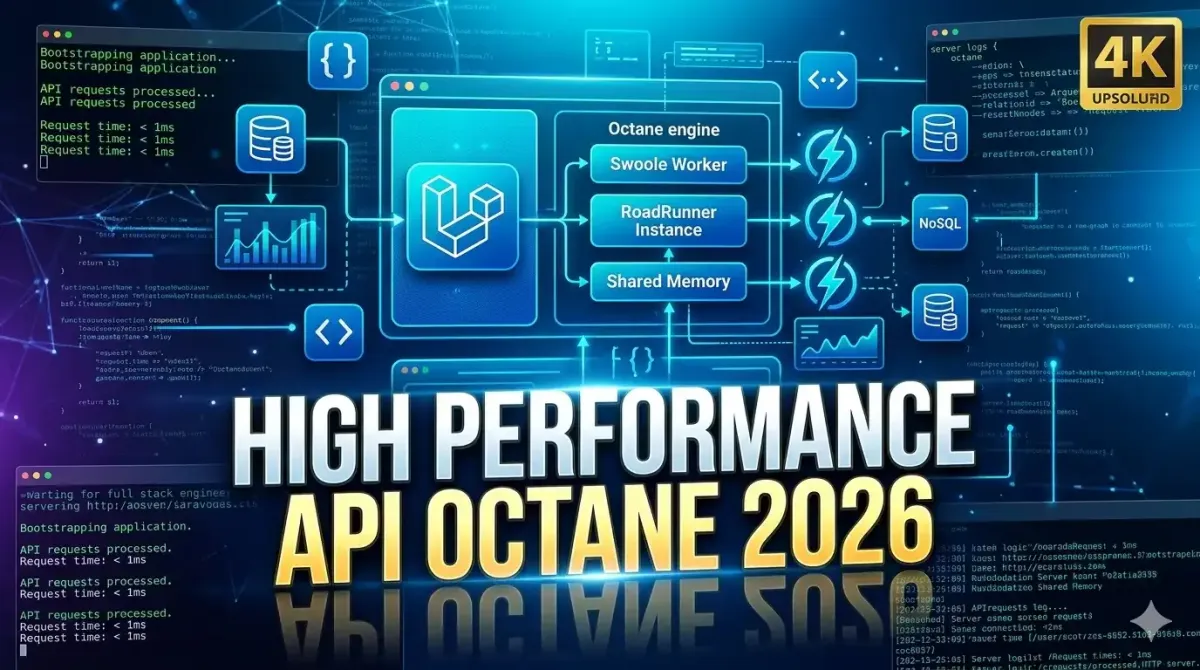
How to Build a High Performance API with Laravel 11 and Octane
Building a high performance API with Laravel 11 and Octane in 2026 requires transitioning from traditional request response cycles to persistent application servers that maintain PHP processes in memory across multiple requests. Octane supercharges Laravel by bootstrapping the application once and serving thousands of subsequent requests through long running worker processes powered by Swoole or RoadRunner. This architectural shift eliminates framework boot overhead, reduces response times by 60 to 80 percent, and enables advanced concurrency features like parallel task execution, WebSockets, and real time data streaming. By implementing proper state management, connection pooling, memory optimization, and strategic caching, developers can deploy enterprise grade APIs that handle 15000 to 30000 requests per second on standard cloud infrastructure. This comprehensive technical guide provides production ready configuration workflows, memory safety protocols, load testing methodologies, and deployment strategies required to maximize Laravel Octane performance while maintaining code maintainability and regulatory compliance.
Understanding Laravel Octane Architecture and Persistent Memory
Traditional PHP applications follow a request isolation model where the framework bootstraps, resolves dependencies, executes logic, renders output, and terminates for every incoming HTTP request. This lifecycle guarantees clean state but introduces 50 to 150 milliseconds of overhead per request for service container initialization, configuration loading, route compilation, and middleware pipeline construction. Octane fundamentally changes this paradigm by keeping the Laravel application resident in memory through persistent worker processes.
When a request arrives, Octane routes it to an available worker that reuses the already bootstrapped application container. The framework executes only the route specific controller logic and returns the response, bypassing repeated initialization steps. Swoole provides an event driven asynchronous I/O layer with native coroutine support, enabling true concurrent request handling without thread blocking. RoadRunner leverages Go based process management with advanced worker pooling, automatic process recycling, and built in HTTP/2 and gRPC support. Both engines deliver substantial performance improvements but require developers to adopt stateless programming practices and carefully manage shared memory resources.
For teams evaluating backend architectures, reviewing top 5 modern frameworks every full stack developer should learn provides essential context for comparing Laravel Octane against alternative persistent application servers and microservice frameworks in modern API development ecosystems.
Environment Configuration and Octane Installation
Production grade Octane deployment requires precise environment preparation, dependency alignment, and server level configuration. Improper setup leads to memory bloat, worker crashes, and unpredictable performance degradation under load.
System Requirements and Dependencies:
- PHP 8.3 or higher with JIT compilation enabled for optimal execution speed
- Composer 2.7 plus for dependency resolution and package autoloading optimization
- Server extensions: Swoole 5.1 plus or RoadRunner CLI with PHP plugin support
- OPcache enabled with file cache directives for persistent script compilation
- Minimum 4 GB RAM per worker group with swap disabled to prevent latency spikes
Installation Workflow:
- Execute composer require laravel/octane to install the Octane service provider and console commands
- Run php artisan octane:install to generate the configuration file and select between Swoole and RoadRunner
- Configure octane.php with worker count matching available CPU cores using formula: workers equals physical cores multiplied by one point five
- Set max execution time to thirty seconds and configure task wait timeout for background job processing
- Validate installation by running php artisan octane:start and benchmarking with curl or wrk
For developers seeking integrated development environments that streamline Octane configuration and debugging, exploring a comprehensive guide to choosing the best IDE for your project reveals toolchain optimizations that accelerate API development cycles and reduce configuration errors.
Building the API Core with Laravel 11 Architecture
Laravel 11 introduces a streamlined directory structure, reduced service providers, and enhanced routing performance that complements Octane persistent memory architecture. Building an efficient API requires disciplined route organization, strict input validation, and optimized response serialization.
Route Registration and Controller Design:
- Define API routes in routes/api.php with explicit HTTP method declarations and versioning prefixes
- Implement single action controllers for resource endpoints to reduce service container resolution overhead
- Utilize route model binding with custom resolution callbacks to bypass unnecessary database queries
- Apply route caching via php artisan route:cache during deployment to eliminate route compilation at runtime
Request Validation and DTO Mapping:
- Replace array based validation with FormRequest classes that support Octane optimized rule caching
- Implement Data Transfer Objects for consistent input mapping and type safety across API layers
- Configure validation pipelines to fail fast on first error rather than collecting all validation messages
- Use Laravel 11 validation rule objects to encapsulate complex business logic outside controller methods
For teams integrating artificial intelligence into API workflows, understanding building AI powered Laravel apps a complete guide demonstrates how to architect Octane compatible endpoints that handle asynchronous AI inference and streaming responses without blocking worker processes.
Octane State Management and Memory Safety Protocols
Persistent memory architecture introduces unique challenges related to state isolation, memory leaks, and container binding lifecycle. Octane workers maintain application state across requests, meaning global variables, static properties, and unresolved service bindings persist and accumulate unless explicitly managed.
Memory Leak Prevention Strategies:
- Avoid storing request specific data in static properties or global variables that persist across worker lifecycles
- Register cleanup callbacks using Octane tick events to release unused resources and reset worker state
- Configure max requests parameter to force worker recycling after processing specified request count, preventing gradual memory accumulation
- Monitor memory usage with Swoole table or RoadRunner metrics endpoint to detect workers approaching allocation limits
Service Container Optimization:
- Bind singleton services that remain immutable across requests, such as configuration repositories and cache drivers
- Use contextual binding to inject request scoped dependencies without polluting the global container
- Resolve heavy dependencies lazily using factory closures to defer instantiation until explicitly required
- Clear resolved instances during Octane request termination hooks to prevent cross request data contamination
Implementing robust memory management ensures API stability under sustained traffic. For organizations managing distributed engineering teams across multiple time zones, integrating top 5 SaaS platforms for managing global remote teams with Octane monitoring dashboards enables real time collaboration on performance troubleshooting and memory optimization strategies.
Database Connection Pooling and Query Optimization
Database interactions represent the most frequent bottleneck in high throughput API architectures. Octane workers maintain persistent database connections, enabling connection pooling that eliminates TCP handshake overhead for subsequent queries. However, improper query patterns can still degrade performance despite optimized connection management.
Connection Pool Configuration:
- Configure database pool size matching worker count multiplied by average concurrent queries per request
- Enable persistent connections in database configuration to reuse existing sockets across worker requests
- Implement connection health checks that validate socket liveness before executing queries
- Set connection timeout thresholds to prevent workers from blocking indefinitely on unresponsive database servers
Eloquent and Query Builder Optimization:
- Utilize select queries that explicitly define required columns rather than retrieving complete model records
- Apply eager loading with relationship constraints to prevent N plus one query patterns that multiply database round trips
- Leverage chunking methods for large dataset processing to minimize memory allocation during result set hydration
- Compile complex queries into database views or materialized tables that reduce computation overhead during API execution
For infrastructure teams evaluating database scaling strategies, understanding comparing Docker vs Kubernetes which one do you need provides architectural guidance for deploying read replicas, connection proxies, and distributed caching layers that complement Octane persistent connections.
Advanced Caching Strategies and Response Acceleration
Caching represents the most effective mechanism for reducing computational load and database pressure in high performance APIs. Octane integrates seamlessly with Redis, Memcached, and array based cache drivers that operate within persistent memory contexts.
Multi Layer Caching Architecture:
- Application Cache: Store computed results, configuration values, and permission matrices in Redis with explicit expiration windows
- Query Cache: Cache frequent database queries using hash based keys derived from normalized query parameters and filter combinations
- Response Cache: Cache serialized API responses at the middleware level with ETag generation for conditional request handling
- OPcache Integration: Leverage PHP opcode caching to eliminate script compilation overhead for static application files
Cache Invalidation and Consistency:
- Implement tag based cache invalidation that groups related resources and clears them collectively during data mutations
- Configure cache warming scripts that prepopulate frequently accessed endpoints during deployment windows
- Apply versioned cache keys that automatically invalidate when application schema or business logic changes
- Monitor cache hit ratios and adjust expiration policies based on access frequency and data volatility patterns
For organizations tracking infrastructure costs and optimization metrics, connecting Octane performance data to how to automate your accounting using modern SaaS tools enables automated budget allocation, resource scaling triggers, and cost efficiency reporting across cloud deployments.
Concurrency Features and Asynchronous Task Execution
Octane unlocks concurrent processing capabilities that traditional PHP applications cannot achieve without external message queues. Swoole coroutines and RoadRunner async workers enable parallel HTTP requests, simultaneous database queries, and non blocking I/O operations within single API endpoints.
Parallel HTTP Requests:
- Utilize Octane concurrent helper to dispatch multiple external API calls simultaneously and aggregate responses upon completion
- Configure timeout thresholds and fallback responses to prevent single external service failures from blocking entire workflows
- Implement circuit breaker patterns that temporarily disable degraded services and return cached or default responses
Asynchronous Background Processing:
- Dispatch heavy computational tasks to Octane task servers that execute independently of HTTP request lifecycle
- Use Redis based job queues with priority channels to separate time sensitive operations from batch processing workloads
- Implement retry logic with exponential backoff to handle transient failures in external service integrations
- Monitor task execution metrics and adjust worker allocation based on queue depth and processing latency
For engineering teams implementing advanced debugging workflows, leveraging how AI powered debugging tools are saving hours of coding accelerates identification of race conditions, deadlocks, and asynchronous execution errors in complex Octane concurrent architectures.
Security Hardening and Regulatory Compliance
High performance APIs require rigorous security controls that protect against injection attacks, authentication bypass, and data exposure without compromising throughput. Octane persistent architecture demands careful consideration of state isolation, session management, and compliance auditing.
Authentication and Authorization:
- Implement Laravel Sanctum with token based authentication that validates credentials against cached user records
- Apply middleware based authorization checks that evaluate permissions before executing controller logic
- Configure token expiration policies and refresh rotation mechanisms to limit credential exposure windows
- Enforce rate limiting at the Octane server level to prevent brute force attacks and resource exhaustion
Data Protection and Compliance:
- Encrypt sensitive payload fields using application level encryption keys managed through secure vault services
- Implement request logging that captures metadata without storing personally identifiable information or authentication tokens
- Configure CORS policies that restrict cross origin access to approved domains and HTTP methods
- Audit API endpoints against emerging data protection regulations to ensure compliance with retention and deletion requirements
For organizations navigating evolving regulatory landscapes, understanding how new AI policies are shaping the tech industry future provides frameworks for aligning API data processing workflows with global compliance standards and automated governance requirements.
Load Testing and Performance Benchmarking
Validating Octane API performance requires systematic load testing that simulates production traffic patterns, identifies bottlenecks, and establishes performance baselines. Benchmarks must measure throughput, latency distribution, error rates, and resource utilization under sustained load.
Testing Methodology:
- Configure testing tools like k6, Artillery, or wrk to generate concurrent HTTP requests with realistic payload distributions
- Execute ramp up tests that gradually increase request volume to identify maximum sustainable throughput thresholds
- Run endurance tests that maintain peak load for extended periods to detect memory leaks and worker degradation
- Measure percentile latency metrics including P50, P90, and P99 to understand performance variability under load
Optimization Iteration Process:
- Analyze profiling data from Blackfire or Tideways to identify hot paths, expensive queries, and serialization overhead
- Adjust Octane worker count, max request limits, and connection pool sizes based on benchmark results
- Implement response compression using Brotli or gzip to reduce payload transmission time over constrained networks
- Validate database query execution plans and add strategic indexes to eliminate full table scans during high concurrency
| Metric | Traditional PHP FPM | Laravel Octane Swoole | Performance Improvement |
|---|---|---|---|
| Requests Per Second | 1500 to 3000 | 12000 to 25000 | 6 to 8 times increase |
| Average Latency | 80 to 150 ms | 15 to 35 ms | 70 to 85 percent reduction |
| CPU Utilization | High per request bootstrap | Optimized persistent workers | 40 to 60 percent lower |
| Memory per Request | Allocated and freed repeatedly | Shared across workers | Reduced allocation overhead |
| Database Connections | Opened and closed per request | Pooled and reused | Eliminated connection handshake |
For teams optimizing hardware infrastructure to support Octane workloads, understanding understanding CPU architecture what makes a processor fast provides essential insights into processor selection, core allocation strategies, and memory bandwidth requirements that directly impact persistent worker performance.
Deployment Strategies and Zero Downtime Updates
Production deployment of Octane APIs requires container orchestration, rolling update procedures, and health check validation to ensure continuous availability during code releases and infrastructure scaling.
Containerization and Orchestration:
- Package Octane applications using Docker images that include PHP extensions, Swoole or RoadRunner binaries, and optimized configuration files
- Deploy containers using Kubernetes or Docker Swarm to manage worker scaling, load balancing, and service discovery automatically
- Configure horizontal pod autoscaling rules that adjust replica count based on CPU utilization, memory pressure, and request queue depth
- Implement readiness and liveness probes that validate worker responsiveness before routing production traffic
Zero Downtime Deployment Workflow:
- Execute database migrations during maintenance windows or use online schema change tools that support concurrent read write operations
- Deploy updated containers in parallel with existing instances using blue green or canary deployment strategies
- Gradually shift traffic to new workers while monitoring error rates, latency spikes, and memory consumption patterns
- Terminate legacy workers only after validating successful request processing and stable performance metrics
For organizations managing continuous integration pipelines, connecting Octane deployment workflows to the future of SaaS top trends to watch this year reveals emerging automation patterns that streamline testing, deployment, and rollback procedures across distributed microservice architectures.
Monitoring Observability and Incident Response
Production grade Octane APIs require comprehensive observability infrastructure that captures application metrics, distributed traces, and structured logs for rapid incident detection and resolution.
Metrics Collection and Alerting:
- Integrate Prometheus exporters that scrape Octane worker statistics, request throughput, and memory utilization at fixed intervals
- Configure Grafana dashboards that visualize performance trends, error rates, and resource consumption across deployment environments
- Establish alert thresholds that trigger notifications when latency exceeds acceptable limits or worker count drops below minimum thresholds
- Implement synthetic monitoring that executes periodic API health checks from geographically distributed locations
Distributed Tracing and Log Aggregation:
- Deploy OpenTelemetry instrumentation that propagates trace context across Octane workers, database queries, and external service calls
- Aggregate structured logs using Elasticsearch or cloud native logging platforms that support full text search and field level filtering
- Correlate log entries with trace identifiers to reconstruct complete request lifecycles during error investigation
- Maintain audit trails that document deployment history, configuration changes, and incident response actions for compliance requirements
For engineering teams prioritizing secure operations, reviewing why you should switch to passkeys for better online security demonstrates how modern authentication standards integrate with Octane API endpoints to eliminate credential theft risks while maintaining frictionless developer and user experiences.
Conclusion: Architecting Scalable APIs for 2026 and Beyond
Building a high performance API with Laravel 11 and Octane requires embracing persistent memory architecture, implementing disciplined state management, and optimizing every layer from database connections to response serialization. The performance gains delivered by Octane workers, concurrent processing capabilities, and advanced caching strategies enable development teams to deploy APIs that handle enterprise scale traffic while maintaining sub fifty millisecond response times. Success depends on treating performance optimization as an ongoing engineering discipline rather than a one time configuration task.
Organizations must invest in comprehensive testing infrastructure, implement robust monitoring pipelines, and establish automated deployment procedures that preserve service availability during continuous iteration. By combining Octane persistent architecture with modern container orchestration, distributed tracing, and regulatory compliance frameworks, engineering teams build APIs that scale predictably, operate reliably, and adapt seamlessly to evolving business requirements. The future of backend development favors architectures that minimize computational waste, maximize resource utilization, and deliver consistent performance under unpredictable load patterns.
Begin your Octane implementation by benchmarking existing API endpoints, identifying performance bottlenecks, and configuring persistent workers with conservative resource limits. Monitor memory usage rigorously, implement strict state isolation practices, and validate deployment procedures through staged traffic migration. The compounding effects of architectural optimization will transform your API throughput, reduce infrastructure costs, and establish a foundation for sustained competitive advantage in increasingly demanding digital ecosystems.