
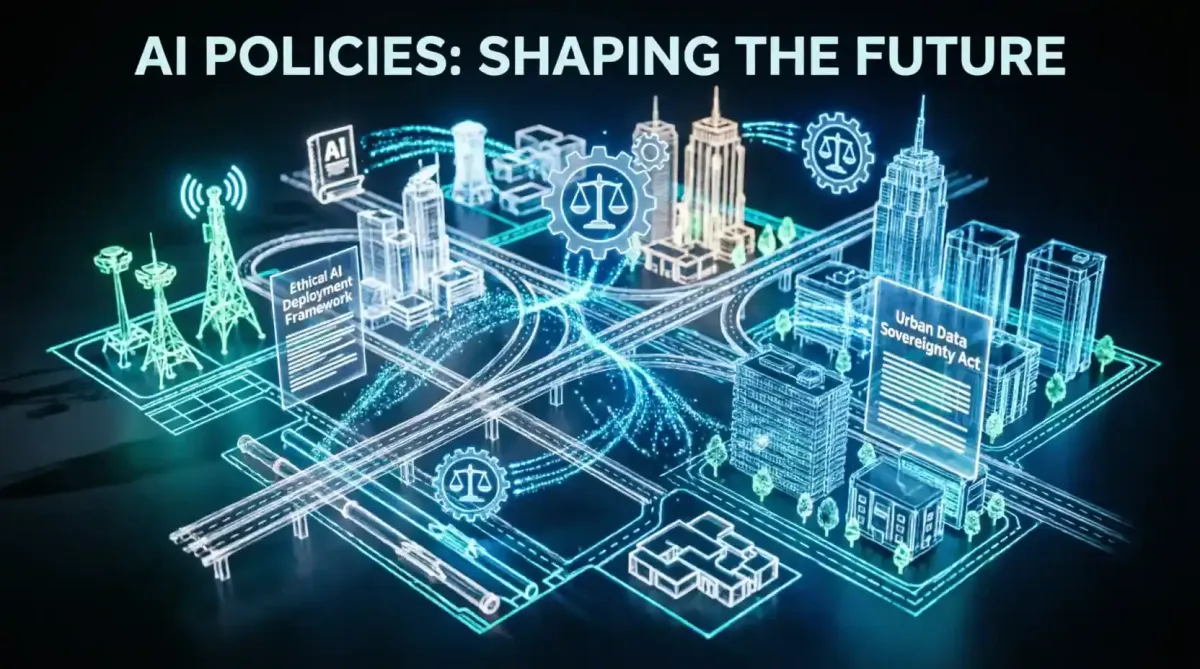
How New AI Policies are Shaping the Tech Industry’s Future in 2026
By 2026, the "Wild West" era of artificial intelligence is officially over. What started as voluntary ethical guidelines has transformed into a complex web of global mandates, spearheaded by the full enforcement of the EU AI Act and similar frameworks in the US and Asia. These policies are not just legal hurdles; they are fundamental architects of how technology is built, deployed, and monetized. At TipsForAITech, we are analyzing how these regulations are creating a more transparent and secure digital future.
This 1500+ word comprehensive guide explores the impact of AI policy on the tech landscape. Whether you are navigating global compliance or monitoring safe deployment, understanding the policy shift is critical for every tech professional.
[Image showing a digital balance scale with a microchip on one side and a law gavel on the other, representing the balance of innovation and regulation]1. The Mandatory Transparency Revolution
In 2026, transparency is no longer optional. Policies now mandate that any AI-generated content—be it a marketing image, a news article, or a video—must carry a C2PA-compliant digital watermark. This helps combat AI-driven misinformation and scams, ensuring that users can always distinguish between human and synthetic creation, a standard we advocate in our AI transformation guides.
2. Algorithmic Accountability and Audits
Tech companies are now legally required to provide "Explainability" for high-stakes AI models. If an AI denies a loan or filters a job application, the company must be able to prove there was no bias in the decision-making process. This push for Ethical AI has led to the rise of specialized AI auditing and debugging tools that ensure fairness and accuracy.
3. Data Sovereignty and Localization
2026 marks the peak of Sovereign AI. Nations are implementing strict data localization laws, requiring that the data used to train AI models for their citizens must stay within national borders. This has forced the tech industry to move away from centralized "mega-clouds" and toward a distributed, multi-cloud infrastructure.
4. Liability and the "Human-in-the-Loop" Requirement
Who is responsible when an AI makes a mistake? New policies in 2026 clarify AI Liability, placing the responsibility on the developers and deployers to ensure human oversight. For critical systems in healthcare and transport, a "Human-in-the-Loop" is now a legal requirement, mirroring the safety protocols for humanoid robotics.
5. Impact on Open Source and Small Startups
There was a fear that heavy regulation would kill innovation. However, in 2026, governments have introduced Compliance Subsidies and "Regulatory Sandboxes" for small businesses. This allows startups to test new AI applications without the massive legal overhead faced by Big Tech, fostering a diverse ecosystem of open-source alternatives.
6. Protecting Intellectual Property in the AI Era
Copyright laws have been updated in 2026 to address AI Training Data. Policies now require AI companies to compensate creators if their work is used to train large-scale models. This ensures a fair economy for artists and writers who use writing assistants and creative tools.
7. Cybersecurity and "AI for Defense" Policies
Governments are mandating that AI systems be built with Zero-Trust Security. In 2026, AI models must be resilient against "Prompt Injection" and data poisoning. Protecting the network infrastructure that powers AI is now a matter of national security, requiring passkey-level authentication for all administrative access.
8. Global Harmonization vs. Fragmentation
While the EU leads, 2026 is seeing a push for a Global AI Treaty. The goal is to prevent a fragmented digital world where an app is legal in one country but banned in another. This harmonization is vital for global remote teams who operate across multiple jurisdictions.
9. The Rise of Chief AI Compliance Officers (CAICO)
A new role has emerged in the C-suite for 2026: the Chief AI Compliance Officer. These professionals use advanced scheduling and management tools to ensure that every AI model in the company’s portfolio adheres to the latest global standards and digital wellbeing protocols.
10. Conclusion: Trust as the New Competitive Advantage
In 2026, AI policies are not killing the tech industry; they are maturing it. By establishing clear rules of the road, these regulations are building the one thing AI needs most to succeed: Public Trust. The companies that thrive in this new era will be those that view compliance not as a burden, but as a commitment to building technology that is safe, fair, and beneficial for all. The future of tech is regulated, responsible, and remarkably bright.
Stay at the forefront of the technology and policy revolution by following TipsForAITech. Whether you're looking for data management tips or development frameworks, we are your partner in the 2026 technology landscape.