
Comparing Docker vs. Kubernetes: Which One Do You Need in 2026?
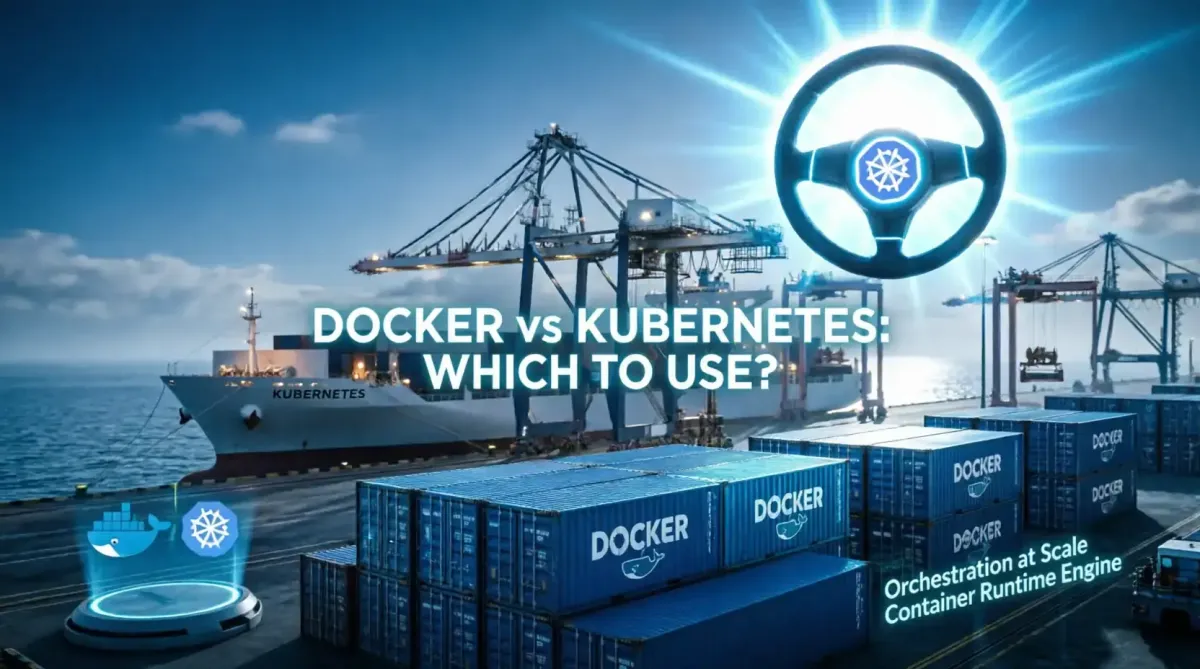
In the digital landscape of 2026, "Docker vs. Kubernetes" is one of the most misunderstood comparisons in tech. The truth is, they aren't direct competitors; they are complementary technologies that solve different parts of the cloud-native puzzle. While Docker focuses on Containerization (packaging), Kubernetes excels at Orchestration (management at scale). At TipsForAITech, we want to help you understand which tool—or combination of tools—is right for your specific workflow.
This 1500+ word comprehensive guide explores the unique strengths of both platforms. Whether you are starting your coding journey or mastering modern full-stack frameworks, knowing your infrastructure is key.
1. Docker: The Foundation of Modern Packaging
Docker revolutionized development by solving the "it works on my machine" problem. In 2026, Docker is the industry standard for creating OCI-compliant images. It allows you to package your app, its runtime, and its dependencies into a single, portable container.
Best for: Local development, CI/CD pipelines, and single-host deployments. As we discussed in 10 ways AI is transforming technology, consistency is the first step toward automation.
2. Kubernetes: The Brain of Distributed Systems
While Docker builds the containers, Kubernetes (K8s) manages them across a cluster of machines. In 2026, Kubernetes is the go-to platform for high-availability systems. It automates Self-Healing (restarting failed containers), Auto-Scaling, and Load Balancing. It is the operating system of the cloud, vital for global remote team operations.
3. Docker Swarm: The Simple Alternative
If Kubernetes feels like "overkill" for your project, Docker Swarm is still a viable option in 2026. It is built directly into the Docker Engine and offers basic orchestration with a much lower learning curve.
Recommendation: Use Swarm for small teams or internal tools where scheduling mastery is more important than massive scalability.
4. When Do You Need Docker ONLY?
You probably only need Docker if:
- You are building a Monolith or a small microservice.
- You are working on an MVP (Minimum Viable Product) and need speed over complexity.
- Your app runs on a single server, which is common for small business infrastructure.
5. When Does Kubernetes Become Mandatory?
Kubernetes is the right choice when:
- You are managing Hundreds of Microservices.
- You require Zero-Downtime Updates (rolling updates).
- You need to scale automatically based on real-time traffic spikes, a feature we see in intelligent server monitoring.
6. The Learning Curve vs. The Power
In 2026, the complexity of Kubernetes is still its biggest hurdle. Docker can be learned in a day; Kubernetes takes months to master. However, many developers are using AI assistants to generate Kubernetes YAML files, significantly reducing the "YAML Fatigue."
7. Security in the Container Era
Both Docker and Kubernetes require a "Security-First" approach. In 2026, you should be using Distroless Images (minimal images) in Docker and Network Policies in Kubernetes. As we noted in our online privacy guides, securing the internal network is just as important as the external one.
8. Cost Considerations: Managed K8s vs. Bare VMs
Managed Kubernetes services (EKS, GKE, AKS) simplify life but add cost. For startups, running Docker on a simple Virtual Machine (VM) is often the most cost-effective path. This aligns with the automation of business costs we advocate for growing companies.
9. Using AI for Infrastructure Management
Modern DevOps in 2026 uses AI to monitor cluster health. These tools can predict when a pod is about to crash and suggest optimizations. This is part of the seamless data and resource management needed for professional-grade systems.
10. Conclusion: The Unified Stack
In 2026, the question isn't "Docker or Kubernetes," but rather "How do I use them together?" Docker is your tool for Creating, and Kubernetes is your tool for Operating. Start with Docker to package your vision, and adopt Kubernetes when your success demands the power of orchestration. By mastering both, you become an architect of the resilient, scalable future.
Stay ahead of the DevOps and AI revolution by following TipsForAITech. Whether you're looking for OS comparisons or advanced coding guides, we are your partner in the 2026 technology landscape.