
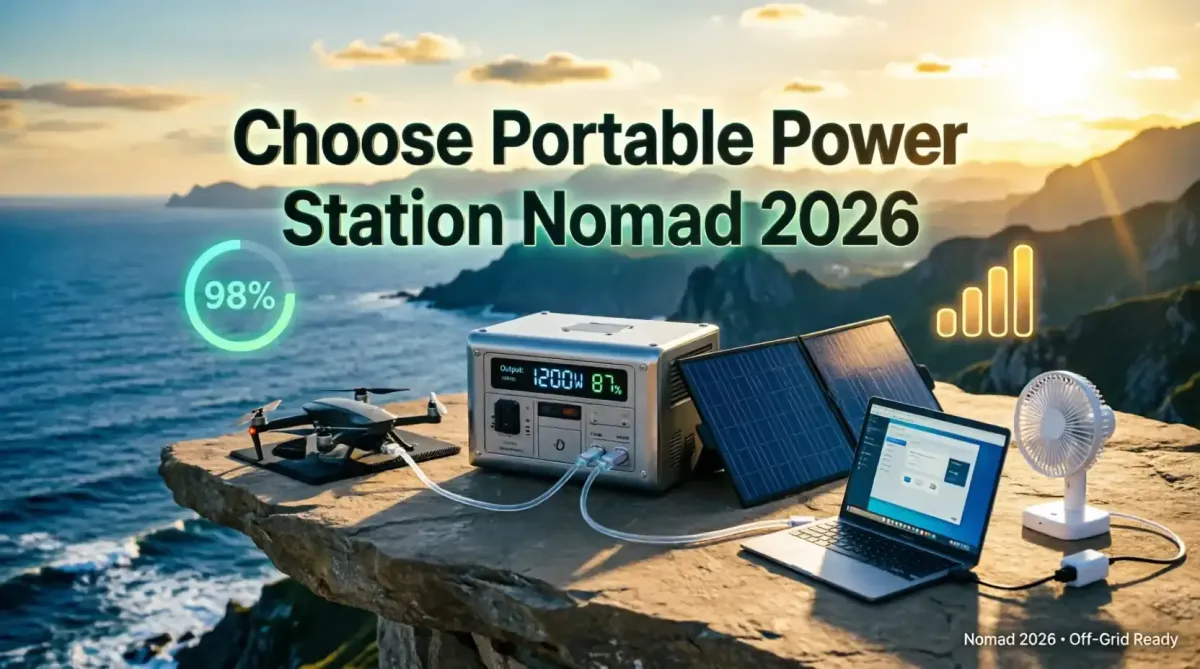
How to Choose a Portable Power Station for Digital Nomad Life
The digital nomad lifestyle in 2026 has evolved far beyond hunting for available outlets in crowded coffee shops. With the rise of van life, remote eco-retreats, and global travel, modern remote workers require true energy independence. A high-quality portable power station is no longer just a camping accessory; it is a critical piece of professional infrastructure that ensures your laptops, communication hubs, and creative gear remain powered anywhere on Earth. This comprehensive guide dissects the essential specifications, battery chemistries, inverter types, and charging ecosystems you need to understand before investing in a portable power station. By mastering the math behind watt-hours, understanding the superiority of LiFePO4 batteries, and evaluating solar integration capabilities, you can build a reliable off-grid power setup that supports your productivity, creativity, and connectivity without interruption.
The Digital Nomad Power Paradigm in 2026
For the modern remote worker, power equals productivity. Whether you are managing global teams from a converted Sprinter van in Patagonia or editing 4K footage on a secluded beach in Bali, a dead battery means a halted business. The integration of AI into daily workflows has increased the computational load on our devices, making energy management more critical than ever. For context on how modern hardware impacts your energy needs, reviewing the ultimate laptop buying guide 2026 choosing between NPU powered AI PCs reveals how next-generation processors balance performance with power efficiency, directly influencing your off-grid runtime.
Unlike traditional campers who primarily need to charge phones and run 12V refrigerators, digital nomads must power high-draw, sensitive electronics: MacBook Pros, high-end Windows workstations, Starlink or 5G mobile routers, mirrorless cameras, and heavy-duty drones. This requires a shift from basic battery banks to sophisticated, multi-port portable power stations equipped with advanced Battery Management Systems (BMS) and pure sine wave inverters.
Understanding the Math: Watts vs. Watt-Hours
The most common mistake first-time buyers make is confusing Watts (W) and Watt-Hours (Wh). To select the right capacity, you must understand the difference.
- Watts (W): The rate of power flow. It determines how many devices you can run simultaneously. The power station's inverter has a maximum wattage rating (e.g., 1000W, 2000W). If your combined devices exceed this, the station will overload and shut down.
- Watt-Hours (Wh): The total capacity of the "fuel tank." It determines how long you can run your devices. A 1000Wh station can theoretically power a 100W device for 10 hours.
How to Calculate Your Daily Nomad Needs:
- List all the devices you need to charge daily (e.g., Laptop, Phone, Router, Drone).
- Find the wattage of each device (usually printed on the power brick or in the manual).
- Estimate the hours of use per day for each device.
- Calculate:
Device Watts x Hours of Use = Daily Wh per device. - Sum the total daily Wh and multiply by 1.15 to account for inverter inefficiency (typically 85-90% efficiency).
For content creators, the power draw can be substantial. Charging camera batteries, powering LED lights, and running editing software on high-brightness displays requires significant juice. Exploring the best AI-powered gadgets for content creators and vloggers helps you audit your gear list and understand the cumulative energy footprint of a modern mobile production studio.
Battery Chemistry: The Shift to LiFePO4
In 2026, the debate between Lithium-ion (NMC) and Lithium Iron Phosphate (LiFePO4 or LFP) has been decisively settled for serious off-grid applications. LiFePO4 is now the undisputed gold standard for portable power stations.
| Feature | Li-ion (NMC) | LiFePO4 (LFP) | Winner for Nomads |
|---|---|---|---|
| Lifecycle (Cycles to 80%) | 500 - 800 cycles | 3000 - 4000+ cycles | LiFePO4 (Lasts 10+ years) |
| Safety / Thermal Stability | Higher risk of thermal runaway | Extremely stable, non-combustible | LiFePO4 (Safer for vans/homes) |
| Weight / Energy Density | Lighter, more compact | Heavier, slightly bulkier | Li-ion (Better for backpacking) |
| Cost per Wh | Higher | Lower (Long-term value) | LiFePO4 (Better ROI) |
While Li-ion batteries are lighter and better suited for ultra-light backpacking, LiFePO4 batteries can be charged and discharged daily for a decade without significant degradation. For digital nomads living in vehicles or setting up temporary basecamps, the safety and longevity of LiFePO4 make it the only logical choice. Furthermore, LiFePO4 chemistry allows for safer operation in the high ambient temperatures often encountered in desert or tropical nomad destinations.
The Inverter: Why Pure Sine Wave is Non-Negotiable
The inverter converts the DC power stored in the battery into the AC power used by your wall-outlet devices. There are two main types: Modified Sine Wave and Pure Sine Wave.
Modified Sine Wave: Cheaper to produce, these inverters create a "staircase" approximation of AC power. While fine for simple resistive loads like incandescent light bulbs or a basic fan, they can cause microphones to buzz, touchscreens to glitch, and power adapters to overheat.
Pure Sine Wave: These inverters produce a smooth, continuous wave identical to (or cleaner than) grid electricity. In 2026, with the proliferation of GaN (Gallium Nitride) chargers and sensitive AI hardware, a Pure Sine Wave inverter is absolutely mandatory. Using a modified sine wave inverter with a high-end laptop or medical device can void warranties and cause permanent hardware damage over time. Always verify that the power station explicitly states "Pure Sine Wave" on the spec sheet.
Port Selection: The USB-C PD Revolution
Gone are the days when you needed to carry a tangle of AC adapters and bricks. The modern portable power station acts as a massive, centralized charging hub, largely thanks to USB-C Power Delivery (PD) 3.1.
- USB-C PD (100W - 140W+): Essential for digital nomads. A 140W USB-C port can directly charge a 16-inch MacBook Pro or high-performance Windows laptop at full speed, bypassing the AC inverter entirely. This saves energy and reduces heat.
- USB-A (18W - 27W): Still useful for older peripherals, wireless earbuds, and smartwatches. As wearable technology evolves, managing their power needs becomes part of your daily routine. Understanding the future of wearable tech beyond smartwatches and fitness trackers highlights the diverse charging requirements of next-generation AR glasses and health monitors.
- AC Outlets: Look for stations with at least two to four AC outlets. Ensure they are spaced widely enough to accommodate bulky power bricks without blocking adjacent sockets.
- DC5521 / Car Cigarette Lighter: Crucial for running 12V appliances like portable compressors, 12V blenders, or connecting directly to a vehicle's alternator for charging while driving.
Charging Inputs: Solar, Wall, and Car
A power station is only as good as its ability to be recharged off-grid. You must evaluate the input capabilities based on your nomadic lifestyle.
1. Solar Charging (The Lifeline): For true off-grid independence, solar is king. Look for a station with a built-in MPPT (Maximum Power Point Tracking) controller. MPPT dynamically adjusts to the solar panel's output, ensuring up to 99% conversion efficiency, even when clouds pass over. In 2026, flexible, lightweight solar panels (100W-200W) can easily be strapped to the roof of a van or laid out on a beach. Ensure the station's solar input voltage limit matches your panel array.
2. AC Wall Charging (The Speed Demon): When you do have access to grid power (e.g., at an Airbnb or coworking space), you want to recharge as fast as possible to prepare for the next off-grid stint. Leading brands now offer 1000W to 1500W AC input, allowing a 1000Wh station to charge from 0% to 80% in under 45 minutes.
3. Car Charging (The Commuter's Friend): If you are constantly moving, a 12V car charger is vital. However, standard car cigarette lighter ports are fused at 10A (120W). To get faster charging while driving, you must invest in a specialized solar charge controller or direct-to-alternator cabling that can push 500W+ into the battery while you highway drive.
Smart Features and the BMS (Battery Management System)
The brain of the power station is the BMS. It protects the battery from overcharging, deep discharging, short circuits, and extreme temperatures. In 2026, BMS technology is deeply integrated with smartphone apps via Bluetooth and Wi-Fi.
App Connectivity Benefits:
- Real-Time Telemetry: Monitor exact input/output wattages, remaining battery percentage, and estimated time to depletion.
- Customizable Settings: Adjust the screen sleep timer, set eco-mode parameters, and configure UPS (Uninterruptible Power Supply) thresholds.
- Firmware Updates: OTA (Over-The-Air) updates can improve charging algorithms and add new features without buying new hardware.
EPS / UPS Functionality: Many premium power stations feature an EPS (Emergency Power Supply) or UPS mode. You can plug the station into a wall outlet, and then plug your laptop or router into the station. If the grid power drops, the station switches to battery power in under 20 milliseconds—fast enough that your devices won't even register a dropout. This is invaluable for nomads working in regions with unstable electrical grids, ensuring you never lose an unsaved document or drop a critical video call.
The Air Travel Dilemma: Capacity vs. Portability
Digital nomads who fly face a significant hurdle: airline lithium battery regulations. The TSA and IATA have strict rules regarding spare lithium batteries.
- Under 100Wh: Generally allowed in carry-on luggage without airline approval. (Most "power banks" fall here, but very few true "power stations").
- 100Wh to 160Wh: Requires airline approval, but is usually permitted in carry-on. Limited to two per passenger.
- Over 160Wh: Strictly prohibited on passenger aircraft in both carry-on and checked luggage. They must be shipped via specialized cargo freight.
The Nomad Strategy: If you fly frequently, you need a modular approach. Carry a sub-100Wh high-density power bank for your phone, earbuds, and emergency laptop top-ups while in transit. Once you reach your destination, ship your larger 1000Wh+ LiFePO4 power station and solar panels via international freight or mail ahead to your next basecamp. Alternatively, if you are a van-lifer or overlander who travels exclusively by road or sea, you can ignore airline limits and maximize capacity up to 2000Wh or more.
Matching the Power Station to Your Nomad Persona
Not all nomads have the same power requirements. Identifying your persona will guide your purchasing decision.
1. The Cafe Hopper (Lightweight / 200Wh - 500Wh)
You work from coffee shops, co-working spaces, and libraries. You only need the power station as a backup for when outlets are unavailable, or to power your router for a secure, private connection. Priority: Portability, USB-C PD fast charging, lightweight design.
When working in public spaces, security is just as important as power. Using a personal hotspot powered by your station keeps you off vulnerable public Wi-Fi networks. For a deep dive into protecting your data on the road, review how to secure your mobile device from advanced cyber threats.
2. The Van Lifer / Overlander (Heavy Duty / 1000Wh - 2000Wh+)
Your vehicle is your home and office. You need to run a laptop for 8 hours, charge drones, power a 12V fridge, and run induction cooktops or blenders. Priority: LiFePO4 battery, high AC inverter output (2000W+), solar input capacity, EPS/UPS functionality.
3. The Field Creator / Filmmaker (Specialized / 500Wh - 1500Wh)
You spend days in remote locations shooting photography or video. You need to charge multiple V-mount batteries, power high-end LED monitors, and run AI-powered editing rigs on location. Priority: Multiple AC and DC outputs, rugged build quality, fast recharge times between shoots.
To understand the computational demands of editing on the go, exploring top 10 generative AI tools for creative professionals in 2026 reveals how local AI rendering and processing tasks can heavily impact your device's battery drain and overall power station requirements.
Top Ecosystems and Brand Considerations in 2026
The market has consolidated around a few major players, each offering distinct ecosystems. When choosing a brand, consider the availability of proprietary accessories (like smart solar panels, Bluetooth battery expansion modules, and smart home integration).
- EcoFlow: Known for industry-leading charging speeds (X-Stream technology) and seamless app integration. Their smart home panels and expansion batteries make them a favorite for nomads who transition between van life and stationary off-grid cabins.
- Bluetti: A pioneer in LiFePO4 adoption. Bluetti offers highly modular systems where you can daisy-chain multiple battery modules and solar inputs, making them ideal for heavy-duty, long-term off-grid setups.
- Anker: Leveraging their massive charging expertise, Anker offers incredibly durable, compact, and user-friendly stations with excellent warranty support, perfect for the lightweight, travel-focused nomad.
- Jackery: The original pioneer in portable solar generators. While they were slower to adopt LiFePO4 across their entire lineup, their integrated solar "suitcases" and rugged designs remain a staple for outdoor-focused creators.
Maintaining Your Power Station on the Road
To ensure your power station survives the rigors of global travel and provides a decade of service, follow these maintenance protocols:
- Temperature Management: LiFePO4 batteries are resilient, but charging them below freezing (0°C / 32°F) can cause permanent damage. Most premium stations have built-in low-temperature charging protection, but always be mindful of extreme cold. Conversely, avoid leaving the station in direct, scorching sunlight for extended periods.
- Long-Term Storage: If you are taking a break from traveling or storing the unit for a few months, do not store it at 100% or 0%. The ideal storage charge is between 50% and 60%. Check and top it up every 3 to 6 months.
- Firmware Updates: Always keep the BMS firmware updated via the manufacturer's app to ensure you have the latest safety protocols and charging optimizations.
Managing your gear budget and tracking the depreciation of your expensive tech stack is a crucial part of the nomadic business model. Utilizing how to automate your accounting using modern SaaS tools can help you categorize your power station and solar gear as tax-deductible business expenses, optimizing your financial health while on the road.
Conclusion: Investing in Energy Independence
Choosing the right portable power station is about more than just reading a spec sheet; it is about designing your lifestyle's energy resilience. In 2026, the combination of LiFePO4 chemistry, Pure Sine Wave inverters, and high-wattage USB-C PD ports has transformed these devices from clunky camping gadgets into essential professional tools. By accurately calculating your watt-hour needs, prioritizing battery longevity over initial weight savings, and integrating solar charging into your routine, you can sever the tether to the grid. Whether you are managing remote teams, creating viral content, or simply enjoying the freedom of a beachside workspace, a properly configured power station ensures that your ambition is never limited by the availability of a wall outlet. Invest wisely, maintain your gear, and embrace the ultimate freedom of the digital nomad life: true, unplug-able independence.