
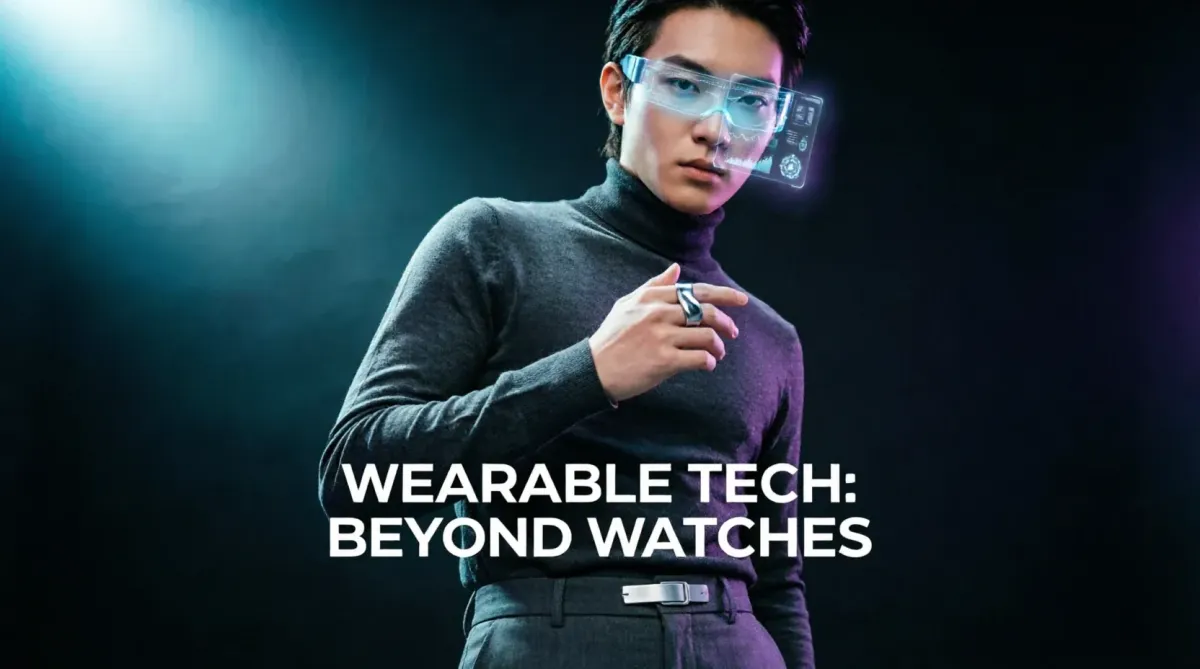
The Future of Wearable Tech: Beyond Smartwatches and Fitness Trackers in 2026
In 2026, the wearable revolution has moved past the wrist. While smartwatches and fitness trackers laid the foundation, the new generation of wearables is becoming invisible, integrated, and infinitely more intelligent. We are entering an era of "Ambient Computing," where our devices don't just track our steps; they enhance our senses, monitor our internal chemistry in real-time, and act as seamless interfaces for our digital lives. At TipsForAITech, we are looking at the gadgets that are moving wearable tech from an accessory to a biological extension.
This 1500+ word comprehensive guide explores the cutting edge of 2026 wearables. Whether you are integrating smart home tools or protecting your personal data, the future you wear is already here.
1. The Rise of the Smart Ring: Minimalism Meets Power
In 2026, many are ditching bulky watches for Smart Rings. These tiny devices offer medical-grade sleep tracking, heart rate variability (HRV) monitoring, and even Continuous Glucose Monitoring (CGM) without needles. Their subtle form factor makes them ideal for those who value digital wellbeing and a distraction-free lifestyle.
2. AI Glasses: The Replacement for Smartphones?
2026 is the breakout year for AI-Integrated Smart Glasses. These are not heavy VR headsets, but stylish frames that use advanced computer vision to provide real-time translation, facial recognition for networking, and turn-by-turn navigation directly on the lens. They serve as a proactive personal assistant that sees what you see.
3. Smart Fabrics and Connected Clothing
Why wear a device when your clothes can be the device? In 2026, Smart Fabrics with conductive fibers can track your posture, muscle strain, and even body temperature. This technology is revolutionizing professional sports and emergency rescue missions, where monitoring the vitals of responders is a matter of life and death.
4. Neural Interfaces: Controlling Tech with Your Mind
One of the most sci-fi developments of 2026 is the Non-Invasive Neural Interface. Worn as a headband or behind the ear, these devices can detect brain patterns to control smart home gadgets or scroll through content without moving a finger. This represents the ultimate step in human-AI transformation.
5. Bio-Wearables: The Laboratory on Your Skin
In 2026, Smart Patches are replacing traditional blood tests. These thin, adhesive sensors analyze your sweat to monitor hydration, electrolytes, and even cortisol (stress) levels. This data is critical for optimizing professional productivity by identifying exactly when you need a break.
[Image showing the internals of a 2026 smart ring: Highlighting the micro-sensors, battery, and NFC chip for payments]6. Hearables: The Evolution of the Earbud
Earbuds in 2026 have become Hearables. Beyond music, they feature "Active Transparency" that can filter out construction noise while amplifying the person talking to you. They also act as real-time health monitors, tracking core body temperature more accurately than a wrist-based device, a feature we explore in complex health data management.
7. Wearable Security: The Body as a Key
In 2026, your wearables are your identity. Using your unique heartbeat (ECG) as a biometric signature, your ring or watch can automatically unlock your laptop, car, or home. This integrates perfectly with passkey-based security, making traditional passwords truly obsolete.
8. Energy Harvesting: Charging from Your Body
A major breakthrough in 2026 is Kinetic and Thermal Energy Harvesting. Newer wearables can charge themselves using your body heat or the movement of your arms. This reduces the need for frequent charging, a sustainability trend seen in domestic robotics and green tech.
9. Using AI Writing Assistants to Synthesize Health Data
With so much data coming from our bodies, it's hard to make sense of it. In 2026, users use advanced AI assistants to summarize their weekly wearable data into actionable health reports, maintaining maximum professional productivity through better health.
10. Conclusion: The Invisible Integration
The future of wearable tech in 2026 is not about having more screens; it's about having fewer barriers. As technology moves from our pockets to our eyes, skin, and even our clothes, the boundary between the digital and physical worlds will continue to blur. These devices are no longer just counting our steps; they are becoming silent partners in our health, safety, and productivity. By embracing these "invisible" technologies, we aren't just becoming more connected—we are becoming more human. The future isn't something you carry; it's something you wear.
Stay at the forefront of the wearable and AI revolution by following TipsForAITech. Whether you're looking for OS comparisons or development frameworks, we are your partner in the 2026 technology landscape.