
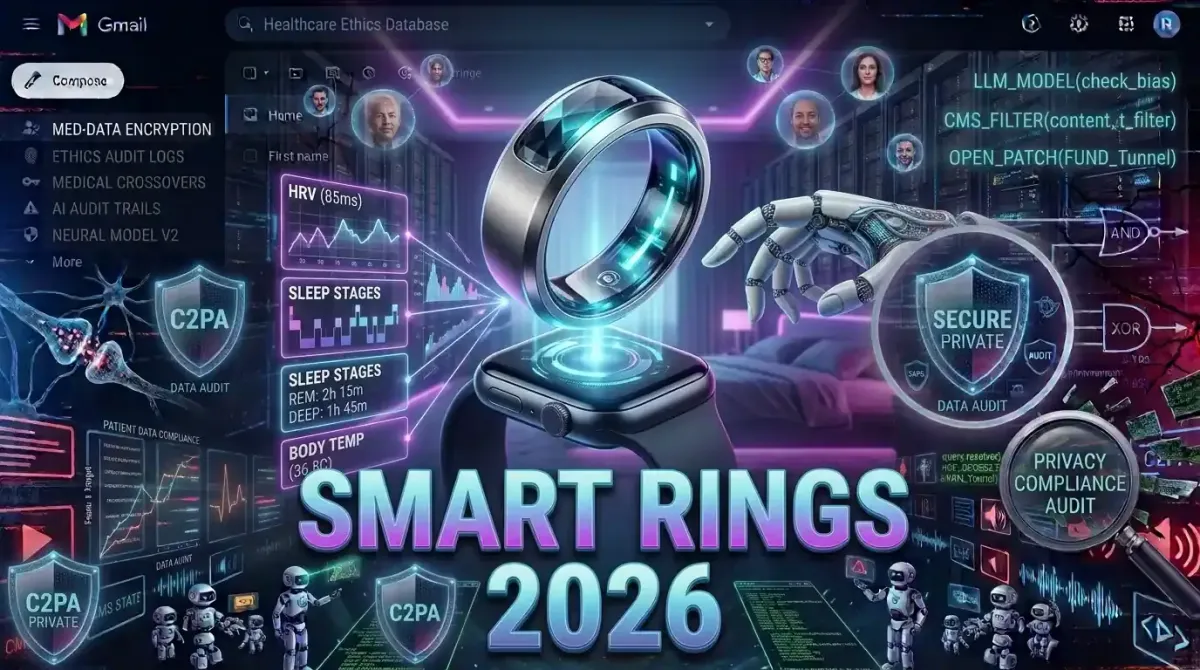
The transition from bulky smartwatches to minimalist smart rings represents the most significant shift in personal health tracking technology in 2026. Devices like the Oura Ring and Ultrahuman Ring Air utilize advanced photoplethysmography, continuous temperature sensing, and machine learning algorithms to deliver clinical grade health insights without the screen fatigue and sleep disruption caused by traditional wearables. By moving sensors to the finger, these devices capture more accurate heart rate variability and peripheral temperature data, all while offering multi day battery life and seamless integration with broader digital wellbeing ecosystems. This comprehensive guide explores the technical architecture, sensor fusion capabilities, and data privacy frameworks that make smart rings the superior choice for continuous health monitoring.
The Paradigm Shift from Smartwatches to Smart Rings
Direct Answer: Smart rings are replacing smartwatches because they offer superior comfort for 24/7 wear, especially during sleep, while capturing more accurate physiological data from the finger's dense capillary network. They eliminate screen distractions, provide multi day battery life, and leverage advanced machine learning to deliver actionable health insights without the bulk of a traditional wrist wearable.
For the past decade, the smartwatch has reigned supreme as the default personal health tracker. However, as the market matures, users are increasingly recognizing the inherent limitations of wrist worn devices. Smartwatches are prone to motion artifacts during sleep, cause skin irritation during extended wear, and constantly demand visual attention through notifications and bright displays. The finger, by contrast, offers a superior physiological vantage point. The digital arteries in the finger are closer to the skin surface and have a higher concentration of blood vessels, allowing optical sensors to capture cleaner, more reliable signals for heart rate, heart rate variability, and blood oxygen saturation.
This anatomical advantage, combined with a drastic reduction in form factor, has catalyzed a massive migration toward smart rings. Users are no longer willing to sacrifice sleep quality or aesthetic minimalism for health tracking. Exploring the future of wearable tech beyond smartwatches and fitness trackers reveals that the industry is actively pivoting toward invisible, ambient computing devices that gather data passively without disrupting the user's daily life or sleep architecture.
Technical Deep Dive: Sensor Fusion in Modern Smart Rings
The efficacy of a smart ring hinges entirely on its sensor array and the algorithms used to interpret the raw data. Leading devices in 2026 pack a remarkable density of medical grade sensors into a chassis that weighs less than four grams.
Advanced Photoplethysmography and Heart Rate Variability
At the core of both the Oura Ring and Ultrahuman Ring Air is a multi wavelength photoplethysmography sensor array. These sensors emit green, red, and infrared light into the skin and measure the amount of light reflected back. By analyzing the subtle changes in blood volume with each heartbeat, the device calculates heart rate and heart rate variability with clinical precision. The finger's stable position during sleep minimizes the motion noise that frequently plagues wrist based optical sensors, resulting in highly accurate HRV metrics, which are the gold standard for measuring autonomic nervous system recovery and stress.
Continuous Skin Temperature Monitoring
Unlike smartwatches that measure temperature at the wrist, smart rings measure distal skin temperature. Research indicates that finger temperature is a more sensitive and earlier indicator of physiological changes, including the onset of illness, hormonal cycle shifts, and metabolic fluctuations. High precision negative temperature coefficient thermistors embedded in the inner band of the ring can detect temperature deviations as small as 0.1 degrees Celsius, providing a continuous baseline that machine learning models use to predict sickness days before symptoms manifest.
Electrodermal Activity and Emerging Biomarkers
The next frontier in smart ring technology is the integration of electrodermal activity sensors to measure skin conductance, providing real time insights into sympathetic nervous system arousal and stress levels. Furthermore, the industry is aggressively researching non invasive biomarker tracking. Understanding the role of machine learning in modern healthcare diagnostics is critical here, as advanced neural networks are being trained to correlate optical sensor data with blood glucose levels and hydration status, paving the way for truly non invasive metabolic monitoring directly from the finger.
Battery Architecture and Charging Innovations
One of the most compelling advantages of smart rings over smartwatches is battery longevity. A typical smartwatch requires daily charging, creating a friction point that often leads to users abandoning sleep tracking altogether. Smart rings, devoid of power hungry OLED displays and constant cellular connectivity, are engineered for endurance.
Power Management and Sleep Optimization
Modern smart rings utilize highly efficient system on a chip architectures that aggressively manage power consumption. The device spends the majority of its time in a low power sleep state, waking only at predefined intervals to take sensor readings or synchronize data via Bluetooth Low Energy. This architectural efficiency allows devices like the Ultrahuman Ring Air to achieve up to six days of battery life on a single charge, while the Oura Ring consistently delivers five to seven days.
The charging mechanisms have also evolved. Instead of proprietary, easily lost cables, 2026 smart rings utilize Qi compatible wireless charging docks or compact USB-C travel cases that simultaneously charge the ring and act as a portable power bank. For users looking to optimize the power management of all their interconnected devices, applying the principles from maximizing battery life on your smartphone proven AI optimized tips can help establish a holistic charging routine that ensures your wearable and mobile devices are always ready without degrading battery health over time.
Machine Learning and Personalized Health Analytics
Raw sensor data is meaningless without sophisticated interpretation. The true value of a smart ring lies in its proprietary machine learning models, which transform millions of data points into actionable, personalized health scores.
Sleep Staging and Recovery Algorithms
Smart rings employ complex classification algorithms, often based on ensemble methods like Random Forests or deep learning architectures like Convolutional Neural Networks, to analyze heart rate, HRV, movement, and temperature. These models map the data to established polysomnography standards, accurately distinguishing between light sleep, deep sleep, and REM sleep. The algorithms continuously adapt to the user's baseline, meaning the ring learns what a "good" night of sleep looks like for that specific individual, adjusting its recovery score dynamically based on historical trends rather than rigid, population wide averages.
Readiness and Strain Metrics
Beyond sleep, these devices calculate a daily readiness score. This metric synthesizes overnight recovery data with daytime activity levels to recommend whether the user should push for a high intensity workout or prioritize active recovery. This personalized feedback loop is a prime example of understanding the basics of supervised vs unsupervised learning, where the system uses labeled historical data to predict optimal daily behavior, while simultaneously using unsupervised clustering to identify novel patterns in the user's unique physiological responses to stress, diet, and exercise.
Data Privacy and Security in Wearable Health Tech
As smart rings collect highly intimate physiological data, including sleep patterns, heart rhythms, and potential illness markers, data privacy becomes a paramount concern. Users must trust that this sensitive information is protected from unauthorized access, corporate exploitation, or cyber attacks.
End to End Encryption and Local Processing
Leading smart ring manufacturers in 2026 have adopted rigorous security protocols. Data transmitted from the ring to the paired smartphone is protected by robust encryption standards, ensuring that intercepted Bluetooth signals cannot be deciphered. Furthermore, the most privacy conscious platforms are moving toward local processing, where raw data is analyzed directly on the user's smartphone rather than being uploaded to centralized cloud servers. This decentralized approach minimizes the attack surface and aligns with the growing demand for digital sovereignty. Implementing why end to end encryption is more important than ever is a foundational principle for these companies, ensuring that health data remains exclusively in the hands of the user.
Compliance and Data Ownership
Reputable smart ring companies comply with stringent global data protection regulations, such as the General Data Protection Regulation in Europe and the Health Insurance Portability and Accountability Act in the United States. They provide transparent privacy policies, allowing users to export or permanently delete their data at any time. However, users must remain vigilant. Securing the paired smartphone is equally critical, as a compromised phone can expose the ring's data. Following best practices from how to secure your mobile device from advanced cyber threats ensures that the entire ecosystem, from the ring sensor to the cloud dashboard, remains impervious to unauthorized access.
Step by Step Guide to Transitioning from a Smartwatch to a Smart Ring
Migrating from a feature rich smartwatch to a minimalist smart ring requires a shift in expectations and habits. Follow this structured workflow to ensure a seamless transition without losing critical health insights.
Phase 1: Define Your Primary Health Goals
Smartwatches excel at real time workout tracking, GPS navigation, and communication. Smart rings excel at passive, continuous health monitoring, particularly sleep and recovery. Before making the switch, identify your primary use case. If your main goal is to optimize sleep quality, track resting heart rate trends, and monitor daily readiness, a smart ring is the superior tool. If you require on wrist GPS for running or the ability to reply to text messages, a smartwatch may still be necessary, or you may need to use both devices in tandem.
Phase 2: Accurate Sizing and Fitment
Unlike smartwatches with adjustable straps, smart rings require precise sizing for accurate sensor readings. A ring that is too loose will allow ambient light to interfere with the optical sensors, corrupting the heart rate data. A ring that is too tight can restrict blood flow and cause discomfort. Always use the official sizing kit provided by the manufacturer. Measure your fingers at the end of the day when they are slightly swollen, and choose the size that fits snugly but can still be removed with a gentle twist.
Phase 3: Establishing a Baseline Period
Upon receiving your smart ring, do not expect immediate, highly accurate readiness scores. The machine learning models require a baseline period, typically seven to fourteen days, to learn your normal physiological patterns. During this time, wear the ring consistently, especially during sleep. Avoid making drastic changes to your routine, and allow the algorithm to calibrate to your unique heart rate variability and temperature baselines.
Phase 4: Integrating with Your Digital Ecosystem
Maximize the value of your smart ring by connecting it to your broader health and productivity ecosystem. Most smart ring applications offer native integrations with platforms like Apple Health, Google Fit, Strava, and Whoop. By centralizing your data, you can correlate your ring's recovery metrics with your calendar, nutrition logs, and workout intensity. For a holistic approach to managing your digital health footprint, exploring managing digital wellbeing best apps to control screen time can help you use your ring's readiness data to consciously limit screen exposure on days when your nervous system requires rest.
Comparative Analysis: Oura vs Ultrahuman vs Samsung Galaxy Ring
The smart ring market in 2026 is dominated by three primary contenders, each with distinct philosophical and technical approaches to health tracking.
| Feature | Oura Ring | Ultrahuman Ring Air | Samsung Galaxy Ring |
|---|---|---|---|
| Primary Focus | Sleep optimization and holistic readiness | Metabolic health and circadian rhythm | Seamless Android ecosystem integration |
| Battery Life | 5 to 7 days | 4 to 6 days | 6 to 7 days |
| Subscription Model | Required for full data access | No subscription required | No subscription required |
| Unique Sensors | Advanced infrared temperature | Circadian rhythm tracking, movement index | Gesture controls, energy score |
| Material | Titanium with PVD coating | Aerospace grade aluminum | Titanium with scratch resistant coating |
The Oura Ring remains the gold standard for sleep tracking accuracy and boasts the most refined user interface, though its mandatory subscription is a point of contention for many users. The Ultrahuman Ring Air appeals to biohackers and metabolic health enthusiasts, offering robust features without a recurring fee, and integrating seamlessly with continuous glucose monitors. The Samsung Galaxy Ring targets the mainstream Android user, prioritizing aesthetic design and deep integration with the Samsung Health ecosystem, though it currently lacks the advanced third party integrations of its competitors.
The Ethical Implications of Continuous Biometric Monitoring
As smart rings become more capable, they cross the threshold from fitness gadgets into medical grade diagnostic tools. This transition introduces profound ethical questions regarding data ownership, algorithmic bias, and the psychological impact of constant self quantification.
Algorithmic Bias in Health Metrics
Machine learning models are only as unbiased as the data they are trained on. Historically, optical heart rate sensors have demonstrated reduced accuracy on individuals with darker skin tones due to the way melanin absorbs light. While hardware improvements have mitigated this, algorithmic bias remains a risk. If a readiness algorithm is trained predominantly on data from young, athletic demographics, it may inaccurately flag normal physiological variations in older adults or individuals with chronic conditions as "poor recovery." The industry must prioritize the ethics of AI in 2026 why neutrality is no longer enough, actively auditing algorithms for demographic bias to ensure that health insights are equitable and accurate for all users.
Orthosomnia and Data Anxiety
The relentless pursuit of perfect health metrics can lead to a condition known as orthosomnia, where users develop unhealthy obsessions with achieving perfect sleep scores. This anxiety can paradoxically degrade sleep quality and increase stress. Smart ring developers have a responsibility to design interfaces that encourage healthy behaviors without fostering neurotic data fixation. This involves presenting data as gentle guidance rather than rigid judgment, and emphasizing long term trends over daily fluctuations.
Future Horizons: Non Invasive Glucose and Advanced Biomarkers
The next major leap in smart ring technology will be the transition from tracking physiological responses to measuring specific biochemical biomarkers non invasively.
Optical Glucose Monitoring
Several tech giants and specialized startups are investing heavily in using spectroscopy to measure blood glucose levels through the skin. By emitting specific wavelengths of light and analyzing the scattered photons, algorithms can estimate glucose concentration. While currently facing challenges with accuracy and environmental interference, breakthroughs in sensor miniaturization and building privacy first AI techniques for secure data processing are accelerating the timeline for this technology. A smart ring capable of non invasive glucose monitoring would revolutionize diabetes management and metabolic health tracking for the general population.
Blood Pressure and Hydration Tracking
Similarly, research is underway to estimate continuous blood pressure and hydration levels using pulse transit time and bioimpedance sensors embedded in the ring. These advancements will transform the smart ring from a passive activity tracker into a proactive, wearable medical diagnostic device, capable of alerting users to hypertension spikes or severe dehydration before they become critical.
Maximizing the Value of Your Smart Ring
Owning a smart ring is only the first step. To truly benefit from the technology, users must adopt habits that leverage the data effectively.
Consistent Wear and Proper Placement
For accurate sleep and temperature tracking, the ring must be worn consistently throughout the night. Place the sensors on the inner side of the finger, facing the palm. Avoid wearing the ring on the index finger if you type frequently, as the impact can cause micro vibrations that interfere with the sensors. The middle or ring finger typically offers the best balance of comfort and data accuracy.
Actionable Data Interpretation
Do not just observe your data; act on it. If your ring indicates low heart rate variability and elevated resting heart rate, interpret this as a signal from your autonomic nervous system that it is under stress. Respond by prioritizing sleep, reducing caffeine intake, or swapping a high intensity workout for a gentle walk or stretching session. The ring is a diagnostic tool; your behavior is the intervention.
Conclusion
The rise of smart rings is not merely a change in fashion; it is a fundamental evolution in how we interact with personal health technology. By relocating advanced sensors to the finger, devices like the Oura Ring and Ultrahuman Ring Air deliver superior data accuracy, unparalleled comfort, and multi day battery life, effectively solving the primary pain points of traditional smartwatches. As machine learning algorithms become more sophisticated and new biomarkers are integrated, the smart ring will transition from a niche biohacking tool into an essential, ubiquitous component of preventative healthcare.
For consumers, the decision to swap a watch for a ring represents a commitment to passive, continuous self awareness without the burden of screen fatigue. For the technology industry, it represents a massive opportunity to redefine ambient computing. As we move deeper into 2026, the smart ring stands poised to become the most intimate, insightful, and indispensable health companion we have ever worn.