
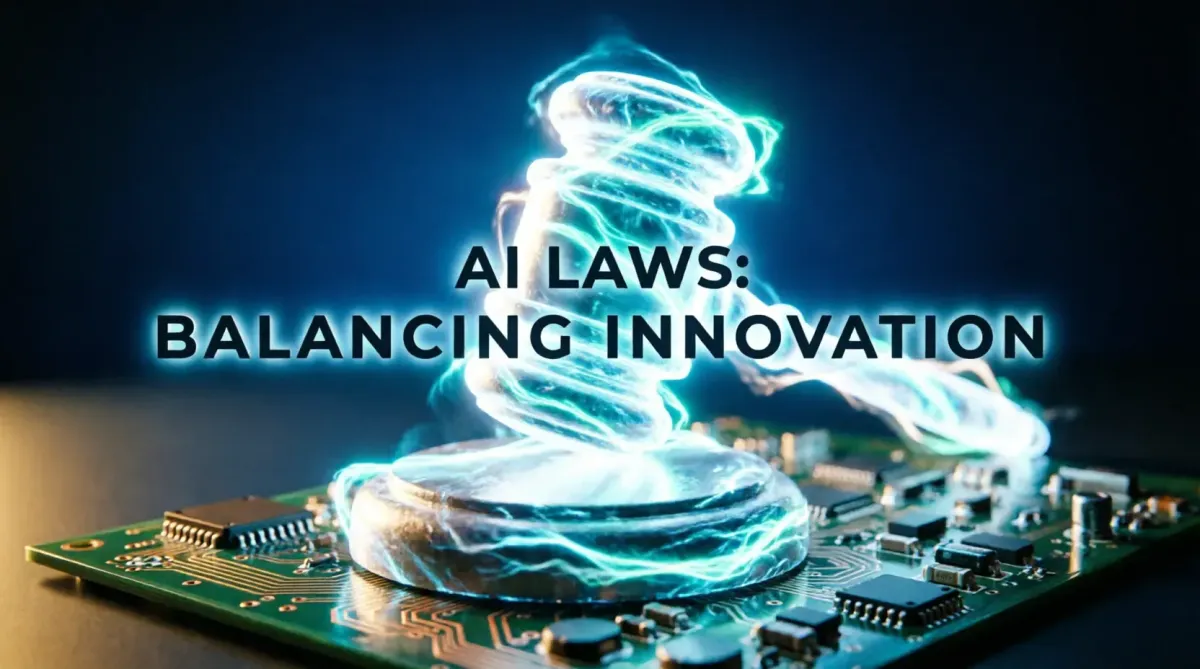
Balancing Innovation and Ethics: Regulating AI Development in 2026
In 2026, we find ourselves in a delicate dance between the "Impossible" and the "Responsible." Artificial Intelligence has moved from a playground for developers into the very foundation of our global infrastructure. From diagnosing diseases to managing urban traffic, AI's potential is limitless. However, this power brings a critical question: How do we foster innovation without sacrificing our human ethics? The race for AI dominance is now being matched by a race for AI Regulation. At TipsForAITech, we are examining how 2026 is becoming the year of "Accountable Intelligence."
This 1500+ word comprehensive guide dives into the complex world of tech policy. Whether you are building privacy-first AI models or navigating modern data laws, ethics is the compass that will guide the next decade of growth.
[Image showing a set of scales balancing a glowing AI brain on one side and a gavel representing law/ethics on the other]1. The Rise of the AI Safety Mandate
By 2026, major global powers have established AI Safety Institutes. The goal is simple but difficult: ensure that AI systems do not cause unintended harm. This isn't just about "Terminator" scenarios; it's about preventing mass misinformation and ensuring safe AI deployment in critical sectors like healthcare and aviation.
2. Algorithmic Bias: The Fight for Fairness
One of the biggest ethical hurdles in 2026 is Algorithmic Bias. If an AI is trained on biased data, it will produce biased results. Regulators are now mandating "Bias Audits" for any AI used in hiring, lending, or law enforcement. This push for fairness is a direct result of our evolution in machine learning principles.
3. Transparency and the "Right to Explanation"
In 2026, the "Black Box" era of AI is coming to an end. New laws require Explainable AI (XAI). If an AI rejects a loan or makes a medical diagnosis, the user has a right to understand "why." This transparency is as fundamental as end-to-end encryption in building long-term user trust.
4. Intellectual Property and the Data Scraping War
Who owns the output of an AI? In 2026, this is the trillion-dollar question. Regulation is moving toward a model where creators must be compensated if their work is used for training. Protecting your personal data from unauthorized scraping has become a core part of digital citizenship.
5. The Challenge of "Innovation Stifling"
The biggest fear for tech leaders in 2026 is that over-regulation will slow down progress. To counter this, many regions are implementing Regulatory Sandboxes—safe environments where startups can innovate with AI without the full burden of heavy compliance, a trend we see in the dynamic SaaS market.
[Image showing a global map: Highlighting the different AI regulatory approaches in the EU (Strict), US (Market-led), and China (State-controlled)]6. AI in the Workforce: Ethical Transitions
As AI automates more tasks, the ethical focus in 2026 has shifted to Human-Centric AI. Companies are now encouraged to use AI to augment human workers rather than replace them. This balance is vital for maintaining professional productivity and societal stability.
7. Deepfakes and the Crisis of Truth
Regulation in 2026 is aggressively targeting synthetic media. Every AI-generated image or video must now contain a Digital Watermark (C2PA). This helps protect people from deepfakes and ensures network security tools can identify malicious content before it goes viral.
8. Security: Preventing AI Weaponization
In 2026, the cyber-security of the AI model itself is a regulatory requirement. Developers must use passkey-secured protocols to prevent "Model Inversion" attacks where hackers try to extract sensitive training data from the AI's weights.
9. Using AI Writing Assistants for Ethical Auditing
Compliance teams use advanced writing assistants to draft ethics reports and policy impact statements, ensuring maximum professional productivity in an increasingly regulated environment.
10. Conclusion: Governance as a Foundation for Growth
Balancing innovation and ethics in 2026 is not a zero-sum game. In fact, strong regulation is the very foundation that will allow AI to grow sustainably. By setting clear boundaries, we protect the individual, ensure fairness, and build a world where technology serves humanity, not the other way around. As we continue to push the boundaries of what is possible, we must never lose sight of what is right. The future of AI isn't just about being smart; it's about being wise. Let’s build an intelligent future that we can all trust.
Stay at the forefront of the ethics and AI revolution by following TipsForAITech. Whether you're looking for OS comparisons or development frameworks, we are your partner in the 2026 technology landscape.