
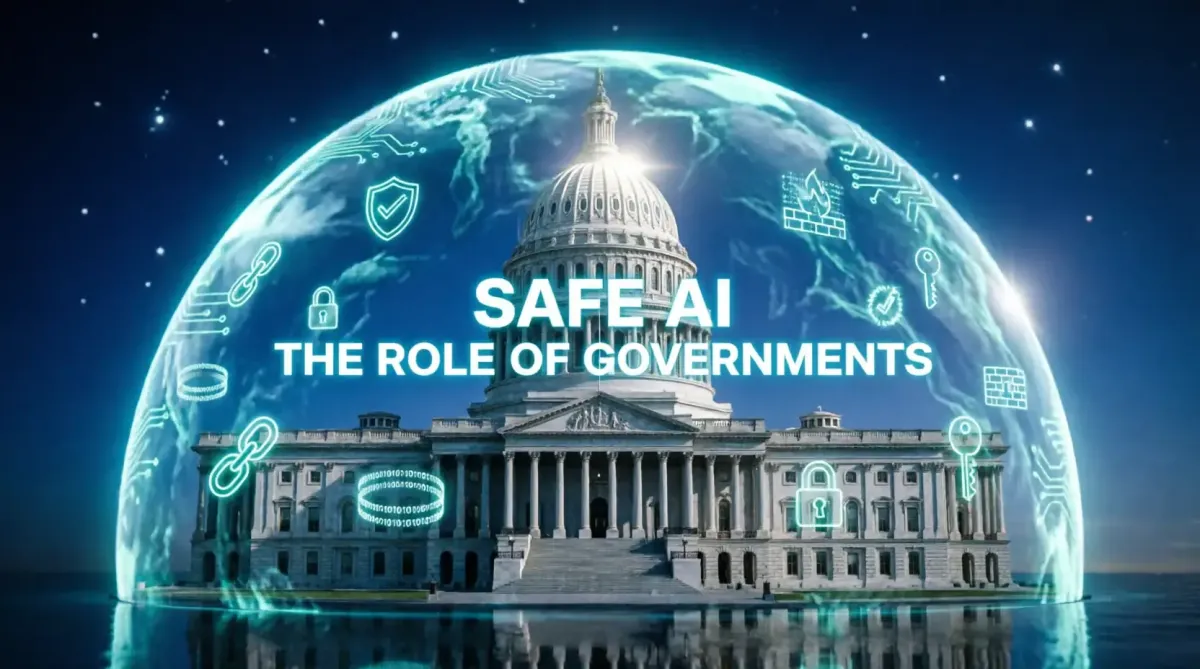
The Role of Governments in Ensuring Safe AI Deployment in 2026
In 2026, artificial intelligence is no longer just a corporate innovation; it is a pillar of national infrastructure. From managing energy grids to diagnosing diseases, AI’s footprint is everywhere. However, with great power comes the need for significant oversight. Governments worldwide are now stepping in to ensure that AI is deployed safely, ethically, and securely. At TipsForAITech, we are analyzing the shift from self-regulation to mandatory government governance.
This 1500+ word comprehensive guide explores the evolving role of public policy in the AI era. Whether you are navigating the EU AI Act or securing your business data, government intervention is the new reality of technology.
1. Establishing Legal Frameworks and Standards
The primary role of governments in 2026 is the creation of "Hard Laws" for AI. Unlike the voluntary guidelines of the past, today’s regulations provide clear boundaries. Governments are setting standards for Data Privacy, Algorithmic Accountability, and System Transparency. As we discussed in 10 ways AI is transforming technology, these frameworks prevent AI from becoming a "Black Box."
2. Risk-Based Categorization and Prohibitions
Governments are now categorizing AI based on its potential impact on human life. By 2026, most nations have adopted a hierarchy similar to the EU’s model:
- Prohibited AI: Real-time biometric surveillance and social scoring are banned to protect civil liberties.
- High-Risk Oversight: AI in critical sectors like banking and healthcare requires mandatory audits before deployment.
3. Mandatory AI Ethics Committees
In 2026, many governments require large tech firms to maintain independent AI Ethics Committees that report directly to national regulators. These committees ensure that AI models are trained on diverse datasets to prevent racial or gender bias, a core part of ethical machine learning.
4. Combating AI-Generated Misinformation
National security in 2026 depends on the ability to distinguish truth from Deepfakes. Governments are mandating "Digital Watermarking" for all AI-generated content. This helps citizens spot AI-generated scams and protects the integrity of elections and public discourse.
5. Funding "Safety-First" Research
Governments are no longer just subsidizing AI performance; they are subsidizing AI Alignment. In 2026, billions in public grants are directed toward research that ensures AI systems remain under human control, even as they become more autonomous. This is a primary concern for developers building next-gen apps.
6. Protecting Critical Infrastructure
AI-driven cyberattacks are a major threat in 2026. Governments are deploying their own "Defense AI" to protect power grids, water systems, and financial networks. By mandating Zero Trust Architecture for public utilities, they are ensuring that online privacy and security remain a national priority.
7. Workforce Transition and AI Literacy
Governments play a crucial role in managing the "AI Labor Shift." In 2026, national education strategies include AI Literacy from high school levels and funded "Reskilling Programs" for workers displaced by automation, helping them master professional productivity tools.
8. International Diplomacy: The Global AI Treaty
AI knows no borders. In 2026, governments are participating in a Global AI Treaty to prevent an "AI Arms Race." This includes agreements on the non-proliferation of autonomous lethal weapons and shared standards for global data management.
9. Using AI Writing Assistants for Policy Drafting
Government agencies are ironically using AI to regulate AI. By utilizing advanced writing assistants, they can draft complex regulations that are clear, concise, and adaptive to the rapid changes in the technological landscape.
10. Conclusion: Governance as a Foundation for Innovation
In 2026, government oversight is not a hurdle; it is the foundation of public trust. Without safe deployment, AI cannot reach its full potential. By acting as a referee, guardian, and funder, governments ensure that the AI revolution benefits all of humanity while minimizing its risks. The goal is clear: an intelligent future that remains fundamentally human.
Stay ahead of the global AI and policy revolution by following TipsForAITech. Whether you're looking for team management SaaS or scheduling mastery, we are your partner in the 2026 technology landscape.