
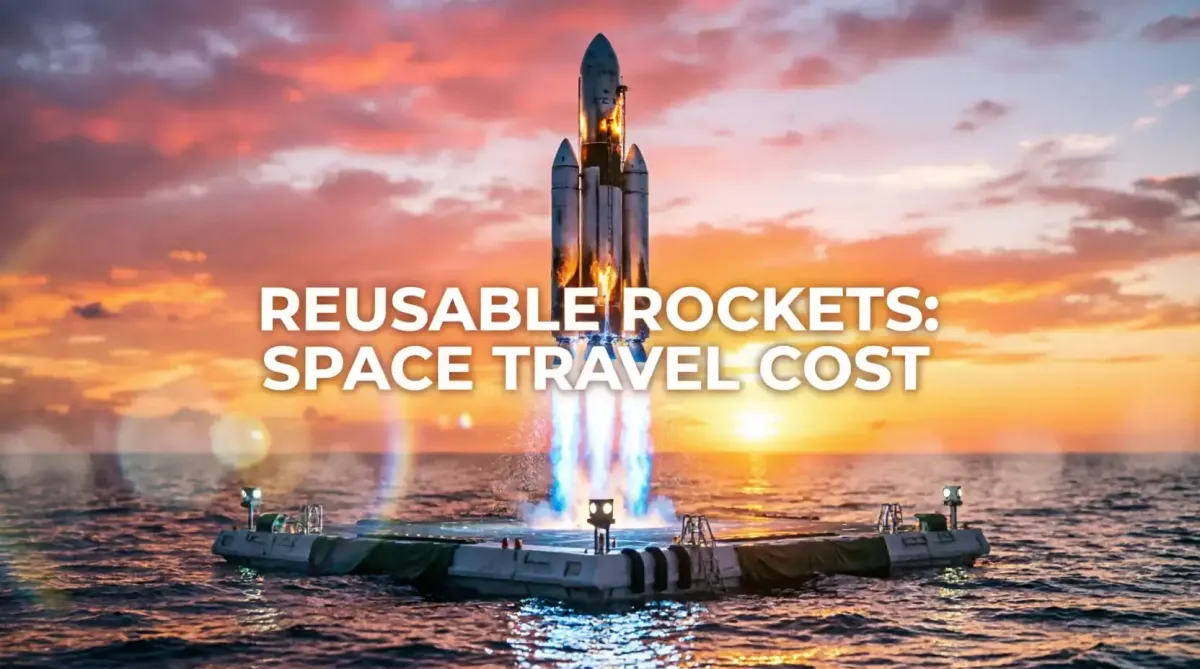
How Reusable Rockets are Making Space Travel More Affordable in 2026
For decades, space exploration followed a wasteful pattern: we built a multi-million dollar rocket, launched it once, and let it burn up in the atmosphere or sink into the ocean. Imagine if every time you flew from New York to London, the airline threw away the Boeing 747 after landing. That was the reality of space flight until Reusable Rockets changed everything. In 2026, reusability is no longer an experiment—it is the industry standard. At TipsForAITech, we are examining how this technological leap is opening the final frontier to everyone.
This 1500+ word comprehensive guide explores the economics of reusable space tech. Whether you are tracking AI in deep space or monitoring general tech trends, the drop in launch costs is the catalyst for the next decade's biggest innovations.
1. The Economics of Reusability: From Millions to Thousands
In the era of expendable rockets, the cost to send 1kg of payload into orbit was over $20,000. In 2026, thanks to rapid reusability, that cost has plummeted to under $1,000. By landing and reflashing boosters, companies like SpaceX and Blue Origin have slashed their overhead, a financial optimization similar to automated business accounting on Earth.
2. Starship: The Game Changer of 2026
The SpaceX Starship is the crown jewel of 2026 space travel. Unlike the Falcon 9, which is only partially reusable, Starship is designed for total reusability. It can launch, land, and be ready for flight again in hours. This "Aviation-style" operation is critical for global logistics teams planning orbital delivery networks.
3. The Role of AI in Precision Landings
Landing a skyscraper-sized rocket vertically on a moving ship requires split-second calculations that no human could perform. In 2026, sophisticated On-board AI uses computer vision and real-time telemetry to adjust thrusters and grid fins, ensuring a soft landing every time. This is a masterclass in autonomous error correction and debugging.
4. Democratizing Space: More Satellites, Better Internet
Lower costs mean more people can reach orbit. In 2026, small startups and universities can launch their own "CubeSats" for research. This has led to massive constellations providing high-speed internet to every corner of the globe, a vital infrastructure for virtual offices and remote work.
5. Space Tourism: No Longer Just for Billionaires
While still expensive, reusability has made space tourism a burgeoning industry in 2026. Frequent launches mean more "seats" are available, slowly driving down the price. This growing sector requires its own safety regulations and policy oversight to ensure passenger protection.
[Image showing a comparison chart: Launch Cost per Kilogram—2006 (Expendable) vs. 2016 (Partial Reusability) vs. 2026 (Full Reusability)]6. Sustainable Exploration and Green Propellants
In 2026, sustainability is a key focus. Reusable rockets mean less metallic debris in our oceans and atmosphere. Furthermore, many 2026 rockets use "Methalox" (Methane and Oxygen), which burns cleaner than old rocket fuels, a trend we also see in sustainable agricultural tech.
7. In-Orbit Refueling: The Path to Mars
Reusability enables In-Orbit Refueling. In 2026, "Tanker" rockets are launched to refuel deep-space vessels in Earth's orbit. This allows ships to carry more cargo to the Moon or Mars, a logistical breakthrough that requires seamless coordination of massive datasets.
8. Security: Protecting Orbital Assets
With more rockets comes the need for better space traffic management. In 2026, Space Situational Awareness (SSA) tools use open-source security principles to track debris and prevent collisions, ensuring our orbital paths remain clear and safe.
9. Using AI Writing Assistants for Mission Planning
Space agencies and private firms use advanced writing assistants to draft mission manifestos and coordinate international launch schedules, maintaining maximum professional productivity in the space sector.
10. Conclusion: The Orbital Highway is Open
The rise of reusable rockets in 2026 has officially turned space from a "one-time destination" into an "orbital highway." By breaking the cycle of waste and high costs, we have unlocked the potential for orbital manufacturing, global connectivity, and a multi-planetary future. We are no longer just visiting space; we are building a permanent presence there. The stars are finally within reach, and we have the technology to go back and forth as many times as we need.
Stay at the forefront of the space and tech revolution by following TipsForAITech. Whether you're looking for OS comparisons or security guides, we are your partner in the 2026 technology landscape.