How to Build Your Own Prompt Library for Rapid Workflows
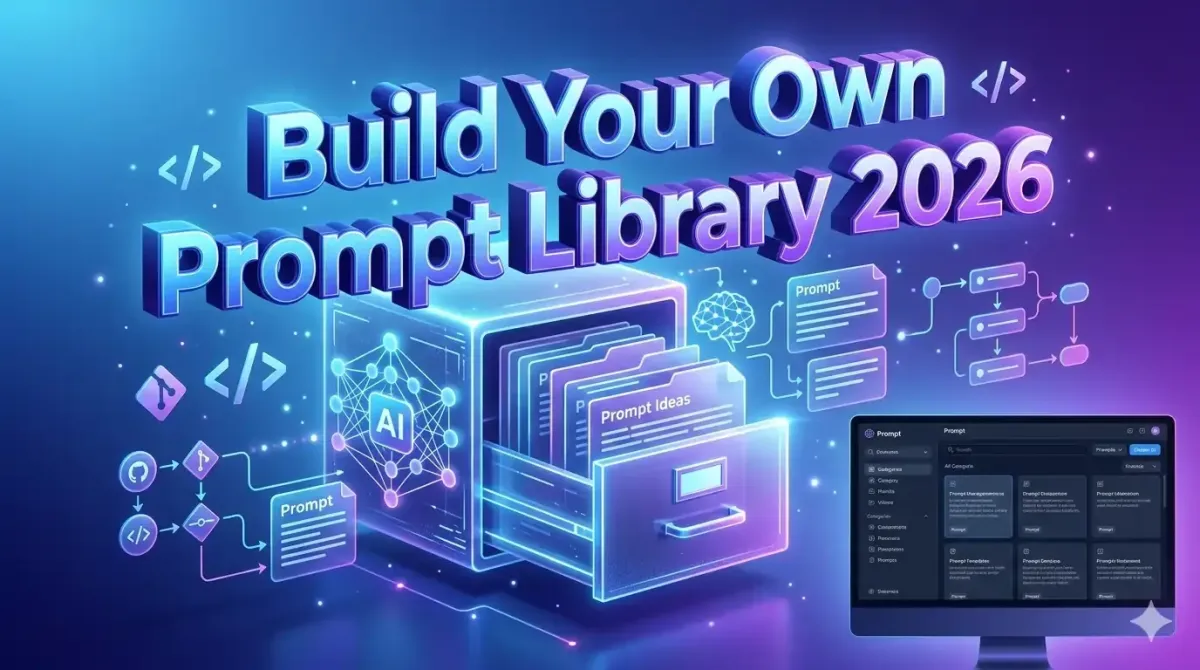
Building a structured prompt library in 2026 is no longer optional for organizations scaling artificial intelligence operations; it is a critical infrastructure requirement. As enterprises transition from experimental AI pilots to production-grade deployments, the ad hoc approach to prompt engineering creates inconsistency, security vulnerabilities, and unmanageable technical debt. A professional prompt library functions as a centralized repository that standardizes input architectures, tracks version history, manages evaluation metrics, and enables rapid deployment of validated prompts across multiple workflows. This comprehensive technical guide details how to architect, implement, and govern a prompt library system that supports rapid iteration while maintaining quality control. By mastering prompt taxonomy, versioning strategies, automated testing pipelines, and metadata management, engineering teams can reduce prompt development time by sixty to eighty percent, ensure compliance with ethical standards, and scale AI capabilities across diverse business functions with predictable reliability.
Understanding Prompt Library Architecture in 2026
A prompt library is more than a collection of text snippets; it is a sophisticated database of instruction sets, context parameters, and configuration metadata that drives large language model behavior. In 2026, advanced libraries support dynamic variable injection, model-agnostic formatting, multi-step chaining, and real-time performance tracking. The architecture typically consists of a storage layer, a management interface, an evaluation engine, and an integration API that connects to downstream applications.
The storage layer organizes prompts using hierarchical taxonomy based on use case, department, or technical function. Each prompt record includes the core instruction text, system role definitions, few-shot examples, temperature settings, and version history. The management interface provides tools for drafting, testing, and approving prompts before they reach production environments. The evaluation engine runs automated tests against curated datasets to measure output quality, constraint adherence, and safety compliance. Finally, the integration API allows applications to fetch the latest validated prompts dynamically, enabling seamless updates without code redeployment.
For practitioners new to structured instruction design, reviewing a beginner's guide to crafting the perfect prompts for gen ai provides foundational syntax patterns and constraint definition techniques that serve as the building blocks for advanced library components.
Designing the Metadata Schema for Prompt Management
Effective prompt management relies on rich metadata that provides context, enables searchability, and supports automated workflows. Without standardized metadata, libraries quickly become disorganized collections of orphaned prompts that teams cannot trust or maintain efficiently. Designing a comprehensive schema ensures every prompt carries the information necessary for validation, deployment, and lifecycle management.
Core Metadata Fields:
- Prompt ID: Unique identifier following semantic naming conventions (e.g., "marketing-email-draft-v2.1").
- Version: Semantic versioning string tracking major architecture changes, minor adjustments, and patch fixes.
- Category: Functional classification such as "content_generation," "code_assistance," or "data_analysis."
- Target Model: Compatible LLM families or specific versions (e.g., "Claude 3.5 Sonnet," "GPT-4o").
- Configuration: JSON object containing temperature, top_p, max_tokens, and stop sequences.
- Variables: Schema defining required and optional dynamic inputs with data types and validation rules.
- Tags: Array of searchable keywords for filtering and discovery across the library.
- Author and Reviewer: Attribution fields tracking who created and approved the prompt version.
Implementing this schema using JSON or YAML formats ensures portability across different management tools and programming languages. For development teams seeking proven prompt patterns, exploring top 25 ChatGPT prompts every developer should know reveals battle-tested templates that can be standardized and imported into library repositories with appropriate metadata tagging.
Tools and Platforms for Prompt Repository Management
Selecting the right infrastructure for your prompt library depends on team size, technical expertise, and integration requirements. Solutions range from simple version-controlled file systems to enterprise-grade platforms with automated evaluation and governance features.
Git-Based Repositories:
Storing prompts as Markdown or YAML files in Git repositories provides robust version control, collaboration features, and integration with developer workflows. Teams can use pull requests for prompt reviews, branch for experimentation, and tags for release management. This approach is cost-effective and familiar to engineering teams but requires custom scripts for validation and API integration.
Specialized Prompt Management Platforms:
Commercial platforms offer dedicated interfaces for prompt storage, A/B testing, performance monitoring, and model switching. These tools often include built-in evaluation engines, usage analytics, and security scanning for prompt injection vulnerabilities. They reduce infrastructure overhead but may introduce vendor lock-in and recurring subscription costs ranging from five hundred to five thousand USD monthly depending on scale.
Database-Driven Solutions:
For high-scale deployments, storing prompts in relational or document databases enables dynamic fetching, real-time updates, and complex querying. This architecture supports microservice integrations and allows applications to retrieve prompts based on user context, location, or behavior patterns without modifying application code.
For content teams deploying AI-assisted creation pipelines, integrating prompt management systems with how to use generative AI for fast paced social media marketing accelerates campaign production by enabling marketers to access validated prompt templates through self-service interfaces while maintaining brand voice consistency.
Implementing Prompt Chaining and Workflow Orchestration
Complex AI tasks rarely succeed with single prompt executions. Prompt chaining breaks down sophisticated workflows into sequential or parallel steps where each output feeds into subsequent inputs. Building a library that supports chaining requires defining modular prompt components with clear input and output contracts.
Sequential Chaining Architecture:
In sequential chains, prompts execute in a predetermined order where the output of step one becomes the input for step two. For example, a research workflow might chain a prompt for information extraction, followed by a summarization prompt, and conclude with a formatting prompt. Each prompt in the chain should be stored independently with version tracking to allow individual optimization without disrupting the entire workflow.
Parallel Execution Patterns:
Parallel chains execute multiple prompts simultaneously to generate diverse perspectives or process different data segments concurrently. The library must support orchestration logic that aggregates outputs, resolves conflicts, and selects the optimal result based on scoring criteria. This pattern improves latency for heavy workloads and reduces the impact of individual prompt failures through redundancy.
Conditional Branching:
Advanced chains use conditional logic to route execution based on intermediate outputs or user inputs. For instance, a customer service chain might route positive feedback to a thank-you prompt while directing complaints to a resolution workflow. The library should store conditional rules alongside prompts to maintain transparency and enable easy modification of routing logic.
For developers building automated narrative generation pipelines, reviewing the future of content creation how generative AI is changing the game provides strategic context for how AI-assisted writing integrates with multimedia storytelling pipelines and cross-platform adaptation workflows that rely heavily on prompt chaining.
Automated Testing and Evaluation Frameworks
Manual review cannot scale with the volume of prompts required for enterprise deployments. Automated testing frameworks validate prompt performance, consistency, and safety before deployment. Implementing rigorous evaluation pipelines prevents regression during model updates and ensures prompts meet quality standards across diverse inputs.
Unit Testing for Prompts:
Unit tests verify that prompts produce expected outputs for controlled inputs. Create a test dataset containing representative examples of normal, edge, and adversarial cases. Execute each prompt against the dataset and compare outputs against ground truth using metrics like exact match, semantic similarity, or constraint satisfaction. Flag any deviations that exceed acceptable thresholds.
LLM-as-a-Judge Evaluation:
Use advanced language models to score outputs based on rubrics defining quality dimensions such as accuracy, relevance, tone, and structure. Configure the judge model to output structured scores and reasoning that explain evaluation decisions. Aggregate scores across test cases to calculate overall prompt performance metrics and identify areas for improvement.
Adversarial Testing:
Test prompts against injection attacks, jailbreak attempts, and ambiguous inputs to evaluate robustness. Include test cases that try to extract system instructions, bypass content filters, or trigger inappropriate responses. Measure the prompt's ability to reject malicious inputs or maintain safe behavior under pressure. Document vulnerabilities and update prompts with defensive patterns.
For engineering teams debugging complex AI workflows, leveraging how AI powered debugging tools are saving hours of coding accelerates identification of reasoning breakdowns, tool execution failures, and context drift patterns during advanced prompt testing cycles.
Security Hardening and Injection Prevention
Prompt libraries store critical instruction sets that control AI behavior, making them high-value targets for manipulation. Implementing security hardening measures prevents unauthorized access, injection attacks, and data exfiltration that could compromise system integrity or expose sensitive information.
Input Sanitization:
Validate and sanitize all user inputs before injecting them into prompt templates. Implement strict type checking, length limits, and character filtering to remove potentially malicious sequences. Use parameterized prompt construction techniques that separate instructions from data, preventing user content from being interpreted as commands.
Access Control and Authentication:
Restrict access to prompt libraries using role-based access control (RBAC) and multi-factor authentication. Define permissions that separate prompt authors, reviewers, and consumers to enforce separation of duties. Audit all access events and modifications to maintain a complete history of who changed what and when.
Encryption and Data Protection:
Encrypt prompt data at rest and in transit using industry-standard cryptographic protocols. Store API keys, credentials, and sensitive variables in secure vaults rather than embedding them directly in prompt text. Implement data loss prevention (DLP) policies that scan prompts for accidentally included confidential information before deployment.
Injection Defense Patterns:
Embed defensive instructions in system prompts that explicitly override any commands found in user inputs. Use delimiter tags to clearly separate instructions from data sections. Configure output filtering that detects and blocks responses containing system instructions, private data, or unauthorized commands. Test these defenses regularly against evolving attack techniques.
For organizations navigating evolving technology policies, understanding how new AI policies are shaping the tech industry's future helps anticipate regulatory frameworks that may influence prompt security requirements, data handling mandates, and compliance reporting obligations.
Bias Detection and Ethical Governance
AI outputs reflect the instructions they receive, making prompt libraries powerful tools for enforcing ethical standards and mitigating algorithmic bias. Implementing governance processes ensures prompts produce fair, inclusive, and culturally aware responses that align with organizational values.
Bias Audit Workflows:
Scan prompts for language that assumes stereotypes, excludes specific demographics, or reinforces harmful narratives. Use automated bias detection tools that analyze word choice, framing, and representation across test cases. Review prompts that show significant variance in output quality or tone across different demographic inputs. Update instructions to enforce neutrality, inclusive language, and balanced representation.
Counterfactual Testing:
Generate outputs for identical inputs with varied demographic attributes such as gender, ethnicity, or age to measure consistency. Analyze results for discriminatory patterns, unequal treatment, or divergent advice. If the prompt produces significantly different outputs based solely on demographic changes, implement constraints that enforce standardized behavior regardless of user characteristics.
Review Boards and Approval Processes:
Establish ethics review boards that evaluate high-impact prompts before deployment. Require prompts affecting hiring, lending, healthcare, or legal decisions to undergo thorough bias assessment and validation testing. Document approval decisions, identified risks, and mitigation strategies to maintain audit trails for regulatory compliance.
Continuous Monitoring:
Deploy monitoring systems that track output distributions and flag emerging bias patterns in production environments. Analyze user feedback and complaints to identify prompts generating problematic responses. Implement automated alerts that trigger reviews when bias metrics exceed predefined thresholds. Update prompts iteratively based on monitoring data to maintain ethical standards over time.
For teams prioritizing ethical AI deployment, understanding addressing bias in AI how to build fairer algorithms provides technical frameworks for integrating fairness metrics, bias detection protocols, and continuous improvement cycles into prompt evaluation pipelines.
Version Control and Lifecycle Management
Prompt libraries require disciplined version control to manage the lifecycle from draft to deprecation. Without structured lifecycle management, teams struggle to track changes, rollback failed deployments, and maintain consistency across applications.
Versioning Strategy:
Adopt semantic versioning (Major.Minor.Patch) for all prompts. Increment major versions for breaking changes in architecture or behavior, minor versions for improvements that maintain backward compatibility, and patch versions for typo fixes or minor adjustments. Maintain a changelog documenting what changed, why it changed, and the impact on outputs.
Environment Segmentation:
Separate prompts into development, staging, and production environments. Test new versions in development, validate against evaluation datasets in staging, and promote to production only after approval. Implement environment-specific overrides that allow testing production-like configurations without affecting live applications.
Deprecation and Archival:
Mark outdated prompts as deprecated rather than deleting them immediately. Maintain archived versions for audit purposes and rollback capability. Communicate deprecation schedules to dependent teams and provide migration paths to newer versions. Set retention policies that automatically archive prompts after a specified period of inactivity.
Dependency Tracking:
Map relationships between prompts and the applications that use them. Track which prompts are consumed by which services, workflows, or user interfaces. When updating a prompt, analyze the dependency graph to assess the blast radius and notify affected teams. Implement automated alerts that flag breaking changes that could disrupt downstream systems.
For developers integrating prompt management into codebases, reviewing top 5 modern frameworks every full stack developer should learn provides context for how modern application architectures facilitate dynamic prompt injection and real-time configuration management.
Integration with CI CD Pipelines
Automating prompt testing and deployment through continuous integration and continuous deployment (CI CD) pipelines ensures quality control, rapid iteration, and seamless integration with application releases. Treating prompts as code enables teams to apply software engineering best practices to AI instruction management.
Pipeline Architecture:
Design pipelines that trigger automatically when prompt changes are committed to version control. Execute unit tests, evaluation suites, and security scans in parallel to validate changes against multiple criteria. Generate reports detailing performance metrics, bias scores, and vulnerability assessments. Block deployment if any test fails or metrics fall below acceptable thresholds.
Automated Promotion:
Configure pipelines to promote validated prompts through environments automatically. After passing all tests in development, promote prompts to staging for final review. Once approved, deploy to production with canary releases that route a small percentage of traffic to the new version while monitoring for anomalies. Gradually increase traffic as confidence grows.
Rollback Mechanisms:
Implement automated rollback procedures that revert to previous prompt versions if production metrics degrade. Monitor key performance indicators such as error rates, user satisfaction, and output quality. Trigger rollbacks automatically when metrics exceed predefined thresholds. Notify teams of rollback events and document root causes for investigation.
Integration Testing:
Test prompts within the context of full application workflows to validate end-to-end behavior. Simulate user interactions and measure how prompts perform under realistic conditions. Verify that variable injection, formatting, and error handling work correctly when prompts interact with application logic and external APIs. Document integration test results and track regressions over time.
For organizations implementing comprehensive development workflows, connecting prompt libraries to is GitHub Copilot the best development tool for beginners demonstrates how AI-assisted coding integrates with prompt management to accelerate development cycles while maintaining quality standards.
Collaboration and Knowledge Sharing
Prompt libraries thrive on collaboration, enabling teams to share successful patterns, avoid duplication, and build collective expertise. Fostering a culture of knowledge sharing multiplies the value of the library and accelerates AI adoption across the organization.
Discovery and Search:
Implement robust search capabilities that allow users to find prompts by keyword, category, tag, or performance metrics. Provide detailed documentation for each prompt including description, use cases, input requirements, and examples. Enable filtering by model compatibility, evaluation scores, and last updated date to help users select the best prompt for their needs.
Forking and Experimentation:
Allow users to fork existing prompts to create experimental variations without affecting production versions. Provide sandbox environments where teams can test forks against custom datasets and share results with the community. Implement a submission process for promoting successful forks to the main library after review and validation.
Feedback and Ratings:
Collect user feedback on prompt performance, usability, and output quality. Enable rating systems that allow consumers to score prompts based on their experiences. Analyze feedback to identify high-performing prompts, detect common issues, and prioritize improvements. Recognize contributors who consistently submit high-quality prompts to encourage participation.
Community Guidelines:
Establish guidelines for prompt creation, documentation, and review that ensure consistency and quality. Provide templates and best practices that help contributors structure prompts effectively. Host regular workshops and training sessions to educate teams on prompt engineering techniques, evaluation methods, and governance policies. Foster a community of practice that shares knowledge and drives continuous improvement.
For content creators expanding into narrative driven marketing, exploring how to use generative AI for fast paced social media marketing reveals how standardized prompt libraries enable marketing teams to scale content production while maintaining brand consistency across diverse channels.
Measuring ROI and Performance Optimization
Quantifying the value of prompt libraries requires tracking metrics that demonstrate efficiency gains, quality improvements, and cost savings. Establish clear ROI frameworks that connect library usage to business outcomes and guide resource allocation.
Efficiency Metrics:
- Development Time Reduction: Measure average time saved when reusing prompts from the library versus creating new ones from scratch.
- Deployment Frequency: Track the number of prompt updates deployed per month to assess iteration velocity.
- Reuse Rate: Calculate the percentage of prompts that are consumed by multiple teams or applications to measure library adoption.
- Error Reduction: Monitor the decrease in production incidents related to prompt failures or inconsistent outputs.
Quality Metrics:
- Evaluation Scores: Track average performance scores across the library to identify trends and prioritize improvements.
- User Satisfaction: Collect feedback scores from prompt consumers to assess perceived quality and usefulness.
- Bias Mitigation: Measure the reduction in bias incidents and flagged outputs after implementing governance processes.
- Compliance Rate: Calculate the percentage of prompts that pass security and ethical review before deployment.
Cost Optimization:
- Token Efficiency: Analyze token consumption patterns to identify prompts that generate excessive output or require unnecessary context.
- Model Switching: Evaluate prompts across different models to find cost-effective alternatives that maintain performance standards.
- Caching Opportunities: Identify prompts with stable outputs that can be cached to reduce API calls and latency.
- Resource Allocation: Track engineering time spent on prompt maintenance versus innovation to optimize resource distribution.
For organizations tracking technology investments, connecting prompt performance data to how to automate your accounting using modern SaaS tools enables accurate cost allocation, budget forecasting, and ROI calculation across enterprise AI deployment initiatives.
Future Trajectory and Strategic Recommendations
Prompt library management continues evolving alongside model capabilities, evaluation frameworks, and regulatory standards. Strategic preparation ensures organizations maintain competitive advantages through adaptive prompt engineering practices that anticipate technological shifts and market demands.
Emerging Capabilities:
- Automated Prompt Optimization: AI systems that iteratively refine prompts based on outcome metrics and user feedback without manual intervention.
- Multi-Modal Prompt Management: Support for prompts that integrate text, image, audio, and video instructions for unified generative workflows.
- Standardized Exchange Formats: Industry-wide prompt formats that enable cross-platform compatibility and community-driven template libraries.
- Regulatory Compliance Modules: Automated checks that adapt prompt constraints to evolving legal and ethical requirements.
Strategic Preparation Recommendations:
- Invest in Training: Provide prompt engineering education that emphasizes modular architecture, constraint optimization, and automated evaluation methodologies.
- Build Internal Repositories: Develop centralized prompt libraries with version control, performance tracking, and collaborative editing capabilities.
- Establish Governance: Form committees that review prompt libraries for security compliance, bias mitigation, and quality standards.
- Monitor Model Upgrades: Conduct regression testing to ensure prompt compatibility with newer model architectures and capabilities.
For creative professionals exploring AI tool integration, reviewing top 10 generative AI tools for creative professionals in 2026 provides strategic context for how advanced prompt engineering unlocks specialized capabilities across design, writing, and multimedia production workflows.
Practical Implementation Checklist
Use this structured checklist to guide the deployment of your prompt library and ensure comprehensive coverage of essential features and processes.
| Phase | Key Actions | Success Criteria | Responsible Role |
|---|---|---|---|
| Planning | Define taxonomy, select tools, design metadata schema | Schema approved, tool selected, team trained | AI Architect |
| Development | Create initial prompts, implement version control, build API | Library functional, API operational, docs complete | Development Team |
| Testing | Build test datasets, configure evaluation engine, run security scans | Tests automated, benchmarks established, vulnerabilities patched | QA Engineer |
| Deployment | Integrate with applications, configure CI CD, enable monitoring | Prompts deployed, pipelines active, alerts configured | DevOps Engineer |
| Governance | Establish review board, implement bias audits, collect feedback | Review process active, audits completed, feedback loop operational | Ethics Officer |
Conclusion: Building Sustainable Prompt Infrastructure
Building a prompt library for rapid workflows requires treating prompts as engineered assets that demand systematic management, rigorous testing, and continuous optimization. By implementing structured architectures, leveraging automated evaluation pipelines, enforcing security and bias mitigation protocols, and integrating libraries into CI CD workflows, organizations achieve predictable AI performance that scales reliably across production environments. The discipline of prompt library management transforms stochastic generative systems into deterministic workflow components that deliver measurable business value, operational efficiency, and strategic competitive advantages.
Success depends on viewing prompt management as an ongoing technical discipline rather than a one-time configuration task. Establish version-controlled repositories, implement quantitative evaluation metrics, conduct adversarial testing, and maintain human oversight for critical decision-making workflows. Organizations that invest in professional prompt engineering capabilities position themselves ahead of competitors by deploying AI systems that maintain consistency, comply with regulatory standards, and adapt seamlessly to evolving model architectures. The future belongs to teams that combine technical precision with strategic foresight, engineering prompts that unlock AI potential while maintaining rigorous quality controls.
Begin your prompt library journey by auditing existing instruction patterns, identifying three primary failure points in output consistency or format compliance, and implementing structured constraint templates targeting those deficiencies. Generate baseline outputs, measure performance against quantitative metrics, and iterate prompt parameters until validation thresholds exceed ninety percent reliability. Expand systematically to advanced techniques including prompt chaining, automated testing, and bias detection protocols. The compound effects of disciplined prompt design will transform your AI capabilities, accelerate workflow execution, and establish sustainable foundations for enterprise-grade artificial intelligence deployment.