Getting Started with Data Science in 2026 A Roadmap for Beginners
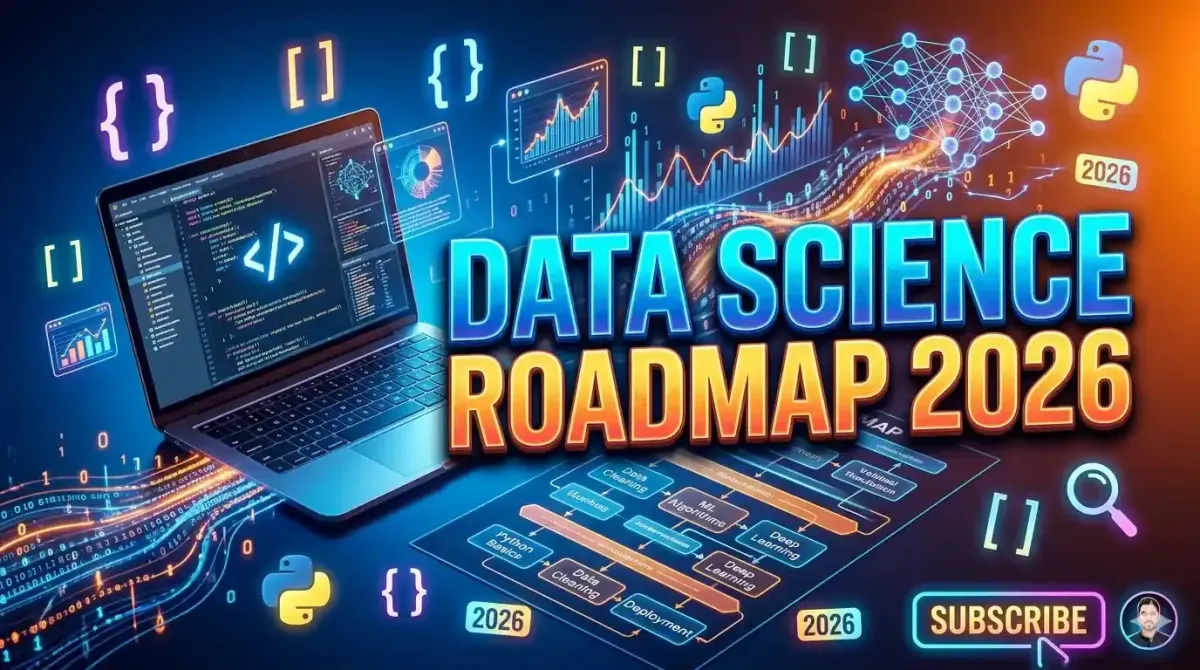
Data science in 2026 represents one of the most accessible and rewarding career paths for technology enthusiasts. This comprehensive roadmap guides absolute beginners through essential skills, tools, and projects needed to launch a successful data science career. Whether you are transitioning from another field or starting your first tech journey, this step by step guide provides clear milestones, learning resources, and practical projects to build confidence and competence. Modern data science combines statistical analysis, programming expertise, and domain knowledge to extract actionable insights from complex datasets, making it indispensable across industries from healthcare to finance.
Understanding the Data Science Landscape in 2026
Data science has evolved dramatically, with artificial intelligence integration becoming standard practice. Modern data scientists must understand not only traditional statistical methods but also deep learning frameworks, large language models, and ethical AI principles. The field now emphasizes practical application over theoretical perfection, with employers prioritizing portfolio quality and problem solving abilities over formal credentials alone.
According to industry reports, entry level data science positions require proficiency in Python or R, SQL database querying, data cleaning techniques, and at least one machine learning library such as scikit learn or TensorFlow. However, the learning curve has become more manageable thanks to improved educational resources, interactive platforms, and AI powered coding assistants that accelerate skill development.
For those wondering about the distinction between related fields, data science focuses on extracting insights and building predictive models, while data analytics emphasizes descriptive analysis and business intelligence. Understanding the basics of supervised vs unsupervised learning helps clarify which machine learning approaches suit different problem types you will encounter.
Essential Prerequisites and Mindset Preparation
Before diving into technical skills, successful data science learners cultivate specific mindsets and foundational knowledge. Mathematical comfort with algebra and basic statistics proves more valuable than advanced calculus for most entry level positions. Logical thinking, curiosity about patterns, and persistence through debugging challenges characterize effective data scientists.
Time commitment varies significantly based on background and learning intensity. Full time learners typically reach job readiness in 6 to 12 months, while part time students balancing work or studies may require 12 to 24 months. The key is consistent practice rather than sporadic intensive sessions. Daily coding, even for just 30 minutes, builds muscle memory and conceptual understanding more effectively than weekend marathons.
Hardware requirements have become more accessible. A modern laptop with 8 GB RAM minimum (16 GB recommended) and any recent processor handles beginner to intermediate data science tasks. Cloud platforms like Google Colab provide free GPU access for more demanding machine learning experiments, eliminating the need for expensive local hardware initially.
Phase 1: Programming Fundamentals with Python
Python dominates data science due to its readable syntax, extensive libraries, and active community support. Beginners should dedicate 4 to 6 weeks to mastering core programming concepts before advancing to data specific libraries.
Essential Python topics include:
- Variables and Data Types: Understanding strings, integers, floats, booleans, and type conversion
- Data Structures: Lists, dictionaries, tuples, and sets with practical manipulation methods
- Control Flow: If statements, for loops, while loops, and list comprehensions
- Functions: Defining reusable code blocks with parameters and return values
- Error Handling: Try except blocks for robust code that handles unexpected inputs
- File I/O: Reading and writing CSV, JSON, and text files
Practice platforms like LeetCode, HackerRank, and Codewars offer beginner friendly exercises that reinforce syntax while building problem solving skills. Start with easy problems and gradually increase difficulty as confidence grows.
To accelerate learning, consider using AI coding assistants. Many beginners ask is GitHub Copilot the best development tool for beginners, and the answer depends on your learning style. These tools provide real time suggestions and explanations that can speed up syntax mastery while you focus on conceptual understanding.
| Week | Topic | Practice Project | Time Commitment |
|---|---|---|---|
| 1-2 | Python syntax and basics | Simple calculator, number guessing game | 10-15 hours |
| 3-4 | Data structures and functions | Contact book, to do list manager | 10-15 hours |
| 5-6 | File handling and libraries | Data file parser, log analyzer | 10-15 hours |
Phase 2: Data Manipulation and Analysis
Once Python fundamentals feel comfortable, transition to data specific libraries. Pandas and NumPy form the foundation of data manipulation, enabling efficient handling of structured datasets ranging from hundreds to millions of rows.
NumPy Fundamentals: This library provides support for large multi dimensional arrays and matrices, along with mathematical functions to operate on them. Key concepts include array creation, indexing, slicing, broadcasting, and vectorized operations that execute faster than Python loops.
Pandas Mastery: Pandas introduces DataFrame and Series objects that resemble spreadsheet tables and columns. Essential skills encompass loading data from various formats (CSV, Excel, SQL databases), filtering rows based on conditions, selecting and transforming columns, handling missing values through imputation or removal, grouping data for aggregation, and merging multiple datasets.
Real world datasets rarely arrive clean and ready for analysis. Data cleaning typically consumes 60 to 80 percent of a data scientist time. Common challenges include inconsistent formatting, duplicate entries, outliers requiring investigation, and missing values demanding strategic handling. Developing systematic approaches to data quality assessment separates competent analysts from exceptional ones.
For practical applications, learn how to use AI for seamless spreadsheet and data management to automate repetitive cleaning tasks and validate data quality efficiently.
Phase 3: Data Visualization and Storytelling
Visual communication transforms raw numbers into actionable insights. Stakeholders often lack technical backgrounds, making clear visualizations essential for driving decisions. Matplotlib provides low level plotting control, while Seaborn offers statistically oriented high level interfaces. Plotly enables interactive dashboards that users can explore dynamically.
Effective visualization principles include:
- Choosing Appropriate Chart Types: Bar charts for categorical comparisons, line charts for temporal trends, scatter plots for relationships, histograms for distributions, and box plots for identifying outliers
- Color Theory: Using color purposefully to highlight important information rather than decoration, ensuring accessibility for color blind viewers
- Avoiding Chart Junk: Eliminating unnecessary gridlines, borders, and 3D effects that obscure data
- Annotation: Adding clear titles, axis labels, and callouts that guide interpretation
Build a portfolio of visualizations demonstrating different techniques. Recreate charts from news articles, analyze personal data like spending habits or fitness tracking, or contribute visualizations to open source projects. Each piece should tell a clear story with a beginning (context), middle (analysis), and end (conclusion or recommendation).
Phase 4: Statistical Foundations and Mathematics
Statistics provides the theoretical framework for drawing reliable conclusions from data. While modern libraries handle complex calculations, understanding underlying principles prevents misinterpretation and builds credibility with technical teams.
Core statistical concepts include:
- Descriptive Statistics: Mean, median, mode, variance, standard deviation, and percentiles that summarize data characteristics
- Probability Distributions: Normal, binomial, and Poisson distributions that model different data types
- Hypothesis Testing: A/B testing frameworks, p values, confidence intervals, and statistical significance
- Correlation and Causation: Distinguishing between related variables and causal relationships
- Sampling Methods: Random, stratified, and cluster sampling techniques for representative data collection
Understanding the basics of supervised vs unsupervised learning requires statistical intuition about labeled versus unlabeled data, training versus testing splits, and overfitting versus generalization trade offs.
Online courses from Khan Academy, Coursera, and edX provide structured statistics education. Practice by analyzing datasets and explicitly stating statistical assumptions, calculating confidence intervals manually before verifying with code, and interpreting p values in context rather than as binary significant or not significant decisions.
Phase 5: Machine Learning Fundamentals
Machine learning represents the predictive engine of data science, enabling systems to learn patterns from historical data and make predictions on new observations. Beginners should start with scikit learn, which provides consistent interfaces for numerous algorithms with sensible defaults.
Supervised Learning Algorithms:
- Linear Regression: Predicting continuous values based on linear relationships between features and target variables
- Logistic Regression: Binary classification problems despite the regression name
- Decision Trees: Interpretable models that split data based on feature thresholds
- Random Forests: Ensemble methods combining multiple decision trees for improved accuracy
- Support Vector Machines: Finding optimal boundaries between classes in high dimensional spaces
- Gradient Boosting: XGBoost and LightGBM that sequentially correct predecessor errors
Unsupervised Learning Techniques:
- K Means Clustering: Grouping similar observations without predefined labels
- Hierarchical Clustering: Creating dendrograms showing nested cluster relationships
- Principal Component Analysis: Reducing dimensionality while preserving variance
- Association Rules: Market basket analysis identifying frequently co occurring items
When building your first models, follow a practical guide to building your first machine learning model to avoid common pitfalls like data leakage, improper validation, and metric selection.
| Algorithm | Best For | Complexity | Interpretability |
|---|---|---|---|
| Linear Regression | Numerical prediction | Low | High |
| Decision Trees | Classification and regression | Low to Medium | High |
| Random Forest | Complex patterns | Medium | Medium |
| XGBoost | Competitive accuracy | High | Low |
| Neural Networks | Unstructured data | Very High | Very Low |
Phase 6: SQL and Database Skills
Real world data rarely exists in convenient CSV files. Most organizations store information in relational databases requiring SQL (Structured Query Language) for extraction and manipulation. SQL proficiency distinguishes job ready candidates from those with only academic experience.
Essential SQL competencies include:
- Basic Queries: SELECT, FROM, WHERE clauses for filtering and retrieving data
- Aggregations: GROUP BY, HAVING, and aggregate functions (COUNT, SUM, AVG, MIN, MAX)
- Joins: INNER, LEFT, RIGHT, and FULL joins combining multiple tables
- Subqueries: Nested queries for complex filtering logic
- Window Functions: RANK, ROW_NUMBER, and running totals for advanced analytics
- CTEs: Common Table Expressions improving query readability
Practice platforms like LeetCode SQL, HackerRank, and DataLemur offer progressively challenging problems. Install PostgreSQL or MySQL locally to experiment with creating databases, inserting data, and optimizing query performance. Understanding indexing, query execution plans, and normalization principles proves valuable for handling large datasets efficiently.
Phase 7: Deep Learning and Advanced Topics
Once comfortable with traditional machine learning, explore deep learning for complex problems involving images, text, and sequential data. TensorFlow and PyTorch dominate this space, with PyTorch gaining popularity for research and TensorFlow maintaining strong production deployment tools.
Key deep learning concepts:
- Neural Network Architecture: Layers, activation functions, loss functions, and optimization algorithms
- Convolutional Neural Networks: Image classification, object detection, and computer vision tasks
- Recurrent Neural Networks: Time series forecasting and sequential data processing
- Transformers: Attention mechanisms powering modern language models
- Transfer Learning: Leveraging pre trained models for faster development
Understanding the impact of large language models on modern research helps contextualize where deep learning fits within the broader AI landscape and which problems warrant these computationally expensive approaches.
Hardware considerations become important at this stage. While cloud platforms offer GPU access, understanding GPU VRAM requirements for AI helps optimize model training and avoid memory errors when working with large datasets or complex architectures.
Phase 8: Building a Strong Portfolio
Portfolio projects demonstrate practical abilities far more effectively than certificates or course completions. Employers seek evidence of end to end problem solving: defining questions, acquiring and cleaning data, exploratory analysis, model building, evaluation, and communicating results.
Portfolio project progression:
Beginner Projects (Weeks 1-12):
- Titanic survival prediction using Kaggle dataset
- Housing price regression analysis
- Customer segmentation for retail business
- Sentiment analysis of product reviews
Intermediate Projects (Weeks 13-24):
- Time series forecasting for stock prices or weather
- Image classification for custom dataset
- Recommendation system for movies or products
- Churn prediction for subscription service
Advanced Projects (Weeks 25+):
- End to end machine learning pipeline with deployment
- Natural language processing for document summarization
- Computer vision application solving real problem
- Original research or novel dataset analysis
Each project should include:
- Clean, well documented code on GitHub
- README file explaining problem, approach, and results
- Visualizations and clear conclusions
- Discussion of limitations and potential improvements
For inspiration on leveraging modern tools, explore top ChatGPT prompts every developer should know to accelerate documentation writing and code explanation.
Phase 9: Soft Skills and Communication
Technical excellence alone does not guarantee career success. Data scientists must translate complex findings into actionable recommendations for non technical stakeholders. Strong communication skills often determine promotion velocity more than algorithmic sophistication.
Essential soft skills include:
- Storytelling: Framing analysis as narrative with clear problem, approach, findings, and recommendations
- Visualization Design: Creating charts that communicate rather than confuse
- Business Acumen: Understanding organizational goals and how data science creates value
- Collaboration: Working effectively with engineers, product managers, and domain experts
- Curiosity: Asking probing questions that uncover root causes rather than symptoms
Practice presenting projects to friends or family members without technical backgrounds. If they cannot understand your main conclusion in 2 minutes, simplify your explanation. Record yourself presenting and review for clarity, pacing, and filler words. Join local meetups or online communities to present work and receive constructive feedback.
Phase 10: Job Search Strategy and Career Development
Transitioning from learning to earning requires strategic job search execution. Entry level positions may carry titles like Junior Data Scientist, Data Analyst, Business Intelligence Analyst, or Analytics Engineer. Each role emphasizes different skill mixes, so tailor applications accordingly.
Job search tactics:
- Resume Optimization: Highlight projects over courses, quantify impact with metrics, and use keywords from job descriptions
- LinkedIn Presence: Complete profile with portfolio links, engage with data science content, and connect with recruiters
- Networking: Attend virtual and in person meetups, participate in Kaggle competitions, and contribute to open source
- Interview Preparation: Practice SQL questions, explain projects clearly, and demonstrate problem solving approach
- Portfolio Website: Create personal website showcasing best projects with live demos when possible
Consider contributing to open source projects to build credibility and connect with experienced practitioners who may provide referrals or mentorship.
Learning Resources and Recommended Path
Quality learning resources accelerate progress while preventing common pitfalls. Balance structured courses with hands on projects and community engagement.
Recommended Courses:
- Python: Automate the Boring Stuff (free online book), Python for Everybody (Coursera)
- Data Science: DataCamp interactive courses, Kaggle Learn micro courses
- Machine Learning: Andrew Ng Coursera course, Fast.ai practical deep learning
- Statistics: Khan Academy statistics and probability, Think Stats (free book)
Practice Platforms:
- Kaggle: Competitions, datasets, and notebooks from community
- LeetCode: SQL and Python coding challenges
- HackerRank: Skill assessments and practice problems
- Google Colab: Free cloud computing with GPU access
Communities:
- r/datascience and r/learnmachinelearning on Reddit
- Kaggle forums for project feedback
- Local meetups via Meetup.com or DataTalks.Club
- Twitter data science community for trends and opportunities
Stay current with future trends in machine learning to understand where the field is heading and which skills will remain valuable long term.
Common Pitfalls and How to Avoid Them
Many beginners encounter similar obstacles that delay progress or cause discouragement. Awareness of these pitfalls enables proactive avoidance.
Tutorial Hell: Watching endless tutorials without building original projects creates false confidence. Solution: Follow the 30/70 rule spending 30 percent time learning concepts and 70 percent applying them to unique projects.
Perfectionism Paralysis: Waiting until feeling ready to apply for jobs or share work prevents opportunities. Solution: Embrace iterative improvement and share work at 80 percent completion rather than waiting for perfection.
Tool Obsession: Constantly switching between tools and frameworks prevents depth. Solution: Master one tool thoroughly before exploring alternatives. Python, pandas, and scikit learn suffice for most entry level positions.
Isolation: Learning alone leads to frustration and knowledge gaps. Solution: Join communities, find study partners, and seek mentorship from experienced practitioners.
Ignoring Fundamentals: Jumping to deep learning without understanding basic statistics creates fragile knowledge. Solution: Build strong foundations before advancing to complex topics.
Specialization Paths After Fundamentals
Once comfortable with core data science skills, consider specializing based on interests and market demand.
Machine Learning Engineer: Focus on model deployment, MLOps, and production systems. Requires stronger software engineering skills and cloud platform expertise.
Data Analyst: Emphasize SQL, visualization, and business intelligence. Ideal for those who enjoy storytelling and stakeholder interaction.
Deep Learning Specialist: Concentrate on neural networks for computer vision, NLP, or reinforcement learning. Demands strong mathematics and computational resources.
Data Science in Specific Domains: Apply general skills to healthcare, finance, marketing, or other industries requiring domain expertise alongside technical ability.
Understanding machine learning in healthcare diagnostics demonstrates how domain specialization creates unique value propositions.
Conclusion: Your Data Science Journey Starts Now
Getting started with data science in 2026 offers unprecedented opportunities for motivated learners. The roadmap presented here provides structure while allowing flexibility based on individual backgrounds and goals. Remember that every expert was once a beginner struggling with syntax errors and confusing error messages.
Success in data science requires consistent practice, curiosity, and resilience through challenges. Start today with small daily commitments, build projects that genuinely interest you, engage with the community, and celebrate incremental progress. The field evolves rapidly, making continuous learning not just beneficial but essential. Embrace the journey, stay patient with yourself, and trust that persistent effort compounds into expertise.
Your future in data science begins with a single line of code. Write it today.