The Role of Machine Learning in Modern Healthcare Diagnostics in 2026
By 2026, the intersection of medicine and computer science has reached a historic tipping point. We are no longer practicing "reactive" medicine; we are entering the era of Predictive and Precision Healthcare. At the core of this transformation is Machine Learning (ML). At TipsForAITech, we are exploring how algorithms are now performing tasks that were once thought to require decades of human medical training.
This 1500+ word deep dive explores the critical role of ML in modern diagnostics. Whether you are learning the basics of AI models or conducting advanced research, understanding the healthcare application of ML is vital for the 2026 tech landscape.
1. Medical Imaging: Beyond the Human Eye
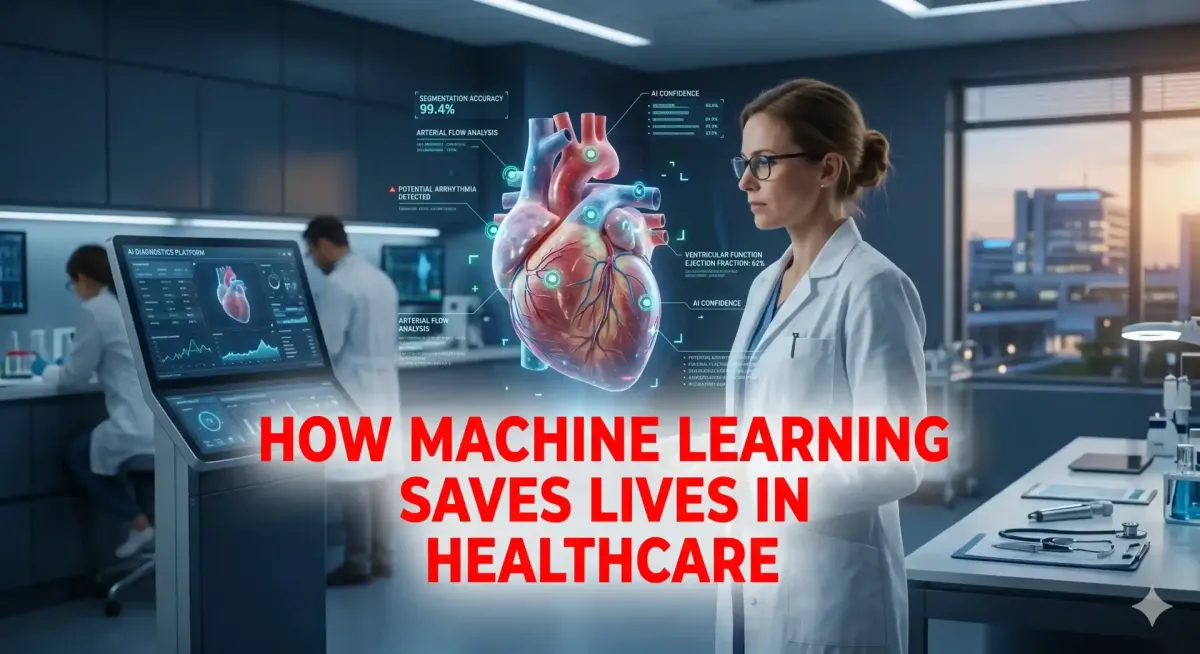
One of the most successful applications of ML in 2026 is in Computer Vision for medical imaging. Convolutional Neural Networks (CNNs) are now routinely used to analyze X-rays, MRIs, and CT scans. These models can detect anomalies—such as early-stage tumors or micro-fractures—with a level of sensitivity that surpasses senior radiologists.
As we noted in 10 ways AI is transforming technology, the speed at which ML can process high-resolution images allows for instantaneous diagnostic "pre-reads," ensuring that critical cases are prioritized immediately.
2. Early Detection through Pattern Recognition
Using Supervised Learning, researchers have trained models on massive global datasets to identify the earliest biomarkers of chronic diseases. In 2026, ML algorithms can analyze blood work and genetic sequences to predict the onset of conditions like Alzheimer’s or Type 2 Diabetes years before physical symptoms appear. This "Window of Intervention" is saving thousands of lives by allowing for lifestyle and medical changes much earlier than ever before.
3. The Power of Predictive Analytics in Acute Care
In 2026, modern hospitals use Predictive ML Models to monitor patients in real-time. By processing data from wearable sensors and bedside monitors, the AI can predict the likelihood of sepsis or cardiac arrest hours in advance. This allows medical teams to act proactively rather than reactively, significantly reducing ICU mortality rates.
This real-time processing is a masterclass in seamless data management, where millions of data points are synthesized into a single "Health Score."
4. Genomic Medicine and Personalized Treatment
Every human body is unique. In 2026, Unsupervised Learning is being used to discover new subtypes of cancers by clustering genetic mutations that were previously thought to be unrelated. This allows doctors to prescribe "Personalized Cocktails" of medication tailored specifically to the patient’s genetic makeup, minimizing side effects and maximizing efficacy.
5. NLP in Clinical Documentation and Diagnosis
As highlighted in our guide on Advanced NLP Voice Assistants, voice AI is now an essential part of the clinical workflow. Natural Language Processing (NLP) models can "listen" to patient-doctor consultations, automatically generating structured medical notes and even suggesting potential diagnoses based on the symptoms discussed. This reduces "Doctor Burnout" and ensures that no detail is lost in the clinical record.
6. Ethical AI and the Problem of Black-Box Models
At TipsForAITech, we emphasize that healthcare AI must be transparent. One of the biggest challenges in 2026 is Explainable AI (XAI). It’s not enough for an algorithm to say a patient has a condition; it must show the "Heat Map" of the MRI or the specific data points that led to that conclusion. This ensures that the human doctor remains the final decision-maker, maintaining the "Human-in-the-Loop" standard.
7. Remote Diagnostics via Wearables
The AI-driven virtual offices of 2026 have shifted the focus to home-based care. High-fidelity wearable devices now use Edge ML to analyze heart rate variability, sleep patterns, and even vocal biomarkers to monitor mental health. This continuous diagnostic loop ensures that healthcare is a constant presence, not just an annual appointment.
8. Combatting Data Bias in Healthcare
A critical focus in 2026 is ensuring that diagnostic models are trained on diverse datasets. In the past, AI models often performed poorly on underrepresented populations. Modern healthcare ML initiatives now prioritize Synthetic Data Generation to fill these gaps, ensuring that diagnostic accuracy is high across all ethnicities and demographics.
9. Integration with Drug Discovery
Diagnostics and treatment are becoming a single loop. When ML identifies a new diagnostic pattern, that data is instantly fed into modern research LLMs to accelerate the discovery of targeted therapies. This synergy is significantly reducing the time it takes to move from "Diagnosis" to "Cure."
10. Conclusion: The Augmented Doctor
Machine Learning is not replacing doctors; it is giving them "Superpowers." In 2026, a physician armed with ML diagnostic tools is like a pilot with a sophisticated autopilot system. By automating the "Search" for disease, ML allows healthcare professionals to focus on the "Care"—the empathy, ethics, and complex decision-making that define the human side of medicine.
Stay at the forefront of the healthcare technology revolution by following TipsForAITech. Whether you are interested in productivity tools or building AI applications, we provide the expert guides you need for 2026.