
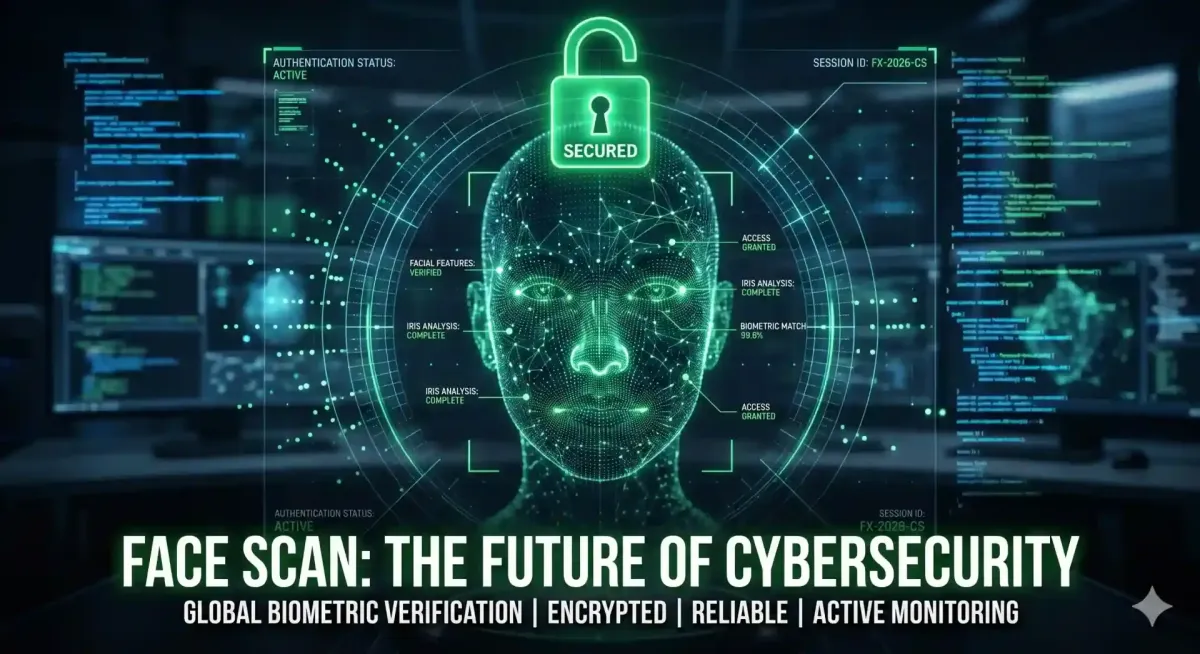
The Role of Facial Recognition in Modern Cybersecurity in 2026
In 2026, the traditional password is a relic of the past. As cyber threats become more sophisticated, static credentials have proven insufficient to protect our digital identities. Facial Recognition, powered by advanced Computer Vision and AI, has emerged as the cornerstone of modern cybersecurity. At TipsForAITech, we are seeing a shift where your face is not just your identity, but your most secure key.
This 1500+ word deep dive explores the critical role of facial recognition in today's security infrastructure. Whether you are exploring computer vision in vehicles or learning about AI regulation, understanding biometric security is essential for 2026.
1. Beyond 2D Mapping: The Rise of 3D Liveness Detection
In the early days, facial recognition could be fooled by a simple high-resolution photo. In 2026, cybersecurity systems utilize 3D Depth Sensing and Liveness Detection. These systems analyze infrared maps of the face, muscle movements, and even blood flow patterns (remote photoplethysmography) to ensure that the person present is a living human being, not a mask or a screen playback.
As we noted in 10 ways AI is transforming technology, this precision is vital for high-stakes environments like banking and government infrastructure.
2. Facial Recognition in Zero Trust Architecture
Cybersecurity in 2026 is built on the principle of Zero Trust—never trust, always verify. Facial recognition allows for "Continuous Authentication." Instead of logging in once, your work device can periodically verify your presence through the camera. If someone else sits in front of the screen or if you walk away, the system instantly locks, preventing unauthorized access in AI-driven virtual offices.
3. The Battle Against Deepfakes and Injection Attacks
The biggest threat to facial recognition in 2026 is the Deepfake. Malicious actors use generative AI to create realistic digital avatars to bypass security. To counter this, modern cybersecurity tools use Synthetic Media Detection algorithms that look for microscopic inconsistencies in pixel rendering and frame rates that are invisible to the human eye but obvious to an AI defender.
4. Passwordless Authentication and Frictionless Access
Facial recognition is the primary driver of the "Passwordless Future." For the modern professional, this means faster access to systems without the cognitive load of remembering complex strings. By integrating with AI scheduling and productivity tools, secure access becomes a seamless part of the workflow, rather than a barrier.
5. Edge AI: Privacy-First Biometrics
A major concern with facial recognition is privacy. In 2026, the solution is On-Device (Edge) Processing. Your biometric data is not sent to a central server; it is encrypted and stored in a "Secure Enclave" on your local hardware. The AI compares your live face against this local hash, ensuring that your biometric identity remains under your control, much like professional data management standards.
6. Multi-Factor Biometrics (MFB)
In high-security sectors, facial recognition is combined with other biometrics like iris scanning or voice print analysis. As highlighted in our guide on Advanced NLP Voice Assistants, using multiple biological layers makes it mathematically impossible for an attacker to spoof a digital identity.
7. The Role of AI in Surveillance and Physical Security
Facial recognition has revolutionized physical cybersecurity. Modern corporate campuses use AI-linked cameras to identify authorized personnel and flag "Tailgating" (unauthorized people following employees through doors). This real-time detection is a direct application of the same Computer Vision logic used in autonomous vehicle navigation.
8. Ethical Governance and Consent
At TipsForAITech, we emphasize that security must not come at the cost of civil liberties. In 2026, ethical facial recognition requires Explicit Consent. Systems must be transparent about how data is used and provide "Opt-Out" mechanisms. This aligns with global AI regulations aimed at preventing the misuse of autonomous monitoring.
9. Integrating with AI Writing Assistants for Security Reporting
Security teams in 2026 use advanced writing assistants to generate instant audit reports based on facial recognition logs. If a security breach is attempted, the AI summarizes the visual data and drafts a technical report, allowing human experts to respond within minutes.
10. Conclusion: The Face of Future Security
Facial recognition has transformed from a futuristic luxury into a fundamental layer of the 2026 cybersecurity stack. By leveraging the unique patterns of the human face, we have created a security model that is both highly secure and incredibly convenient. As AI continues to evolve, our faces will remain our most powerful and personal defense in the digital world.
Stay ahead of the cybersecurity and AI revolution by following TipsForAITech. Whether you're looking for automation productivity or building AI applications, we are your partner in the 2026 technology landscape.