Phishing 2.0: Identifying Sophisticated AI-Generated Email Scams
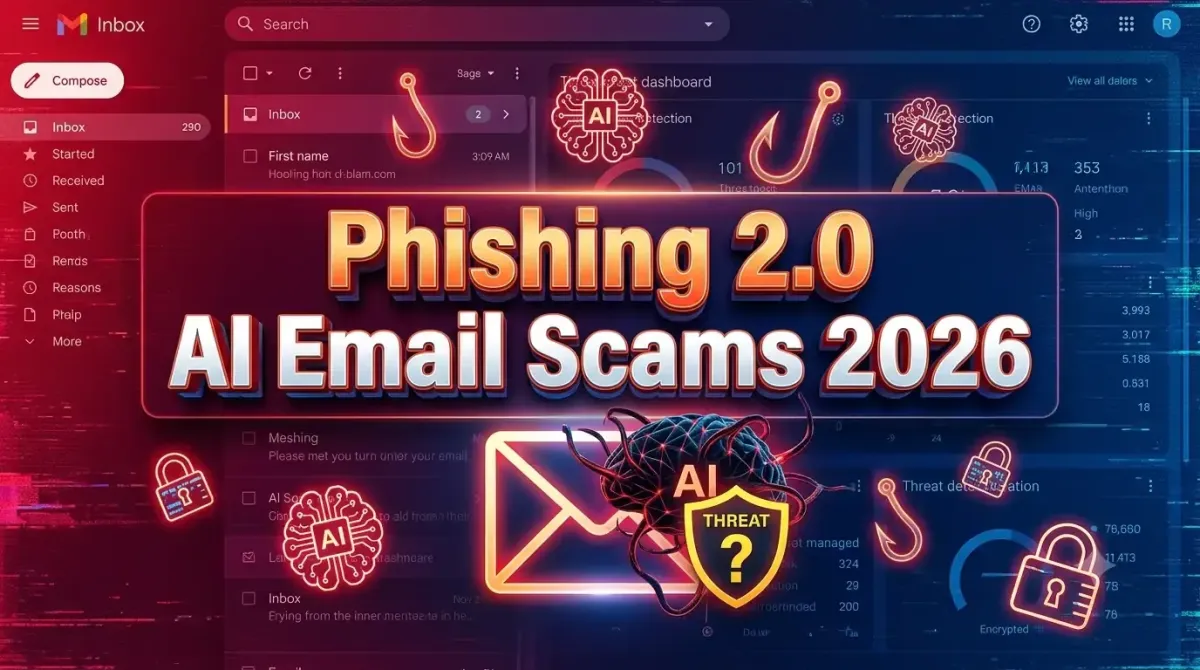
The phishing landscape has undergone a seismic shift in 2026. What was once characterized by poorly translated messages, obvious grammatical errors, and crude social engineering tactics has evolved into a sophisticated threat vector powered by large language models (LLMs) and generative AI. Cybercriminals now leverage the same AI technologies that power legitimate business applications to craft hyper-personalized, grammatically perfect, and contextually aware phishing emails that can bypass traditional security filters and fool even vigilant users. These AI-generated phishing attacks, or "Phishing 2.0," represent an existential threat to organizational security, with success rates climbing as high as 60% compared to traditional phishing's 20% success rate. This comprehensive technical guide dissects the anatomy of AI-generated phishing emails, provides advanced detection methodologies, explores the underlying technologies criminals exploit, and outlines defensive strategies for individuals and enterprises. By understanding the intersection of artificial intelligence and social engineering, security professionals, IT administrators, and end-users can develop the critical awareness needed to identify and neutralize these sophisticated threats before they compromise sensitive data or financial assets.
The Evolution of Phishing: From Script Kiddies to AI-Powered Attacks
Traditional phishing attacks relied on volume over precision. Cybercriminals would cast wide nets, sending millions of poorly crafted emails hoping that a small percentage of recipients would fall victim. These attacks were characterized by obvious red flags: misspelled brand names, broken English, generic greetings like "Dear Customer," and urgent but vague threats.
However, the democratization of generative AI has fundamentally altered this paradigm. In 2026, threat actors have access to the same sophisticated language models used by legitimate businesses, enabling them to:
- Generate Perfect Grammar and Syntax: AI eliminates the linguistic errors that once served as reliable phishing indicators.
- Personalize at Scale: Machine learning algorithms can scrape social media, corporate websites, and data breaches to craft messages tailored to specific individuals, referencing their job titles, recent projects, or professional connections.
- Mimic Writing Styles: Advanced models can analyze a target's previous email communications and replicate their tone, vocabulary, and formatting preferences.
- Adapt in Real-Time: AI-powered phishing campaigns can learn from failed attempts, adjusting language, urgency levels, and social engineering tactics to improve success rates.
This evolution has transformed phishing from a low-skill, high-volume attack vector into a precision weapon capable of compromising high-value targets, including C-suite executives, IT administrators, and financial decision-makers. For a deeper understanding of how AI is reshaping the broader threat landscape, reviewing common online scams in 2026 how to protect your digital assets provides essential context on the diverse tactics cybercriminals employ in the AI era.
Anatomy of an AI-Generated Phishing Email
To effectively identify AI-generated phishing attempts, one must understand their structural and linguistic characteristics. Unlike traditional phishing emails, which often exhibited clear technical and grammatical flaws, AI-generated messages display a deceptive sophistication that masks malicious intent.
Key Structural Elements:
| Component | Traditional Phishing | AI-Generated Phishing (2026) | Detection Challenge |
|---|---|---|---|
| Greeting | Generic ("Dear Customer") | Personalized with name, title, or recent activity | High - appears legitimate |
| Grammar & Spelling | Obvious errors, awkward phrasing | Flawless, professional tone | Very High - no obvious red flags |
| Context | Vague urgency ("Account suspended") | Specific references to projects, colleagues, or events | High - leverages real information |
| Sender Domain | Obvious spoofing (paypa1.com) | Lookalike domains, compromised legitimate accounts | Moderate - requires scrutiny |
| Call to Action | Generic links to fake login pages | Context-specific requests (invoice payment, document review) | High - appears workflow-appropriate |
Linguistic Markers of AI Generation:
Despite their sophistication, AI-generated phishing emails often exhibit subtle linguistic patterns that can serve as detection indicators:
- Overly Formal Language: AI models tend to default to excessively polite and formal phrasing, even in contexts where casual communication would be normal.
- Unnatural Perfection: The absence of any typos, colloquialisms, or idiosyncratic writing quirks can itself be suspicious, especially in internal communications.
- Generic Personalization: While AI can insert names and titles, it often struggles with deeply contextual details that require genuine human understanding of relationships or organizational culture.
- Repetitive Structures: AI-generated text may exhibit formulaic patterns, particularly in how it builds urgency or frames requests.
Understanding these markers requires familiarity with how AI models process and generate text. For those interested in the technical foundations, exploring how NLP is revolutionizing content summarization for busy professionals provides insights into the natural language processing techniques that both enable and can help detect AI-generated content.
Technical Indicators: Beyond the Email Body
While the content of an AI-generated phishing email may be convincing, technical analysis often reveals telltale signs of malicious intent. Security professionals and vigilant users should examine multiple layers of email metadata and infrastructure.
1. Sender Authentication Failures:
Legitimate organizations implement email authentication protocols to prevent domain spoofing. Check for:
- SPF (Sender Policy Framework): Verifies that the sending server is authorized to send emails on behalf of the domain.
- DKIM (DomainKeys Identified Mail): Adds a cryptographic signature to emails, ensuring they haven't been tampered with in transit.
- DMARC (Domain-based Message Authentication): Combines SPF and DKIM to provide comprehensive email authentication.
If an email claims to be from a legitimate organization but fails these authentication checks, it's almost certainly fraudulent, regardless of how convincing the content appears.
2. Suspicious Domain Characteristics:
AI-generated phishing campaigns often employ sophisticated domain strategies:
- Homograph Attacks: Using Unicode characters that visually resemble legitimate characters (e.g., using a Cyrillic "а" instead of a Latin "a").
- Typosquatting: Registering domains with minor misspellings of legitimate brands (e.g., "micr0soft.com" instead of "microsoft.com").
- Subdomain Spoofing: Creating domains like "microsoft-security-alert.com" to appear legitimate at a glance.
- Recently Registered Domains: Phishing domains are often registered days or hours before the attack. Use WHOIS lookup tools to check registration dates.
3. Link Analysis:
Never click links in suspicious emails. Instead, hover over them (without clicking) to preview the actual URL, or use link scanning tools. Red flags include:
- URL shorteners (bit.ly, tinyurl.com) that obscure the final destination
- Mismatched display text and actual URL
- Unusual top-level domains (.xyz, .top, .work) for corporate communications
- IP addresses instead of domain names
For comprehensive protection against these technical threats, implementing top 10 open source security tools to protect your network can provide automated detection and blocking of malicious domains and links.
Social Engineering Tactics Enhanced by AI
AI doesn't just make phishing emails grammatically correct; it supercharges the psychological manipulation techniques that make phishing effective. Understanding these enhanced social engineering tactics is crucial for maintaining vigilance.
1. Hyper-Personalization Through Data Aggregation:
AI systems can aggregate data from multiple sources—social media profiles, corporate websites, data breaches, and public records—to craft messages that appear deeply personal and credible. An AI-generated phishing email might:
- Reference your recent promotion or project completion
- Mention a colleague you actually work with
- Cite a recent company event or announcement
- Use your correct job title and department
This level of personalization bypasses the skepticism that generic phishing emails trigger. The key defense is to verify unexpected requests through secondary channels, even when the email appears highly personalized.
2. Contextual Urgency and Authority:
AI can analyze organizational hierarchies and communication patterns to craft messages that exploit authority dynamics and time pressure:
- Executive Impersonation: AI can mimic the writing style of C-suite executives, crafting urgent requests for wire transfers, sensitive data, or credential verification.
- IT Support Impersonation: Messages claiming to be from IT departments requesting password resets or software updates, complete with technical jargon that sounds authentic.
- Vendor/Billing Scams: AI-generated invoices or payment requests that reference actual vendor relationships and use appropriate formatting.
3. Adaptive Social Engineering:
Advanced AI-powered phishing campaigns can adapt based on recipient behavior. If a user doesn't respond to the initial email, the AI might:
- Send a follow-up with increased urgency
- Change the framing of the request
- Reference the "ignored" previous email to create social pressure
- Switch communication channels (email to SMS to phone call)
Understanding these psychological manipulation techniques is essential for developing resistance. For broader insights into how AI influences human behavior and decision-making, reviewing the ethical dilemma of AI-generated deepfakes and misinformation provides valuable context on the broader implications of AI-powered deception.
Detection Strategies: Human and Automated Approaches
Defending against AI-generated phishing requires a multi-layered approach combining advanced technology with human vigilance and training.
1. AI-Powered Email Security Solutions:
Traditional spam filters that rely on known signatures and blacklists are ineffective against AI-generated phishing, which uses unique content for each recipient. Modern email security must employ:
- Natural Language Processing (NLP): Analyzes email content for phishing indicators, including sentiment analysis, writing style anomalies, and semantic inconsistencies.
- Behavioral Analysis: Establishes baselines for normal communication patterns within an organization and flags deviations.
- Computer Vision: Analyzes embedded images and logos for signs of manipulation or spoofing.
- Link and Attachment Sandboxing: Executes suspicious links and attachments in isolated environments to detect malicious behavior.
2. Human-Centric Detection Techniques:
Despite advances in AI security tools, human judgment remains irreplaceable. Train users to:
- Verify Through Secondary Channels: If an email requests sensitive actions (password changes, wire transfers, data sharing), verify the request through a separate communication channel (phone call, in-person conversation, or a new email thread).
- Question Unexpected Urgency: AI-generated phishing often creates artificial time pressure. Legitimate organizations rarely require immediate action via email.
- Scrutinize Sender Details: Check the full email address, not just the display name. Look for subtle misspellings or unusual domains.
- Analyze Writing Style: Does the email sound like the purported sender? Unusual formality, awkward phrasing, or overly perfect grammar can be indicators of AI generation.
- Hover Before Clicking: Always preview link destinations before clicking.
3. Technical Verification Tools:
Several tools can help verify email authenticity:
- Email Header Analysis: Examine the full email headers to trace the message's path and verify authentication results.
- Reverse Image Search: Use tools like Google Images to verify if logos or signatures have been stolen from legitimate sources.
- Domain Reputation Checkers: Services like VirusTotal or URLVoid can check if a domain has been reported for phishing.
- DMARC Report Analysis: For organizations, analyzing DMARC reports can reveal if your domain is being spoofed in phishing campaigns.
Implementing these detection strategies requires both technological investment and cultural change. For organizations seeking to build comprehensive security awareness, exploring building privacy-first AI techniques for secure data processing provides insights into creating security-conscious organizational cultures.
Organizational Defense: Policies and Training
Individual vigilance is important, but organizational defenses provide the structural protection necessary to combat AI-generated phishing at scale.
1. Multi-Factor Authentication (MFA):
MFA is the single most effective technical control against phishing. Even if a user falls victim to a phishing email and reveals their password, MFA prevents unauthorized access. However, not all MFA is equally effective:
- Avoid SMS-Based MFA: SMS can be intercepted through SIM swapping attacks.
- Use Authenticator Apps: Time-based one-time passwords (TOTP) generated by apps like Google Authenticator or Microsoft Authenticator are more secure.
- Implement Hardware Keys: FIDO2 security keys (YubiKey, Google Titan) provide the strongest protection against phishing.
For a comprehensive guide on implementing MFA effectively, reviewing the ultimate guide to using two-factor authentication (2FA) safely provides detailed implementation strategies.
2. Email Authentication Protocols:
Organizations must implement and enforce:
- SPF Records: Publish which servers are authorized to send email on your domain's behalf.
- DKIM Signing: Cryptographically sign all outbound emails.
- DMARC Policies: Start with "p=none" to monitor, then progress to "p=quarantine" and eventually "p=reject" to block unauthorized emails.
- BIMI (Brand Indicators for Message Identification): Display your verified logo in recipient inboxes, making spoofed emails easier to identify.
3. Security Awareness Training:
Traditional annual security training is insufficient against AI-generated phishing. Effective training programs must:
- Be Continuous: Provide regular, bite-sized training modules rather than annual marathons.
- Use Realistic Simulations: Conduct phishing simulation campaigns that mirror current AI-generated threats.
- Focus on Behavior: Teach users to verify, question urgency, and use secondary channels, rather than just identifying "suspicious emails."
- Measure and Adapt: Track click rates, report rates, and behavior changes to refine training content.
- Create a Reporting Culture: Encourage users to report suspicious emails without fear of punishment for mistakes.
4. Zero Trust Architecture:
Implement zero trust principles to limit the damage if a phishing attack succeeds:
- Least Privilege Access: Users should have only the minimum permissions necessary for their roles.
- Network Segmentation: Isolate critical systems to prevent lateral movement.
- Continuous Verification: Re-authenticate users for sensitive actions, even within an active session.
- Micro-Segmentation: Apply granular access controls at the workload level.
For small businesses seeking to implement these defenses without enterprise budgets, reviewing how to protect your small business from ransomware attacks provides cost-effective security strategies that also protect against phishing.
Incident Response: When Phishing Succeeds
Despite best efforts, some phishing emails will succeed. Having a robust incident response plan is critical to minimizing damage.
Immediate Actions:
- Isolate Affected Systems: Disconnect compromised devices from the network to prevent lateral movement.
- Reset Credentials: Force password resets for affected accounts and any accounts that share credentials.
- Revoke Sessions: Invalidate all active sessions for compromised accounts.
- Scan for Malware: Run comprehensive security scans on affected systems.
- Preserve Evidence: Save the phishing email with full headers for forensic analysis.
Investigation and Remediation:
- Determine Scope: Identify all affected users, systems, and data.
- Assess Data Exposure: Determine what sensitive information may have been compromised.
- Check for Persistence: Look for backdoors, new user accounts, or scheduled tasks created by attackers.
- Review Logs: Analyze authentication logs, email logs, and network traffic for signs of additional compromise.
- Notify Stakeholders: Inform affected individuals, customers, and regulatory bodies as required by law.
Post-Incident Analysis:
- Root Cause Analysis: Determine how the phishing email bypassed defenses and why the user fell victim.
- Update Defenses: Implement technical controls to prevent similar attacks (e.g., blocking sender domains, updating email filters).
- Enhance Training: Use the incident as a case study in security awareness training.
- Test Improvements: Conduct follow-up phishing simulations to verify that defenses have improved.
For organizations handling sensitive personal data, understanding regulatory obligations is crucial. Reviewing the importance of GDPR and modern data privacy laws ensures compliance with breach notification requirements and data protection obligations.
Emerging Threats: The Next Generation of AI Phishing
As defensive technologies improve, so too will offensive AI capabilities. Security professionals must anticipate emerging threats:
1. Deepfake Voice and Video Phishing:
AI can now generate convincing deepfake audio and video. Future phishing attacks may include:
- Voice Cloning: AI-generated voicemails or phone calls that mimic executives or IT staff.
- Video Conferencing Impersonation: Deepfake video calls where attackers impersonate colleagues or business partners.
- Multi-Modal Attacks: Combining email, voice, and video to create a cohesive, multi-channel social engineering campaign.
2. AI-Powered Spear Phishing at Scale:
Currently, spear phishing (highly targeted attacks) requires significant manual research. AI will enable:
- Automated Reconnaissance: AI agents that scrape and analyze target information from social media, corporate websites, and public databases.
- Dynamic Content Generation: Creating unique, highly personalized emails for thousands of targets simultaneously.
- Real-Time Adaptation: Adjusting attack tactics based on individual recipient behavior and organizational responses.
3. AI-Generated Malware:
Beyond phishing emails, AI is being used to create polymorphic malware that evades detection:
- Code Obfuscation: AI that rewrites malware code to avoid signature-based detection.
- Behavioral Evasion: Malware that learns to mimic legitimate software behavior.
- Automated Vulnerability Discovery: AI that identifies and exploits zero-day vulnerabilities.
Understanding these emerging threats requires staying informed about AI capabilities and limitations. For insights into the broader ethical and regulatory landscape, reviewing how new AI policies are shaping the tech industry's future and understanding the EU AI Act what it means for businesses worldwide provides context on how governments are responding to these challenges.
Personal Protection: Strategies for Individuals
While organizational defenses are critical, individuals must also take proactive steps to protect themselves from AI-generated phishing.
1. Email Hygiene:
- Use Separate Email Addresses: Maintain separate email addresses for personal, professional, and online shopping use to limit exposure.
- Enable MFA Everywhere: Use authenticator apps or hardware keys for all accounts that support it.
- Use a Password Manager: Generate and store unique, complex passwords for every account.
- Be Skeptical of Urgency: Legitimate organizations rarely demand immediate action via email.
2. Digital Footprint Management:
Reduce the information available for AI-powered personalization:
- Lock Down Social Media: Set profiles to private and limit publicly visible information.
- Remove Personal Data: Use services like DeleteMe or manually request removal from data broker sites.
- Use Privacy-Focused Services: Choose email providers and browsers that prioritize privacy.
- Monitor for Breaches: Use services like Have I Been Pwned to check if your credentials have been compromised.
For comprehensive guidance on managing your digital footprint, exploring how to manage your digital footprint in the age of AI tracking provides actionable strategies.
3. Mobile Device Security:
Mobile devices are increasingly targeted by phishing:
- Install Security Updates: Keep your operating system and apps updated.
- Use Mobile Security Apps: Install reputable mobile security software.
- Verify App Sources: Only download apps from official app stores.
- Be Cautious with SMS: Smishing (SMS phishing) is on the rise. Never click links in unsolicited texts.
For detailed mobile security guidance, reviewing how to secure your mobile device from advanced cyber threats provides comprehensive protection strategies.
Tools and Technologies for Phishing Defense
Several tools can enhance your ability to detect and prevent AI-generated phishing:
For Individuals:
- Browser Extensions: Tools like Netcraft Extension, Bitdefender TrafficLight, or Avast Online Security can warn about malicious websites.
- Email Clients with AI Detection: Gmail, Outlook, and ProtonMail all employ AI to detect phishing.
- Password Managers: LastPass, 1Password, and Bitwarden can detect and warn about phishing sites.
- Security Keys: YubiKey, Google Titan, and other FIDO2 keys provide phishing-resistant authentication.
For Organizations:
- Advanced Email Security Gateways: Solutions like Proofpoint, Mimecast, and Microsoft Defender for Office 365 use AI to detect sophisticated phishing.
- Security Awareness Platforms: KnowBe4, Cofense, and Infosec Institute provide phishing simulation and training.
- SIEM Solutions: Splunk, QRadar, and Sentinel can correlate email security events with other security data.
- SOAR Platforms: Automate incident response workflows for phishing incidents.
Legal and Regulatory Considerations
Organizations must navigate complex legal and regulatory requirements when dealing with phishing:
1. Data Breach Notification:
If a phishing attack results in a data breach, organizations may be required to:
- Notify affected individuals within specific timeframes (e.g., 72 hours under GDPR)
- Report to regulatory authorities
- Provide credit monitoring services to affected individuals
- Face potential fines and legal action
2. Industry-Specific Regulations:
- Healthcare (HIPAA): Strict requirements for protecting patient health information.
- Financial Services (GLBA, PCI-DSS): Regulations governing financial data protection.
- Government (FISMA, CMMC): Requirements for government contractors and agencies.
3. Liability and Insurance:
- Cyber Insurance: Many organizations now carry cyber insurance to cover phishing-related losses.
- Due Diligence: Courts increasingly expect organizations to implement reasonable security measures.
- Vendor Management: Organizations may be liable for phishing attacks that compromise vendor or customer data.
Understanding these obligations is essential for risk management. For comprehensive guidance on data privacy compliance, reviewing the importance of GDPR and modern data privacy laws provides essential context.
Building a Phishing-Resistant Culture
Technology alone cannot stop AI-generated phishing. Organizations must cultivate a security-aware culture where every employee is an active defender.
Key Cultural Elements:
- Leadership Commitment: Security must be prioritized from the top down, with executives modeling secure behavior.
- Psychological Safety: Employees must feel comfortable reporting mistakes without fear of punishment.
- Continuous Learning: Security awareness must be ongoing, not a once-a-year checkbox.
- Cross-Functional Collaboration: IT, HR, Legal, and Business units must work together on security initiatives.
- Recognition and Rewards: Celebrate employees who report phishing attempts and demonstrate security best practices.
Measuring Culture:
Track metrics that indicate cultural maturity:
- Phishing simulation click rates (should decrease over time)
- Phishing report rates (should increase over time)
- Time to report suspicious emails
- Employee security awareness survey scores
- Number of security-related suggestions from employees
The Future of Phishing Defense
As AI continues to evolve, so too will phishing defense strategies. Emerging technologies and approaches include:
1. AI vs. AI:
Defensive AI systems that can:
- Detect AI-generated content with high accuracy
- Predict and block phishing campaigns before they reach inboxes
- Automatically generate personalized security training based on individual risk profiles
- Adapt defenses in real-time based on emerging threats
2. Blockchain for Email Authentication:
Decentralized identity systems that make email spoofing virtually impossible by cryptographically verifying sender identity on a blockchain.
3. Quantum-Resistant Cryptography:
Preparing for the day when quantum computers can break current encryption, potentially exposing all historical email communications.
4. Behavioral Biometrics:
Continuous authentication based on typing patterns, mouse movements, and other behavioral characteristics that are difficult for attackers to replicate.
Conclusion: Vigilance in the Age of AI
AI-generated phishing represents a fundamental shift in the threat landscape. The combination of perfect grammar, hyper-personalization, and adaptive social engineering makes these attacks far more dangerous than their predecessors. However, they are not unstoppable.
Defense requires a multi-layered approach combining:
- Technology: AI-powered email security, MFA, and zero trust architecture
- Training: Continuous security awareness that adapts to emerging threats
- Processes: Robust incident response and verification protocols
- Culture: An organizational mindset where security is everyone's responsibility
For individuals, the key is skepticism and verification. Question urgency, verify through secondary channels, and never assume that perfect grammar equals legitimacy. For organizations, the imperative is to implement comprehensive defenses while fostering a culture of security awareness.
The battle against AI-generated phishing is ongoing. As defensive technologies improve, attackers will adapt. Staying informed, maintaining vigilance, and continuously improving defenses are the only paths to security in this evolving landscape.
Remember: the most sophisticated AI in the world cannot replace human judgment. Trust your instincts, verify unexpected requests, and when in doubt, pick up the phone. In the age of AI-powered phishing, a moment of skepticism can prevent a catastrophic breach.