
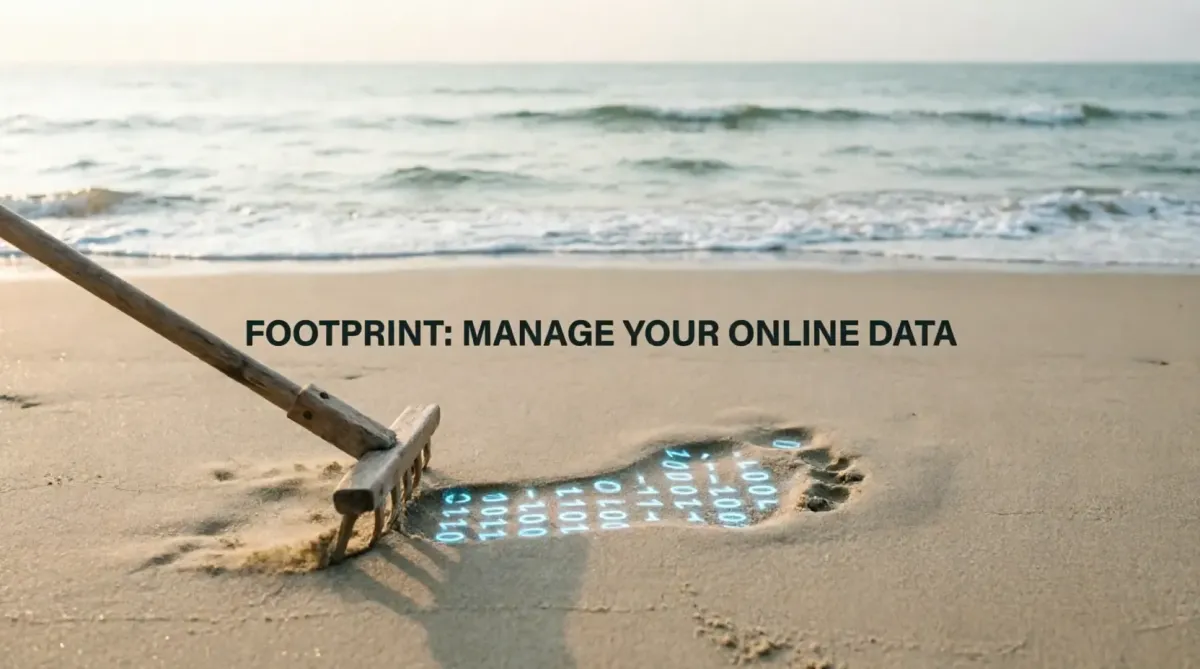
How to Manage Your Digital Footprint in the Age of AI Tracking (2026)
In 2026, every click, like, and location ping is no longer just data—it is fodder for massive AI models. These models create a "Digital Twin" of your personality, predicting your behavior, preferences, and even your future health risks. Managing your Digital Footprint has shifted from a matter of "cleaning up social media" to a strategic defense against automated tracking. At TipsForAITech, we are empowering you with the tools to take back control of your digital shadow.
This 1500+ word guide provides a roadmap for minimizing your AI exposure. Whether you are securing your private conversations or using a VPN for daily browsing, active footprint management is the key to 2026 privacy.
1. Auditing Your Current Digital Shadow
Before you can manage your footprint, you must see it. In 2026, use specialized Privacy Scanning Tools to identify every account associated with your email and phone number. Many AI-driven "Data Brokers" now hold your information; searching for yourself on these platforms is the first step toward identifying network-level vulnerabilities.
2. Opting Out of AI Training Sets
The biggest threat in 2026 is having your personal content used to train Large Language Models (LLMs). Ensure that you have adjusted the settings on your social media and cloud platforms to "Opt-Out" of data sharing for AI training. As we noted in our AI policy report, new regulations now grant you the "Right to be Forgotten" by AI models.
3. Using "Privacy-First" Search and Browsers
Traditional search engines in 2026 are tracking machines. Switch to decentralized or privacy-centric alternatives that do not store your search history. Using browsers like Brave or Librewolf helps block AI Fingerprinting—a technique where AI identifies you by your unique hardware and software settings, a concept we explore in our OS comparison guides.
4. Implementing "Data Poisoning" Techniques
A sophisticated 2026 strategy is "Data Poisoning" or "Noise Generation." By using browser extensions that periodically search for random, non-relevant terms in the background, you confuse the tracking algorithms, making your real profile harder to identify. This is a proactive defense similar to intelligent automated debugging.
5. The Role of Burner Identities and Aliases
Avoid using your primary email for every newsletter or service. In 2026, use Email Masking and "Burner Phone" apps for non-critical signups. This ensures that if one service is breached, your core identity remains protected, a vital practice for securing small business assets.
[Image showing the concept of an "Identity Firewall": Using aliases and masked emails to protect the core primary identity]6. Securing Biometric and Health Data
Your biometric data (face, fingerprints) is the ultimate identifier. In 2026, ensure your devices use local-only biometric storage. Avoid uploading "AI Headshots" or "Face-Swap" photos to unknown apps, as these are often used for advanced phishing and deepfake scams.
7. Regular "Privacy Spring Cleaning"
Set a quarterly reminder to delete inactive accounts and revoke "Third-Party App Access" to your primary Google or Apple ID. In 2026, these forgotten permissions are the biggest leaks in a remote professional's digital stack. Use Passkeys to eliminate the risk of password reuse.
8. Self-Hosting for Maximum Control
The ultimate way to manage your footprint is to not leave one on other people's servers. By hosting your own Nextcloud instance, you ensure that your files, calendars, and photos are never scanned by commercial AI trackers.
9. Using AI Writing Assistants Anonymously
Even when using advanced writing assistants, ensure you are not pasting sensitive personal information into the prompt window. Use local-running LLMs where possible to maintain maximum professional productivity without compromising privacy.
10. Conclusion: Being the Ghost in the Machine
In 2026, managing your digital footprint is not about hiding—it is about being intentional. It is about deciding what the world (and the algorithms) should know about you and what should remain private. By taking these small, consistent steps, you ensure that you are a person, not just a data point. The age of AI tracking is here, but you still have the power to decide how much of yourself you want to share. Protect your shadow, and you protect your future.
Stay at the forefront of the privacy and AI revolution by following TipsForAITech. Whether you're looking for data management tips or scheduling mastery, we are your partner in the 2026 technology landscape.