
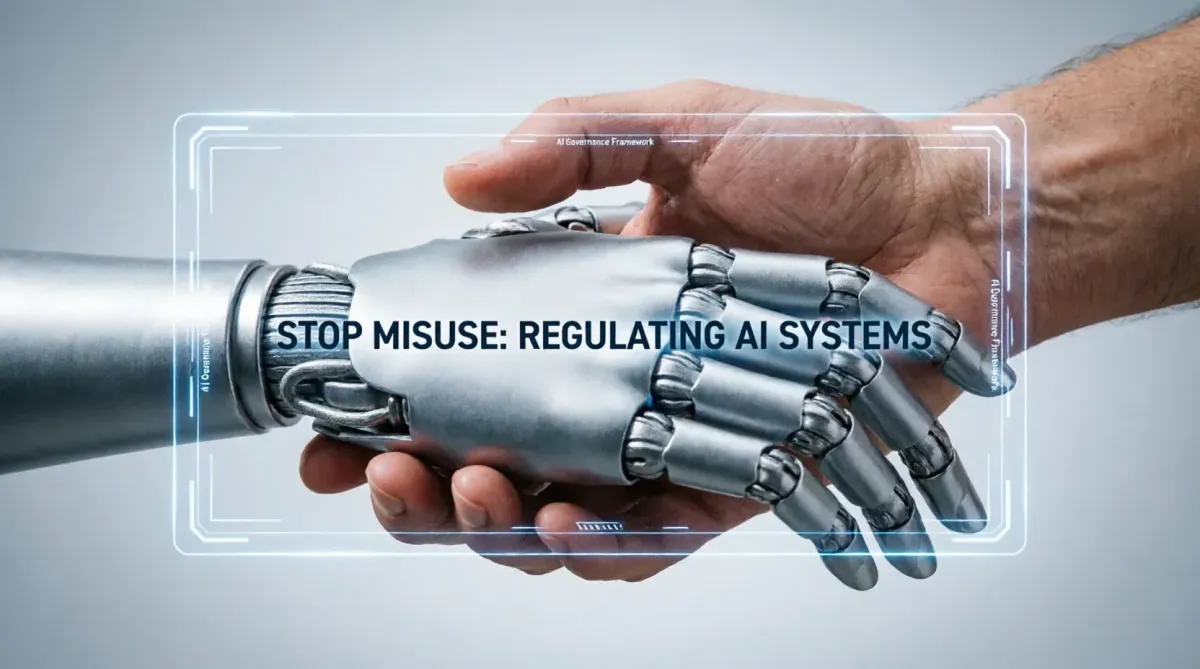
How Regulation Can Prevent the Misuse of Autonomous AI Systems in 2026
In 2026, we have reached a technological frontier where AI no longer just suggests—it acts. From autonomous vehicles navigating our streets to AI agents managing global supply chains, the power of autonomous systems is undeniable. However, with great autonomy comes the potential for profound misuse. At TipsForAITech, we believe that smart, flexible regulation is the only way to ensure that AI remains a force for good.
This 1500+ word comprehensive guide explores the evolving landscape of AI governance in 2026. Whether you are building AI applications or conducting academic research, understanding the regulatory guardrails is essential for survival in the 2026 tech economy.
1. The Risk of Autonomous Autonomy: Why We Need Rules
Autonomous AI systems in 2026 are capable of making decisions without real-time human intervention. While this increases efficiency, it also introduces risks such as algorithmic bias, unintended kinetic actions, and massive privacy breaches. Regulation provides a "Safety Protocol" that mandates human oversight at critical decision points, ensuring that the "Human-in-the-Loop" principle is more than just a suggestion.
As we noted in 10 ways AI is transforming technology, trust is the currency of the future, and trust requires accountability.
2. The EU AI Act 2026: A Global Benchmark
The European Union’s AI Act has become the gold standard for global regulation in 2026. It categorizes AI systems based on risk levels:
- Unacceptable Risk: Systems that perform social scoring or manipulate human behavior are strictly banned.
- High Risk: Systems used in healthcare, law enforcement, or autonomous transport must undergo rigorous audits and maintain absolute transparency.
- Limited Risk: Generative AI tools must be clearly labeled, a practice we advocate for in our content creation guides.
3. Preventing the Weaponization of AI
One of the most critical areas of 2026 regulation is the prevention of AI weaponization. International treaties now restrict the development of "Lethal Autonomous Weapons Systems" (LAWS). Regulation mandates that any autonomous system with the potential for physical impact must have "Hardware Kill-Switches" and hardcoded ethical constraints that prevent it from harming humans.
4. Algorithmic Transparency and Explainability
Regulation in 2026 mandates that AI cannot be a "Black Box." If an autonomous system denies a loan or diagnoses a patient, it must be able to provide an Explainable AI (XAI) report. This ensures that errors can be audited and corrected, which is vital for professional data management and legal compliance.
5. Mandatory Red-Teaming and Stress Testing
Before any autonomous system can be deployed in 2026, it must undergo "Adversarial Red-Teaming." Regulations require companies to try and "break" their own AI to find vulnerabilities. This prevents the misuse of AI by malicious actors who might try to exploit an autonomous agent for cyberattacks or financial fraud.
6. Data Sovereignty and Privacy Guardrails
Autonomous systems require massive amounts of data. 2026 regulations focus on Federated Learning and Differential Privacy, ensuring that AI can learn from data without ever actually seeing the private details of individuals. This aligns with the Edge AI privacy standards we see in modern voice assistants.
7. The Role of Independent AI Auditors
In 2026, a new industry has emerged: Third-Party AI Auditing. Much like financial audits, these independent firms certify that an autonomous system follows all local and international safety regulations. For developers using AI to write code, passing an AI audit is now a standard requirement before launching a product.
8. Combatting Deepfakes and Misinformation
Autonomous generative agents can spread misinformation at an unprecedented scale. 2026 laws require "Digital Watermarking" (C2PA standards) for all AI-generated content. This ensures that users can distinguish between human-led news and AI-synthesized content, a critical defense for fast-paced social media marketing.
9. Liability and the Legal Personhood Debate
If an autonomous car crashes, who is at fault? 2026 regulation has clarified Strict Liability Frameworks. Liability rests with the developers and operators, encouraging them to prioritize safety over speed. This legal clarity is essential for businesses automating their scheduling and operations.
10. Conclusion: Innovation Through Safety
Regulation is often seen as a barrier to innovation, but in 2026, it is seen as its greatest enabler. By providing a clear set of rules, regulation allows developers to build with confidence and consumers to use AI with peace of mind. Preventing the misuse of autonomous AI is not about stopping progress; it is about steering it toward a future that is safe, equitable, and human-centric.
Stay informed about the intersection of ethics and technology by following TipsForAITech. Whether you are interested in automation tools or improving your communication, we provide the expert guides you need for 2026.