
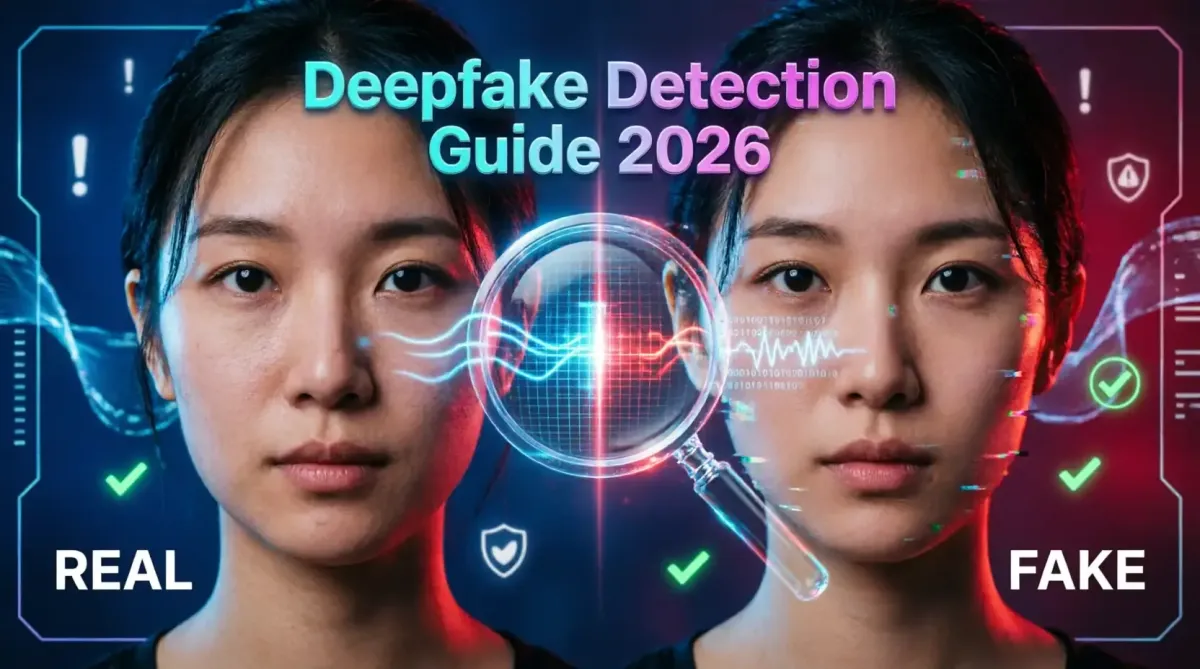
Deepfake Detection How to Spot AI Generated Content Before It Spreads
Deepfake technology has reached unprecedented sophistication in 2026, making it increasingly difficult to distinguish between authentic and AI generated content. These synthetic media creations, powered by advanced generative adversarial networks (GANs) and diffusion models, can manipulate faces, voices, and entire scenes with alarming realism. The proliferation of deepfakes poses serious threats to information integrity, personal privacy, financial security, and democratic processes. This comprehensive guide provides technical detection methodologies, visual analysis techniques, forensic tools, and behavioral indicators to help you identify AI generated content before it spreads. By mastering these detection strategies, you can protect yourself from misinformation, fraud, and manipulation while contributing to a more trustworthy digital ecosystem. Understanding deepfake detection is no longer optional; it is an essential digital literacy skill for navigating the modern information landscape.
Understanding Deepfake Technology in 2026
Deepfakes represent a convergence of artificial intelligence, computer vision, and graphics that enables the creation of hyper realistic synthetic media. Modern deepfake generation relies on several key technologies: generative adversarial networks (GANs) where generator and discriminator networks compete to produce increasingly realistic outputs, variational autoencoders (VAEs) that learn efficient data representations for face swapping, diffusion models that iteratively refine noise into coherent images, and neural radiance fields (NeRFs) that generate 3D consistent views from 2D images.
In 2026, deepfake creation has become democratized through user friendly applications requiring minimal technical expertise. What once demanded specialized knowledge and expensive hardware can now be accomplished with smartphone apps and cloud based services. This accessibility has led to an explosion of deepfake content across social media platforms, with estimates suggesting over 500,000 deepfake videos circulated online in 2026 alone, up from 100,000 in 2024.
The implications extend beyond entertainment. Malicious actors exploit deepfakes for financial fraud through CEO impersonation, political manipulation via fabricated speeches, reputation damage through fake compromising content, social engineering attacks using trusted person avatars, and market manipulation through false corporate announcements. Understanding the ethical dilemma of AI generated deepfakes and misinformation provides crucial context for why detection capabilities must evolve alongside generation technology.
Visual Indicators of Deepfake Content
Despite advancing sophistication, deepfakes often exhibit telltale visual artifacts that trained observers can identify. These indicators stem from the technical limitations of current generation models and the complexity of replicating human physiology and physics accurately.
Facial Inconsistencies:
- Unnatural Blinking Patterns: Early deepfakes rarely blinked; modern versions blink excessively or at unnatural intervals. Humans blink 15 to 20 times per minute with irregular timing. Deepfakes often display mechanical, periodic blinking or fail to blink during extended speech.
- Eye Reflection Mismatches: Light reflections in both eyes should mirror each other symmetrically. Deepfakes frequently show inconsistent reflections, different light source angles, or missing catchlights that indicate artificial generation.
- Pupil Irregularities: Pupils should be perfectly circular and equal in size. Deepfakes may display elliptical pupils, size asymmetry, or pupils that don't respond appropriately to lighting changes.
- Teeth and Tongue Artifacts: Mouth interiors are challenging to render. Look for blurred teeth, incorrect tooth count, unnatural gum lines, or tongues lacking texture detail.
Skin Texture and Lighting Issues:
- Overly Smooth Skin: Deepfakes often exhibit unnaturally smooth skin lacking pores, fine lines, and texture variation. Real skin shows subtle imperfections even under ideal lighting.
- Inconsistent Lighting: Face lighting should match the environment. Deepfakes frequently show facial lighting that contradicts scene shadows, multiple light source directions, or illumination that doesn't change with head movement.
- Color Bleeding: Skin tones may show unnatural color transitions at face boundaries, particularly around the jawline and hairline where face swapping occurs.
- Temperature Mismatches: Different parts of the face may exhibit inconsistent color temperature, indicating composite generation rather than unified capture.
Motion and Temporal Artifacts:
- Lip Sync Errors: Audio visual desynchronization where lip movements don't precisely match speech sounds. Look for delayed mouth movements, incorrect phoneme shapes, or lips moving without corresponding audio.
- Unnatural Head Movements: Jerky, robotic, or overly smooth head motions that lack the micro movements characteristic of natural human behavior.
- Flickering and Jitter: Frame to frame inconsistencies causing facial features to shimmer, shift position slightly, or change shape unnaturally during motion.
- Blurring During Motion: Real cameras capture motion blur consistently. Deepfakes may show sharp faces against blurred backgrounds or inconsistent blur patterns during rapid movement.
For content creators concerned about their own media being manipulated, learning how to create high quality marketing visuals using AI image tools includes understanding watermarking and authentication techniques that protect original content.
| Visual Indicator | What to Look For | Confidence Level | Easy to Spot |
|---|---|---|---|
| Lip Sync Errors | Mouth movements don't match audio | High | Yes |
| Unnatural Blinking | Too frequent, too rare, or mechanical | Medium | Yes |
| Skin Texture | Overly smooth, lacking pores | Medium | Moderate |
| Lighting Mismatch | Face lighting contradicts scene | High | Moderate |
| Eye Reflection | Asymmetric or missing catchlights | High | Difficult |
| Edge Artifacts | Blurring at face boundary | Medium | Difficult |
| Flickering | Frame to frame inconsistencies | High | Yes |
Audio Deepfake Detection Techniques
Voice cloning and audio deepfakes present unique detection challenges. Modern text to speech and voice conversion systems can replicate vocal characteristics with remarkable fidelity, but subtle artifacts remain detectable.
Vocal Quality Indicators:
- Unnatural Prosody: Speech rhythm, stress patterns, and intonation that sound mechanical or inconsistent with natural human variation. Listen for monotone delivery, exaggerated emphasis, or irregular pacing.
- Background Noise Inconsistencies: Real recordings contain consistent ambient noise. Deepfakes may show abrupt noise changes, unnaturally clean audio, or background sounds that don't match the claimed recording environment.
- Breathing Patterns: Natural speech includes inhalations, exhalations, and subtle respiratory sounds. AI generated audio often lacks realistic breathing or places breath sounds at unnatural intervals.
- Emotional Flatness: Despite technical quality, synthetic voices may lack genuine emotional nuance, micro variations in tone, or the subtle imperfections that convey authentic human feeling.
Technical Audio Analysis:
- Spectral Artifacts: Frequency analysis reveals unnatural patterns in the spectrogram, including missing high frequency content, harmonic inconsistencies, or artificial smoothing.
- Compression Mismatches: Audio that has been regenerated may show different compression characteristics than claimed source material, detectable through forensic analysis.
- Phase Inconsistencies: Stereo recordings should maintain coherent phase relationships. Deepfakes may exhibit phase anomalies indicating digital manipulation.
For protecting yourself from voice based social engineering, understanding how to spot and avoid AI generated phishing scams includes recognizing synthetic voice attempts in phone based fraud.
Technical Detection Tools and Software
Beyond visual inspection, specialized tools employ machine learning algorithms and forensic techniques to detect deepfakes with greater accuracy than human observation alone.
AI Powered Detection Platforms:
- Microsoft Video Authenticator: Analyzes videos and photos to provide a confidence score indicating likelihood of manipulation. Examines subtle grayscale elements, reflections, and other features difficult for humans to detect.
- Intel FakeCatcher: Claims 96 percent accuracy by analyzing blood flow patterns through photoplethysmography (PPG). Real humans exhibit subtle color changes from blood circulation that deepfakes struggle to replicate accurately.
- Deepware Scanner: Open source tool that runs multiple detection algorithms and provides consensus scoring. Particularly effective for identifying GAN generated content.
- Sensity AI: Enterprise platform offering real time deepfake detection for video verification, particularly useful for financial services and identity verification.
Forensic Analysis Techniques:
- Metadata Examination: Analyze file metadata for inconsistencies in creation dates, software signatures, camera models, and editing history. Tools like ExifTool reveal hidden information that may indicate manipulation.
- Error Level Analysis (ELA): Detects areas of an image that have been compressed or modified at different levels, revealing potential edits or composites.
- PRNU Analysis: Photo Response Non Uniformity examines sensor noise patterns unique to each camera. Inconsistencies suggest composite images from multiple sources.
- Compression Artifact Analysis: Different compression levels across image regions indicate potential manipulation. Forensic tools quantify these variations objectively.
Browser Extensions and Mobile Apps:
- InVID Verification Plugin: Chrome and Firefox extension providing reverse image search, metadata analysis, and thumbnail extraction for video verification.
- Reality Defender: Mobile app offering real time deepfake detection for photos and videos captured or received on smartphones.
- Truepic: Provides image authentication and tamper detection, particularly useful for verifying photos in journalistic and legal contexts.
For maintaining privacy while using detection tools, reviewing how to manage your digital footprint in the age of AI tracking ensures your verification activities don't compromise personal data security.
Contextual and Source Verification Methods
Technical analysis alone is insufficient. Effective deepfake detection requires contextual investigation and source verification to establish content authenticity.
Source Authentication:
- Original Source Identification: Use reverse image search (Google Images, TinEye, Yandex) to find the earliest appearance of content online. Deepfakes typically appear later than authentic versions.
- Account Verification: Examine the posting account's history, verification status, follower patterns, and previous content. Newly created accounts or those with suspicious activity patterns warrant skepticism.
- Cross Reference Multiple Sources: Legitimate newsworthy content appears across multiple credible outlets. Single source claims, especially from unknown entities, require additional verification.
- Domain Analysis: For web based content, check domain registration dates, ownership information, and website credibility. Fake news sites often use recently registered domains with privacy protection.
Temporal Consistency Checks:
- Timeline Verification: Does the content align with known events, weather conditions, or seasonal indicators? Deepfakes may show anachronistic elements or contradict established timelines.
- Geolocation Validation: Use tools like Google Earth, satellite imagery, and landmark recognition to verify claimed locations match visual evidence in the content.
- Shadow and Sun Position: Tools like SunCalc can verify whether shadows and lighting match the claimed time and location of recording.
Content Plausibility Assessment:
- Claim Evaluation: Does the content make extraordinary claims requiring extraordinary evidence? Sensational or emotionally manipulative content warrants heightened scrutiny.
- Expert Consultation: For specialized content (medical, scientific, technical), consult subject matter experts who can identify technical inaccuracies or impossible scenarios.
- Logical Consistency: Examine whether all elements of the content cohere logically. Deepfakes may contain subtle contradictions or physically impossible scenarios.
Understanding why transparency in AI decision making is crucial for trust helps evaluate whether content sources disclose AI generation or manipulation appropriately.
Biological Signal Detection
Advanced detection methods analyze biological signals that are extremely difficult for AI to replicate convincingly, providing high confidence authentication.
Photoplethysmography (PPG): This technique detects subtle color changes in skin caused by blood pulsing through facial capillaries. Real humans exhibit periodic color variations at heart rate frequency (typically 60 to 100 beats per minute) that are nearly impossible for deepfakes to simulate accurately. Specialized software analyzes video frame by frame to extract these signals.
Micro Expression Analysis: Genuine emotions trigger involuntary micro expressions lasting 1/25 to 1/5 of a second. These fleeting facial movements are difficult to fake consciously and challenging for AI to replicate with temporal precision. Detection systems trained on micro expression databases can identify synthetic content lacking these subtle indicators.
Respiratory Patterns: Natural breathing causes subtle chest and shoulder movements, slight head bobbing, and periodic variations in vocal characteristics. Deepfakes often fail to synchronize these multiple respiratory indicators consistently throughout extended sequences.
Pupil Response: Real pupils dilate and constrict in response to lighting changes and cognitive load. Advanced detection systems track pupil dynamics to identify unnatural patterns indicative of synthetic generation.
Platform Specific Detection Strategies
Different platforms present unique deepfake challenges requiring tailored detection approaches.
Social Media (Facebook, Instagram, Twitter/X):
- Enable platform deepfake detection labels where available
- Check for "manipulated media" warnings added by fact checkers
- Examine engagement patterns; viral deepfakes often show bot amplification
- Review comment sections for early debunking or verification
- Be skeptical of content designed to trigger strong emotional reactions
Video Platforms (YouTube, TikTok):
- Check video upload date against claimed event timeline
- Review creator history and verification status
- Look for YouTube's "altered or synthetic content" disclosures
- Analyze video quality inconsistencies suggesting composite content
- Use YouTube's built in fact check information panels
Messaging Apps (WhatsApp, Telegram, Signal):
- Treat forwarded content with extreme skepticism
- Verify through external sources before sharing
- Be wary of content claiming urgency or requiring immediate action
- Check if content appears on fact checking websites
- Remember that encrypted platforms lack automated detection
News Websites:
- Verify website credibility through media bias fact check resources
- Look for author credentials and contact information
- Check if reputable outlets are reporting the same story
- Examine image and video sources cited in articles
- Be cautious of sites mimicking legitimate news organizations
For protecting mobile devices from deepfake based attacks, understanding how to secure your mobile device from advanced cyber threats includes defending against AI powered social engineering.
Deepfake Prevention and Content Authentication
Beyond detection, proactive measures can prevent deepfake creation and establish content authenticity.
Content Watermarking: Cryptographic watermarks embedded at capture time provide tamper evident authentication. Standards like C2PA (Coalition for Content Provenance and Authenticity) enable cameras and smartphones to sign content cryptographically, creating a verifiable chain of custody.
Blockchain Verification: Recording content hashes on blockchain creates immutable timestamps proving existence at specific moments. This prevents retroactive manipulation claims and establishes provenance.
Digital Identity Systems: Verified digital identities for content creators make impersonation more difficult. Platforms implementing strong creator verification reduce deepfake account creation.
Personal Protection Strategies:
- Limit publicly available photos and videos that could train deepfake models
- Adjust social media privacy settings to restrict image access
- Use reverse image search periodically to detect unauthorized use of your images
- Consider adding subtle noise to public photos to disrupt facial recognition training
- Register with deepfake monitoring services that alert you to potential misuse
Understanding how your data is used to train AI models and how to protect it helps minimize your digital footprint available for deepfake generation.
Legal and Regulatory Frameworks
Governments worldwide are implementing regulations to combat malicious deepfakes while balancing free expression concerns.
Current Regulations:
- EU AI Act: Requires clear labeling of AI generated content and prohibits certain deepfake applications without consent
- US State Laws: Multiple states have enacted deepfake regulations, particularly targeting non consensual intimate imagery and election interference
- China Regulations: Requires explicit labeling of AI generated content and platform liability for unmarked deepfakes
- Platform Policies: Major platforms enforce policies requiring disclosure of synthetic media, with violations resulting in content removal and account suspension
Reporting Mechanisms:
- Report malicious deepfakes to platform moderation teams
- File complaints with law enforcement for criminal deepfake use (fraud, harassment, non consensual imagery)
- Submit deepfakes to research organizations for detection algorithm improvement
- Document evidence including URLs, timestamps, and screenshots for legal proceedings
For understanding broader regulatory context, reviewing understanding the EU AI Act what it means for businesses worldwide provides insight into compliance requirements for AI generated content.
Building Critical Media Literacy Skills
Long term protection against deepfakes requires developing critical thinking and media literacy capabilities.
Educational Strategies:
- Source Skepticism: Default to questioning unfamiliar sources rather than accepting content at face value
- Emotional Awareness: Recognize when content triggers strong emotions designed to bypass rational evaluation
- Verification Habits: Make fact checking a routine practice before sharing any content
- Technical Understanding: Stay informed about AI capabilities and limitations to maintain realistic threat assessment
- Diverse Information Diet: Consume news from multiple perspectives to identify outliers and potential misinformation
Teaching Others:
- Share detection techniques with family and colleagues
- Discuss deepfake examples to build pattern recognition
- Encourage verification before sharing in group chats
- Model critical thinking in your own content consumption
- Support media literacy education in schools and communities
For addressing algorithmic bias that can affect detection tools, understanding addressing bias in AI how to build fairer algorithms ensures detection systems work equitably across diverse populations.
Future of Deepfake Detection
The deepfake detection landscape continues evolving as both generation and detection technologies advance.
Emerging Technologies:
- Quantum Detection: Quantum computing may enable analysis of patterns invisible to classical computers
- Multi modal Analysis: Combining visual, audio, text, and metadata analysis for comprehensive assessment
- Real time Detection: Browser and platform integration providing instant deepfake warnings during content consumption
- Blockchain Provenance: Universal content authentication standards making verification automatic and transparent
- Collaborative Defense: Shared detection databases where platforms pool threat intelligence
Ongoing Challenges:
- Detection algorithms must continuously retrain as generation techniques improve
- Privacy concerns around widespread content scanning and analysis
- Balancing detection with legitimate uses of synthetic media (entertainment, education)
- Global coordination on standards and regulations
- Resource requirements for comprehensive detection infrastructure
Understanding the future of content creation how generative AI is changing the game helps anticipate how detection needs will evolve alongside creation capabilities.
Practical Detection Workflow
Follow this systematic approach when evaluating potentially manipulated content:
Step 1: Initial Assessment (30 seconds)
- Does the content trigger strong emotions?
- Is the source credible and verified?
- Are there obvious visual or audio anomalies?
- Does the claim seem plausible?
Step 2: Visual Inspection (2-3 minutes)
- Check for lip sync accuracy
- Examine eye reflections and blinking
- Look for skin texture inconsistencies
- Verify lighting matches environment
- Watch for flickering or jitter
Step 3: Technical Analysis (5-10 minutes)
- Run reverse image/video search
- Examine metadata if accessible
- Use detection tools like Deepware or Microsoft Authenticator
- Check for compression artifacts
Step 4: Contextual Verification (10-15 minutes)
- Cross reference with trusted news sources
- Verify timeline and geolocation
- Check fact checking websites (Snopes, PolitiFact, FactCheck.org)
- Consult subject matter experts if needed
Step 5: Decision and Action
- If authentic: Share responsibly with context
- If uncertain: Do not share; seek additional verification
- If fake: Report to platform; warn others if appropriate
- Document findings for future reference
Conclusion: Vigilance in the Age of Synthetic Media
Deepfake detection in 2026 requires a multi layered approach combining technical tools, critical thinking, and contextual awareness. No single method provides perfect accuracy, but systematic application of the techniques outlined in this guide significantly improves your ability to identify AI generated content before it spreads.
Remember that deepfake technology will continue advancing, making detection increasingly challenging. Stay informed about new detection tools, update your skills regularly, and maintain healthy skepticism toward sensational content. The responsibility for combating deepfakes extends beyond individual vigilance to platform accountability, regulatory frameworks, and technological innovation.
By developing strong detection capabilities and sharing this knowledge with others, you contribute to a more resilient information ecosystem. Question sources, verify claims, examine evidence, and think critically. In an era where seeing is no longer believing, these skills are not just useful; they are essential for informed citizenship and personal security in the digital age.
The fight against malicious deepfakes is ongoing, but armed with the right knowledge and tools, you can navigate the synthetic media landscape with confidence and protect yourself from manipulation. Stay curious, stay skeptical, and stay vigilant.