
Intel vs. AMD in 2026: Which CPU Offers the Best Value?
In 2026, the battle for the "brain" of your computer has reached a fever pitch. We are no longer just looking at raw clock speeds; the conversation has shifted toward AI-on-chip capabilities, energy efficiency, and total platform longevity. Whether you are building a high-end workstation for full-stack development or a budget gaming rig, choosing between Intel and AMD is a critical decision. At TipsForAITech, we are diving deep into the 2026 benchmarks to help you find the best value for your money.
This 1500+ word comprehensive guide compares the heavyweights of the silicon world. Whether you are deciding on a new OS environment or optimizing your productivity stack, the CPU is the foundation of your experience.
1. Intel’s Strategy in 2026: The "Lunar Lake" and Beyond
In 2026, Intel has doubled down on its Hybrid Architecture. With the full rollout of the 16th and 17th Gen (Lunar Lake and Arrow Lake refreshments), Intel is winning the battle for mobile efficiency.
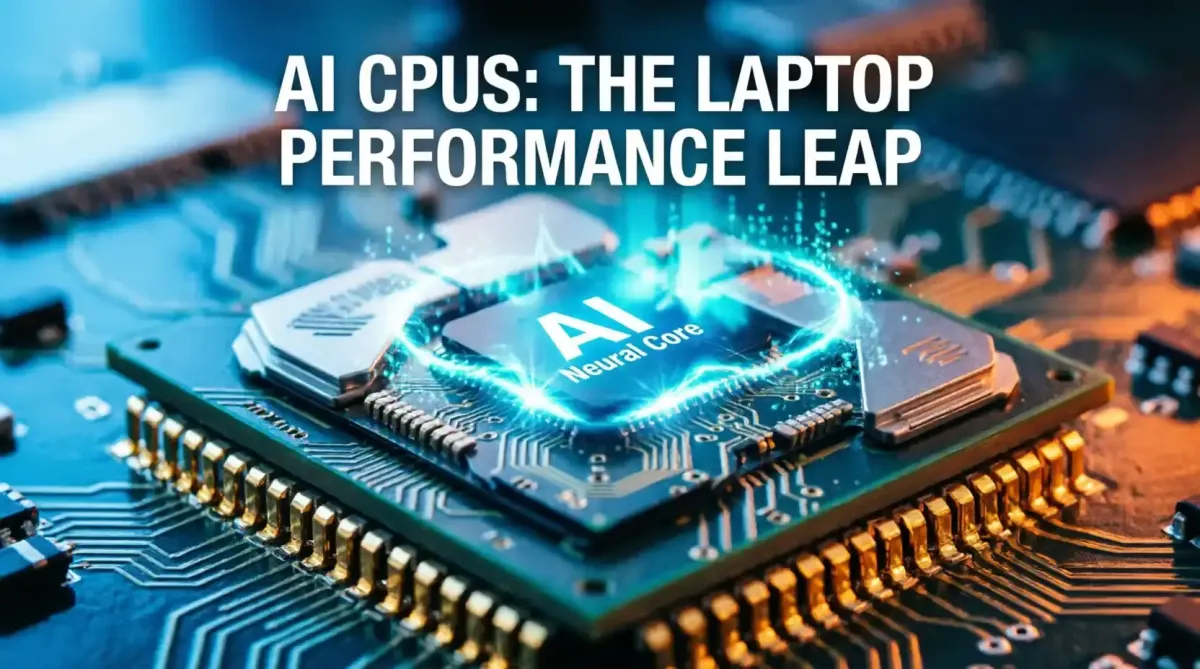
The Edge: Intel’s integrated NPU (Neural Processing Unit) is currently the leader for local AI tasks, making it the better choice for professionals using AI writing assistants and local LLMs.
2. AMD’s Strategy in 2026: The Power of Zen 6
AMD’s Zen 6 architecture has officially arrived in 2026, continuing its dominance in multi-threaded performance. AMD remains the king of the "Chiplet" design, allowing them to offer more cores for a lower price than Intel in the mid-range sector.
The Edge: For heavy-duty tasks like simulating complex robotics data or video rendering, AMD’s Ryzen 9 series offers superior raw performance per dollar.
3. Gaming Performance: The 3D V-Cache Factor
For gamers in 2026, the choice often boils down to one thing: L3 Cache. AMD’s Ryzen "X3D" models continue to outperform Intel in gaming benchmarks by massive margins, thanks to their stacked cache technology. If your primary goal is high-frame-rate gaming, AMD is the clear winner for building a high-performance machine.
4. Power Efficiency and Heat Management
In 2026, electricity costs and thermal throttling are major concerns. Intel has significantly improved its "Performance-per-Watt" with its 18A process node. However, AMD’s Zen 6 chips still tend to run cooler under heavy loads. This makes AMD a favorite for self-hosted home servers that need to run 24/7 without massive cooling bills.
5. Platform Longevity: Socket AM5 vs. Intel LGA 1851
Value isn't just about today; it's about the future.
- AMD: Their commitment to the AM5 socket until 2027 means you can upgrade your CPU without buying a new motherboard.
- Intel: The LGA 1851 socket is powerful, but historically, Intel changes sockets more frequently. For budget-conscious users, AMD offers better long-term financial resource management.
6. Integrated Graphics: The Handheld Revolution
In 2026, you don't always need a dedicated GPU. Both Intel (Arc Graphics) and AMD (Radeon 800M series) have made integrated graphics powerful enough for 1080p gaming. This is driving the robotics and mobile computing trends, where space and power are limited.
7. AI Performance: NPU Benchmarks
As we enter the era of "AI PCs," the TOPS (Trillions of Operations Per Second) of the NPU matters. In 2026, Intel’s "AI Boost" technology is slightly more optimized for mainstream Windows applications, while AMD’s Ryzen AI is preferred by Linux users and open-source security researchers.
8. Security Features: Hardware-Level Protection
Both giants have integrated hardware-level protections against modern threats. Intel’s Threat Detection Technology and AMD’s Shadow Stack are essential for securing small businesses. Using these with Passkey authentication creates a virtually unhackable environment.
9. Using AI Writing Assistants for Benchmarking Reports
Hardware reviewers and IT managers use advanced writing assistants to condense thousands of benchmark data points into readable purchase guides, ensuring maximum professional productivity during the upgrade cycle.
10. Conclusion: Who Wins the Value Crown in 2026?
The winner depends on your "Why."
Choose AMD if you are a gamer or a creator who values multi-core power and long-term motherboard compatibility. AMD is currently the king of "Future-Proofing."
Choose Intel if you are a mobile professional or an AI enthusiast who needs the best integration with Windows and the most efficient NPU for local AI tasks. Intel is the king of "Mobile Productivity."
In 2026, there are no bad choices—only choices that are better suited for your specific workflow. The competition between Intel and AMD has forced both to innovate faster than ever, and as a result, the consumer is the ultimate winner. Happy building!
Stay at the forefront of the hardware and AI revolution by following TipsForAITech. Whether you're looking for data management tips or scheduling mastery, we are your partner in the 2026 technology landscape.