How Machine Learning Algorithms are Personalizing Your Shopping Experience in 2026
The days of scrolling through endless rows of irrelevant products are officially over. In 2026, shopping has transformed from a search-based activity into a discovery-based experience. Behind this magic is Machine Learning (ML), working silently to curate a digital storefront tailored specifically to you. At TipsForAITech, we are seeing how 2026’s retail environment has moved past basic "recommendations" into Predictive Personalization.
This 1500+ word deep dive explores how ML algorithms are rewriting the retail playbook. Whether you are leveraging AI for marketing or managing e-commerce data, understanding these algorithms is the key to mastering the 2026 economy.
1. The Shift to Intent-Based Personalization
In the early 2020s, algorithms suggested products based on what you *just* bought. In 2026, Advanced ML Models predict what you will need next. By analyzing multi-dimensional data—including your current location, weather patterns, and even subtle changes in your browsing speed—the AI can infer your intent. If you’re browsing late at night with low intensity, it might show you relaxation products; if you’re searching rapidly in the morning, it highlights efficiency-focused essentials.
As we noted in 10 ways AI is transforming technology, the focus in 2026 is on "Anticipatory Logic."
2. Collaborative Filtering and Beyond
While Collaborative Filtering (the "customers who bought this also bought..." model) still exists, it has evolved into Neural Collaborative Filtering. In 2026, these algorithms don't just find similar users; they find similar "Life Stages." If the ML identifies that you have recently moved into a new home, it will curate your shopping feed to prioritize home-warming items, even if you haven't explicitly searched for them yet.
3. Visual Search and Semantic Image Recognition
Shopping in 2026 is highly visual. Using Computer Vision, you can snap a photo of a stranger’s shoes or a piece of furniture in a movie, and the ML algorithm will instantly find the exact match or the closest aesthetic equivalent in its inventory. This "Semantic Image Search" allows for a seamless transition from inspiration to purchase.
This is a major part of fast-paced social media marketing, where "shoppable content" is generated dynamically by AI.
4. Hyper-Personalized Pricing and Promotions
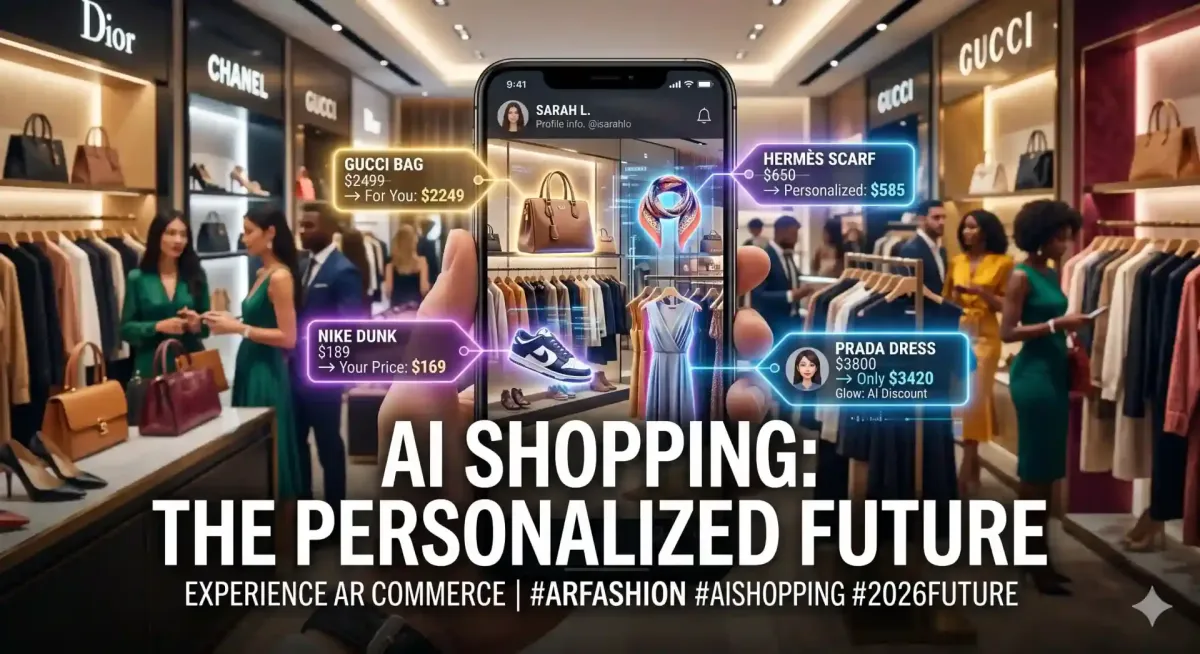
In 2026, the price you see might be unique to you. Dynamic Pricing Algorithms analyze your price sensitivity, loyalty, and the current market demand to offer real-time discounts. This isn't just about higher prices; it’s about offering "Loyalty Rewards" at the exact moment they are most likely to influence a purchase. By integrating with AI scheduling tools, brands can even time their promotions for when you actually have the time to shop.
5. The Role of Conversational AI Assistants
As highlighted in our guide on Advanced NLP Voice Assistants, shopping is now a dialogue. "Find me a sustainable jacket that fits my existing wardrobe color palette and is suitable for a trip to Iceland." The AI analyzes your past purchases (your digital closet) and current inventory to provide a curated selection, reducing the cognitive load of decision-making.
6. Virtual Try-Ons and Augmented Reality (AR)
Machine Learning handles the complex task of "Body Mapping" for virtual try-ons. In 2026, your phone or AR glasses can overlay clothes onto your reflection with perfect drape and physics. This has drastically reduced return rates, as customers can see exactly how an item fits their specific body type before hitting buy. This is a primary use case for generative AI in commerce.
7. Ethical Personalization: The Privacy Balance
At TipsForAITech, we emphasize the "Trust Economy." In 2026, the best algorithms are those that prioritize Data Sovereignty. Using Federated Learning, shopping apps can personalize your experience by training models locally on your device without your personal data ever leaving your phone. This ensures a high-quality experience without compromising privacy.
8. Predictive Supply Chain Integration
Personalization doesn't stop at the UI. Behind the scenes, ML predicts demand at a hyper-local level. If an algorithm sees a rising trend for a specific product in Dhaka, it automatically triggers stock movement to the nearest fulfillment center. This ensures "Same-Hour Delivery," which is the standard for 2026 retail.
9. Reinforcement Learning for Continuous Improvement
The shopping experience gets better with every click. Reinforcement Learning (RL) agents treat every interaction as a "reward" or "penalty." If you ignore a recommendation, the AI learns to pivot its strategy. This is why your feed looks completely different today than it did a month ago—it is constantly evolving to match your changing tastes.
10. Conclusion: The Shop of One
In 2026, every consumer has their own "Shop of One." Machine Learning has turned the internet into a personal shopper that knows your style, your budget, and your needs better than you do. As a consumer, this means more time and less stress; as a business, it means unprecedented loyalty. The future of shopping is not just digital—it’s personal.
Stay ahead of the e-commerce and AI revolution by following TipsForAITech. Whether you are interested in automation tools, writing assistants, or building AI applications, we are your guide to the technology of 2026.