
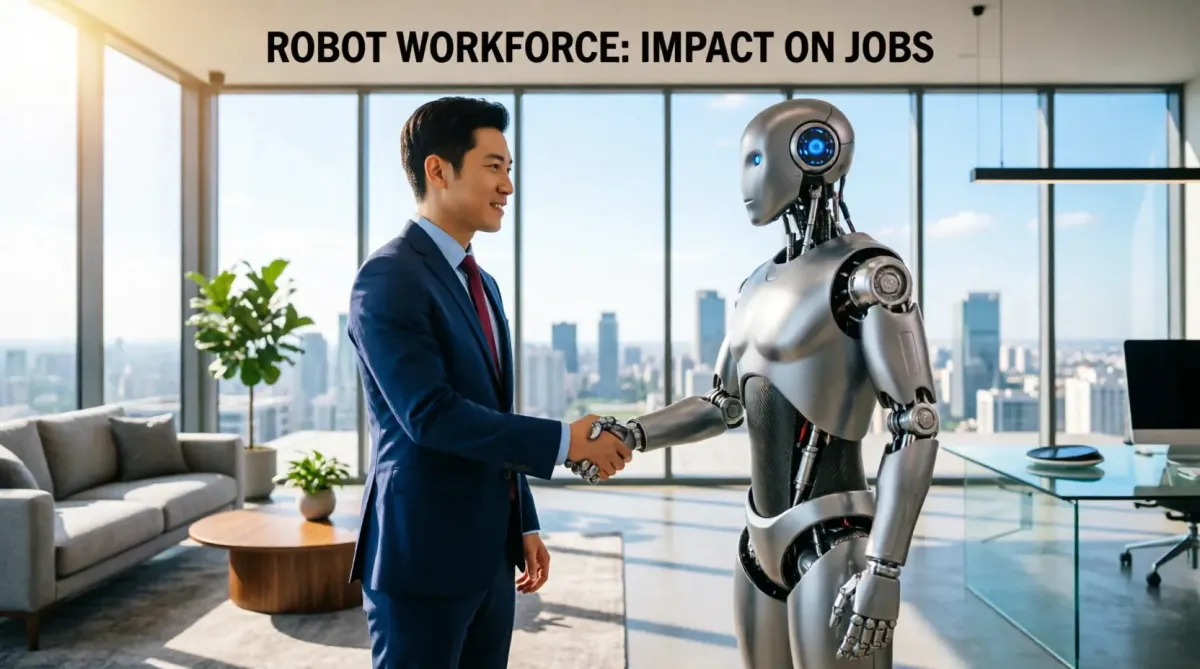
The Rise of Humanoid Robots: How They Will Impact the Workforce in 2026
In 2026, the boundary between science fiction and reality has blurred. Walking through a modern warehouse or manufacturing plant, you are increasingly likely to see bipedal machines working alongside humans. Humanoid Robots, powered by advanced Large Behavior Models (LBMs), are no longer experimental prototypes—they are becoming essential members of the global workforce. At TipsForAITech, we are analyzing how this robotic revolution is redefining the nature of labor and productivity.
This 1500+ word comprehensive guide explores the impact of humanoid robotics on the economy. Whether you are tracking AI trends or monitoring government regulations, understanding the robotic shift is crucial for future-proofing your career.
1. The Big Players of 2026: Optimus, Figure, and Apollo
The race for the dominant humanoid platform is in full swing. Tesla’s Optimus Gen-3 is now performing complex tasks in Gigafactories, while Figure AI has integrated OpenAI’s vision models to allow robots to converse and reason while they work. Apptronik’s Apollo is being deployed in retail logistics, proving that robots can navigate human environments safely. This leap in hardware is a direct result of the computer vision breakthroughs we’ve seen in recent years.
2. Addressing the Global Labor Shortage
In 2026, the primary driver for humanoid adoption isn't replacing humans, but filling the Labor Gap. With aging populations and a decline in interest for "3D" jobs (Dirty, Dull, and Dangerous), humanoid robots are stepping in to handle repetitive tasks like palletizing, heavy lifting, and hazardous material handling. This allows businesses to maintain high productivity despite demographic shifts.
3. The "General Purpose" Advantage
Unlike traditional industrial robots that are bolted to the floor, humanoid robots are General Purpose. They use the same tools, doorways, and interfaces designed for humans. In 2026, a robot can be trained via Imitation Learning—a human wears a VR suit to perform a task, and the robot learns the motion instantly. This is a massive shift from traditional programming, much like the AI-assisted coding revolution.
4. Collaborative Robots (Cobots) and Human Safety
Safety is the top priority in 2026. Modern humanoids use Touch Sensitivity and proximity sensors to ensure they never cause harm to their human colleagues. We are entering the era of "Cobotics," where humans handle the creative and strategic decisions while robots execute the physical labor, a synergy we also see in virtual office collaboration.
5. The Economic Impact: RaaS (Robots as a Service)
In 2026, you don't need to buy a $50,000 robot. The Robots as a Service (RaaS) model allows companies to "rent" humanoids on a monthly subscription. This makes automation accessible to small businesses, transforming their operational costs into a manageable SaaS-like expense.
6. Impact on Specific Sectors: Healthcare and Logistics
While manufacturing is the first adopter, 2026 is seeing humanoids enter Healthcare. They assist with lifting patients and delivering supplies, reducing nurse burnout. In logistics, they are the backbone of "Dark Warehouses," where they operate 24/7 in total darkness, significantly improving the efficiency of global supply chains.
7. The Ethical and Social Debate
The rise of humanoids brings significant questions about Universal Basic Income (UBI) and "Robot Taxes." Governments in 2026 are debating how to redistribute the wealth generated by robotic labor. As we discussed in our EU AI Act guide, ethical deployment is as important as technical capability.
8. Reskilling for the Robotic Era
The workforce isn't disappearing; it's evolving. In 2026, the most in-demand skills are Robot Fleet Management and Hardware Maintenance. Professionals are using scheduling mastery to coordinate between human and robotic shifts, ensuring a seamless workflow.
9. Security: Protecting Robots from Cyber Threats
A humanoid robot is essentially a mobile computer. In 2026, Robotic Cybersecurity is a major industry. Protecting robots from being hijacked or manipulated is vital. Implementing passkeys and encrypted communication channels is mandatory for industrial robotics.
10. Conclusion: A New Era of Human-Robot Synergy
The rise of humanoid robots in 2026 is not an "us vs. them" scenario. It is a new era of synergy. By taking over the physical burdens that have historically limited us, these machines are freeing the human spirit to focus on innovation, empathy, and complex problem-solving. The workforce of the future is a combined force of human heart and robotic precision. The future is walking toward us—are you ready to walk with it?
Stay at the forefront of the robotics and AI revolution by following TipsForAITech. Whether you're looking for development frameworks or writing assistants, we are your partner in the 2026 technology landscape.