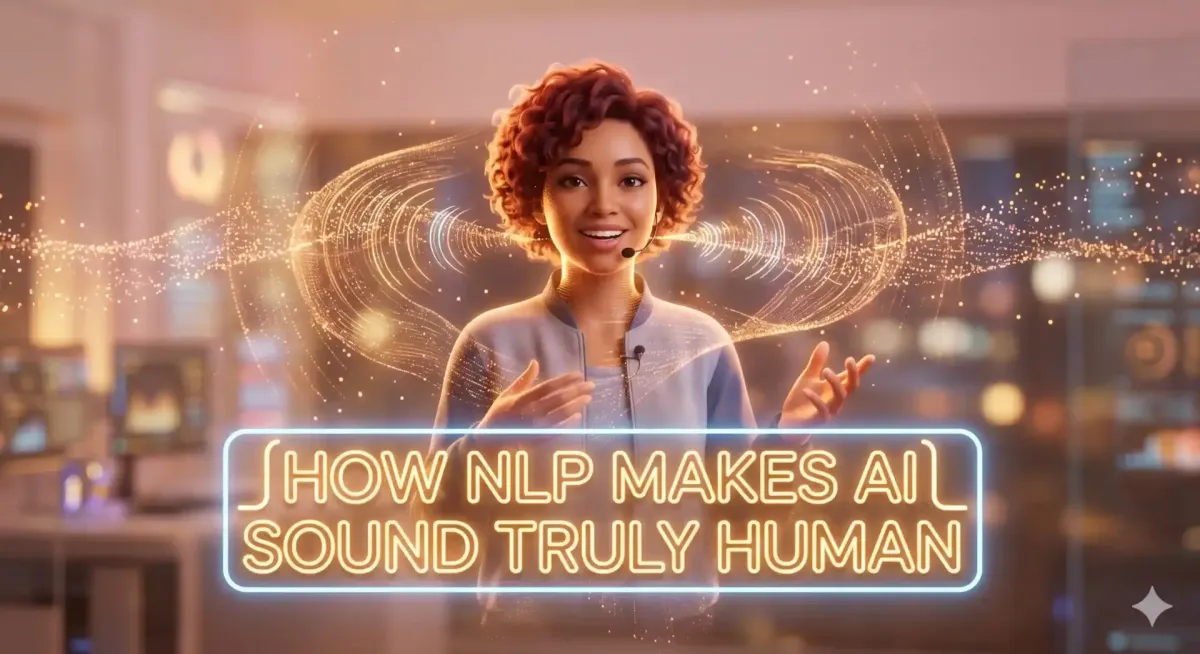
How NLP is Making Chatbots Sound More Human Than Ever in 2026
We have all had the frustrating experience of talking to a chatbot that feels like a wall of rigid, pre-programmed responses. But in 2026, that era is a distant memory. Today, interacting with a high-end AI assistant feels less like "inputting data" and more like a fluid conversation with a colleague. This shift is powered by the rapid evolution of Natural Language Processing (NLP). At TipsForAITech, we are diving deep into the tech that has finally bridged the gap between silicon and soul.
This 1500+ word exploration breaks down the mechanics of modern conversational AI. Whether you are learning to craft perfect prompts or building your own AI-powered apps, understanding the "humanization" of NLP is essential for 2026.
1. The Move from Keywords to Semantic Intent
Earlier chatbots relied on "keyword matching"—if you didn't use the exact word, they were lost. In 2026, NLP uses Semantic Understanding. The AI doesn't just look at the words; it looks at the intent and the relationship between those words. This allows chatbots to handle slang, metaphors, and even sarcasm with surprising accuracy. As we discussed in 10 ways AI is transforming technology, this leap in understanding is what makes 2026 a milestone year.
2. Sentiment Analysis: The AI’s Emotional Compass
A human-like conversation requires emotional intelligence. Modern NLP models are equipped with advanced Sentiment Analysis. In 2026, a chatbot can detect if a user is frustrated, happy, or confused based on their word choice and sentence structure. If the AI detects frustration, it automatically shifts its tone to be more empathetic and de-escalates the situation—a critical feature for AI-driven customer service strategies.
3. Mastering Long-Term Context Retention
The "Goldfish Memory" of early AI is gone. In 2026, NLP models utilize Extended Context Windows and RAG (Retrieval-Augmented Generation). This means the chatbot remembers what you said ten minutes ago, or even in a session from last week. This persistence makes the AI feel like a personal assistant who truly knows you, much like the Advanced NLP Voice Assistants we use today.
4. Neural TTS and the "Voice of Empathy"
When NLP is combined with Neural Text-to-Speech (TTS), chatbots don't just write like humans; they sound like them. In 2026, voice-enabled chatbots can handle "Natural Pauses," "Um/Ah" fillers, and emotional inflections. This makes interactions in AI-driven virtual offices feel incredibly natural, as if you are speaking to a real person across the globe.
5. Breaking the Barrier of Accents and Dialects
2026's NLP has finally mastered the diversity of human speech. Modern models are trained on massive, global datasets that include thousands of regional accents and dialects. Whether you are speaking in a specific regional Bengali dialect or British English, the AI adapts its responses to mirror your linguistic style, fostering a sense of familiarity and trust.
6. Zero-Latency Real-Time Interaction
One of the biggest "tells" of a robot used to be the delay between a question and an answer. In 2026, Edge AI and optimized inference models have reduced latency to near-zero. Chatbots can now interrupt, be interrupted, and respond in real-time, matching the rhythm of human speech. This technical efficiency is also a major focus for future machine learning trends.
7. The Role of Personalization through Data Management
By leveraging seamless AI-driven data management, chatbots can pull from your specific history to provide "Human-Grade" personalized advice. Instead of saying "I don't know," the AI says, "Based on our last project meeting, here is the updated budget you were looking for." This proactive intelligence is the hallmark of 2026's conversational agents.
8. Ethical AI: The Balance of Authenticity
At TipsForAITech, we believe that transparency is key. Even as chatbots sound more human, it is ethically vital that they identify themselves as AI. In 2026, the goal is not to trick the user into thinking they are talking to a human, but to provide a human-quality experience that is helpful, respectful, and efficient.
9. Integrating with AI Writing Assistants
Modern chatbots often use advanced writing assistant kernels to ensure their prose is professional and error-free. This ensures that every response is not just smart, but also clear and easy to understand, reflecting the high standards of professional communication in 2026.
10. Conclusion: The Future of Connection
NLP has turned the chatbot from a novelty into a necessity. In 2026, these intelligent agents are more than just tools; they are the front lines of our digital interactions. By making chatbots sound more human, NLP is not just improving technology—it is improving how we connect with the information we need every day.
Stay ahead of the conversational AI revolution by following TipsForAITech. Whether you're looking for automation productivity or scheduling mastery, we are your partner in the 2026 technology landscape.