
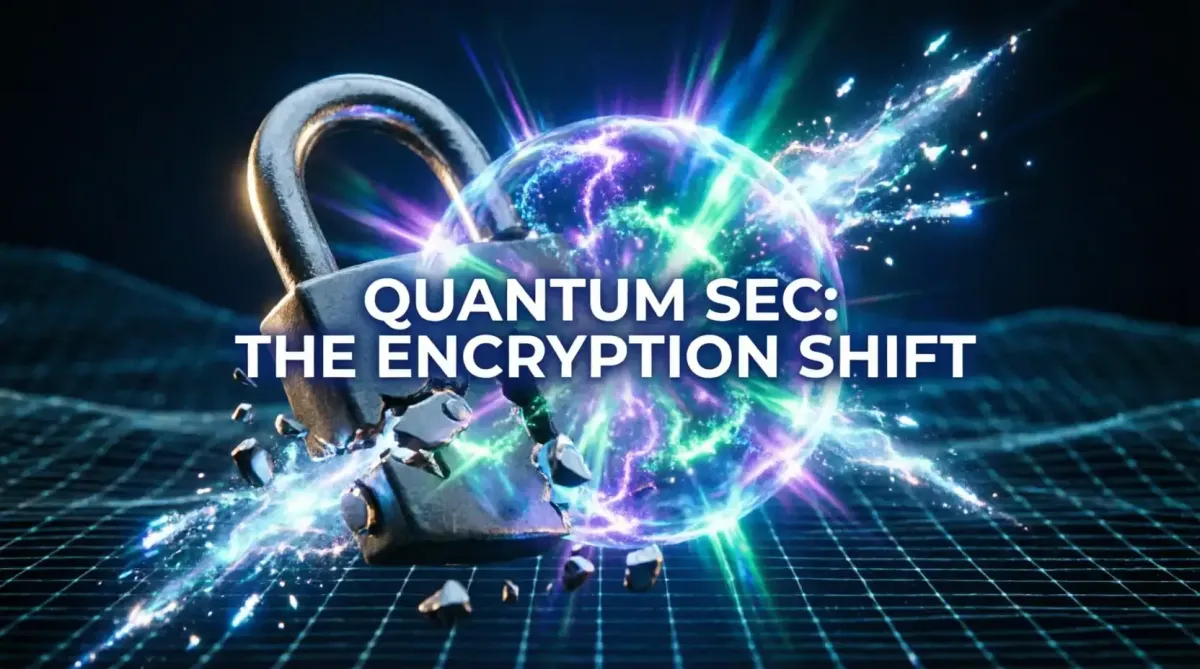
How Quantum Computing Will Break—and Fix—Current Encryption in 2026
In 2026, we stand at the precipice of a cryptographic revolution. For decades, our digital world—from bank transfers to private messages—has relied on mathematical problems that are nearly impossible for classical computers to solve. However, the rise of Quantum Computing has changed the rules. A powerful quantum computer can solve these problems in seconds, potentially rendering our current security systems obsolete. At TipsForAITech, we are exploring the dual nature of the "Quantum Threat": how it breaks our past and fixes our future.
This 1500+ word comprehensive guide explains the transition to a quantum-secure world. Whether you are mastering end-to-end encryption or securing your corporate network, understanding the quantum shift is essential for 2026 and beyond.
1. The "Y2Q" Problem: Why RSA is in Danger
Current encryption standards like RSA and ECC rely on the difficulty of factoring large numbers. In 2026, Shor’s Algorithm—a quantum algorithm—has proven that a sufficiently large quantum computer can bypass these locks easily. This is often called the "Y2Q" (Years to Quantum) problem. If a hacker intercepts your passkey-protected data today, they might be able to decrypt it in the near future using quantum power.
2. "Harvest Now, Decrypt Later" Strategy
A major threat in 2026 is the "Harvest Now, Decrypt Later" tactic used by state actors and advanced cybercriminals. They are currently stealing encrypted data and storing it, waiting for the moment quantum computers become powerful enough to break the code. This is why managing your digital footprint and minimizing data exposure is more critical than ever.
3. The Fix: Post-Quantum Cryptography (PQC)
The good news is that we aren't defenseless. In 2026, Post-Quantum Cryptography (PQC) has become the new standard. These are new mathematical puzzles that even a quantum computer cannot solve efficiently. NIST (National Institute of Standards and Technology) has finalized several PQC algorithms, which are now being integrated into VPNs and secure browsers.
4. Quantum Key Distribution (QKD): Unbreakable Security
While PQC is a software fix, Quantum Key Distribution (QKD) is a hardware-based solution. QKD uses the laws of physics—specifically the properties of photons—to share encryption keys. If anyone tries to "eavesdrop" on the connection, the quantum state changes, instantly alerting both parties. This is the ultimate shield for government-level secure communications.
5. Upgrading the Global Infrastructure
Transitioning to quantum-resistant standards is a massive task for 2026. Financial institutions and global SaaS platforms are currently undergoing "Cryptographic Agility" upgrades—ensuring their systems can easily swap old algorithms for new PQC ones without a total rebuild.
6. Impact on Blockchain and Digital Assets
Many cryptocurrencies rely on ECDSA, which is vulnerable to quantum attacks. In 2026, we are seeing the rise of Quantum-Resistant Blockchains. For investors, ensuring that their assets are held in wallets with quantum-secure signatures is a vital part of securing their professional wealth.
7. The Role of AI in Quantum Defense
AI and Quantum are working together in 2026. Machine learning models are being used to detect "pre-quantum" vulnerabilities in existing code. This automated oversight helps developers using modern frameworks build more resilient applications from day one.
8. Self-Hosting in a Quantum World
For individuals, the quantum threat reinforces the need for local control. By hosting your own cloud via Nextcloud, you can implement the latest PQC plugins as soon as they become available, rather than waiting for a large corporation to update their terms of service.
9. Using AI Writing Assistants to Explain Complexity
Explaining quantum physics to a board of directors is no easy feat. In 2026, IT managers use advanced writing assistants to translate complex quantum risks into actionable business strategies, maintaining professional productivity during this technical shift.
10. Conclusion: The Dawn of the Quantum-Safe Era
Quantum computing in 2026 is both a challenge and an opportunity. While it threatens to unlock the secrets of the past, it is forcing us to build a future that is physically and mathematically unhackable. The transition to quantum-safe encryption is not just a technical update; it is a fundamental strengthening of the digital world. By staying informed and adopting PQC early, we can ensure that our privacy, our data, and our civilization remain secure in the age of the qubit. The race is on, and for the first time, the "fix" is keeping pace with the "break."
Stay at the forefront of the quantum and AI revolution by following TipsForAITech. Whether you're looking for OS comparisons or advanced coding guides, we are your partner in the 2026 technology landscape.