The Future of Retail: Checkout-Free Stores Powered by Computer Vision in 2026
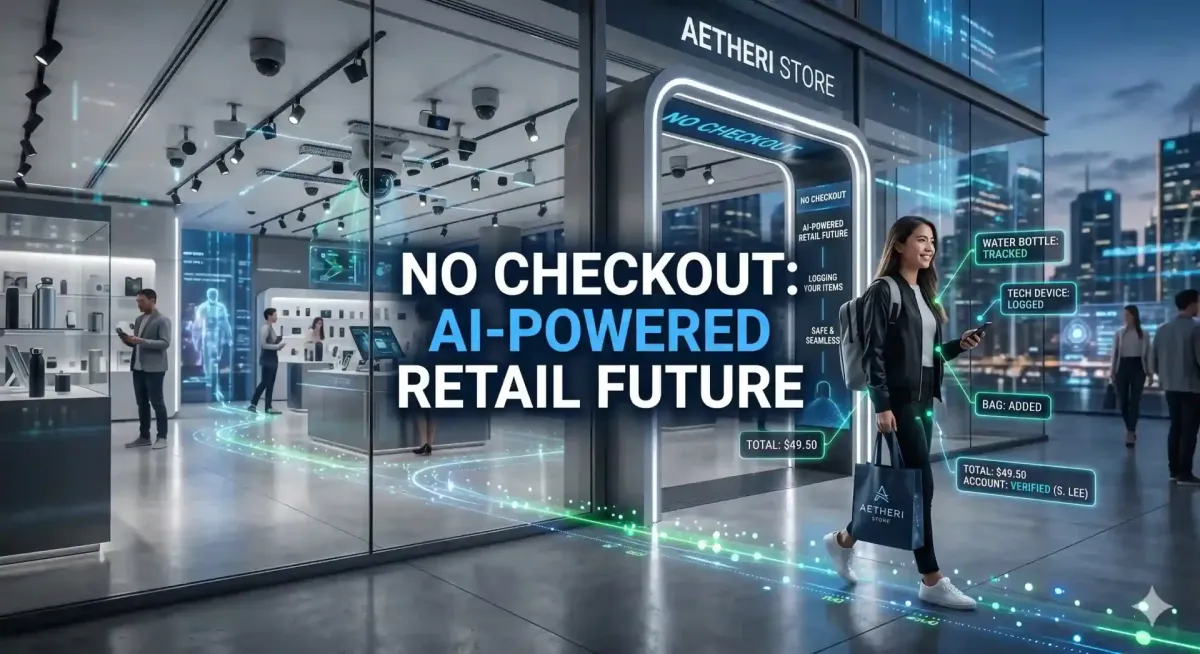
In 2026, the long, frustrating queues at grocery stores are rapidly becoming a memory. The traditional friction of "scanning and paying" is being replaced by a seamless "Grab and Go" experience. This retail revolution is not powered by magic, but by high-fidelity Computer Vision and AI. At TipsForAITech, we are exploring how the integration of visual sensors is turning the act of shopping into a silent, automated dialogue between the consumer and the store.
This 1500+ word deep dive explores the technical mechanics of checkout-free retail. Whether you are learning how AI personalizes shopping or studying computer vision in other sectors, understanding the automation of retail is vital for the 2026 economy.
1. The "Just Walk Out" Architecture: Sensor Fusion
The core of a checkout-free store in 2026 is a sophisticated network of overhead cameras and shelf sensors. Using Deep Learning, the system identifies every individual in the store. When you pick up an item, the computer vision system detects the movement and adds the product to your "Virtual Cart." This is often combined with weight sensors on the shelves to ensure 100% accuracy, creating a high-trust environment for both the retailer and the customer.
As we discussed in 10 ways AI is transforming technology, this removal of friction is a cornerstone of modern urban living.
2. Human Pose Estimation and Action Recognition
How does the store know if you picked up a can of soda or just moved it? Modern stores use Human Pose Estimation. The AI tracks the skeletal movement of your arm and hand. It can distinguish between a "pick" (adding to cart) and a "return" (putting it back). This pixel-level precision ensures that even in a crowded aisle, the AI never confuses who took which item.
3. Real-Time Inventory Management
Checkout-free stores in 2026 are also Autonomous Inventory Managers. Because the computer vision system "sees" every item leaving the shelf, it can update the store's inventory in real-time. If a product is running low or is placed on the wrong shelf, the system instantly alerts the staff or triggers an automatic reorder. This level of efficiency is a practical application of seamless AI-driven data management.
[Image showing an AI dashboard for real-time retail inventory tracking and heat maps]4. Enhancing Security and Reducing Shrinkage
Shoplifting is almost impossible in a checkout-free store. The Computer Vision system maintains a continuous "Chain of Custody" for every item. Since every product is linked to a verified user profile upon entry, the AI can detect if an item is concealed. This has reduced retail "shrinkage" (theft and loss) to near-zero, significantly increasing the profitability of physical stores.
5. Hyper-Personalized In-Store Offers
As highlighted in our guide on AI shopping personalization, these stores can offer real-time discounts. If the computer vision system sees you hesitating in front of a specific brand, it can push a personalized coupon to your smartphone via the store's app, encouraging a purchase at the exact moment of indecision.
6. Privacy and Biometric Ethics
At TipsForAITech, we prioritize the ethical use of technology. In 2026, most checkout-free systems use Anonymized Skeletal Tracking. Instead of storing your facial data, the system assigns you a temporary "Numerical ID" while you are in the store. This protects your privacy while still allowing the system to track your cart accurately. This aligns with global AI regulation standards.
7. The Integration with AI Voice Assistants
Shopping in 2026 is often a vocal experience. You can ask the store’s Advanced NLP Voice Assistant, "Where can I find organic honey?" and the AI—using its spatial knowledge of the store—will guide you to the exact shelf. This synergy between vision and voice makes the shopping experience truly inclusive for all users.
8. Edge AI: Processing Thousands of Visual Streams
Processing hundreds of camera feeds simultaneously requires massive power. Checkout-free stores in 2026 utilize On-Site Edge AI Servers. This ensures that the system works with sub-millisecond latency and remains functional even if the main internet connection is interrupted. This mirrors the high-reliability systems used in autonomous vehicle navigation.
9. Using AI Writing Assistants for Automated Receipting
Once you walk out, your receipt is generated instantly. 2026 retail platforms use advanced writing assistants to draft personalized purchase summaries, highlighting your savings and suggesting recipes based on the ingredients you just bought. This turns a simple transaction into a valuable customer relationship tool.
10. Conclusion: The Invisible Store
The ultimate goal of checkout-free technology is to make the technology itself "invisible." In 2026, the best shopping experience is the one you don't have to think about. By leveraging the power of computer vision, retail has become faster, more secure, and more personalized. We are no longer just "customers"; we are participants in a smart, responsive ecosystem that respects our time and enhances our lives.
Stay ahead of the retail and AI revolution by following TipsForAITech. Whether you're looking for automation productivity or building AI applications, we are your partner in the 2026 technology landscape.