
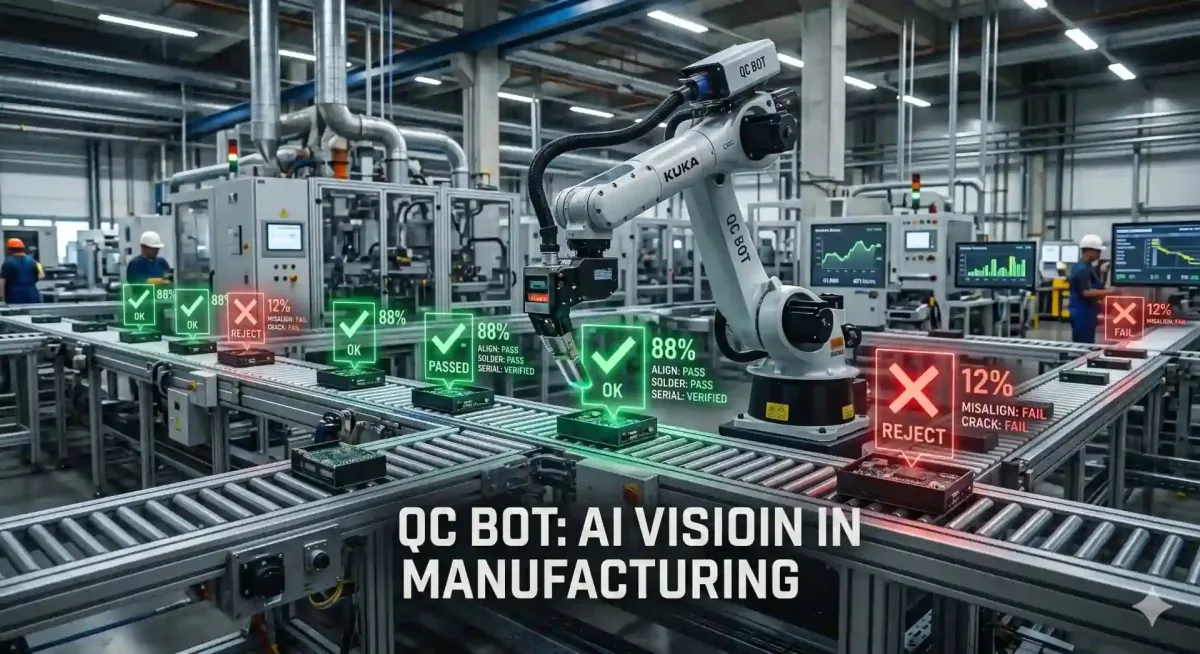
Using Computer Vision for Automated Quality Control in Manufacturing in 2026
In the high-speed production lines of 2026, human error is no longer a bottleneck. As global competition intensifies, "near-perfect" is no longer good enough—manufacturers now strive for zero-defect production. The catalyst for this precision is Computer Vision. At TipsForAITech, we are exploring how AI-driven visual inspection has moved from a luxury to a fundamental requirement in modern factories.
This 1500+ word technical guide dives into the mechanics of automated quality control. Whether you are studying computer vision in transport or biometric security, understanding its role in manufacturing is essential for the 2026 industrial landscape.
1. Real-Time Defect Detection and Classification
By 2026, computer vision systems can identify surface defects—such as scratches, dents, or discolorations—at speeds of up to 1,000 units per minute. Using Deep Learning, the system doesn't just see a flaw; it classifies it. It can distinguish between a critical structural crack and a harmless surface smudge, instantly flagging or diverting faulty items from the main line without human intervention.
As we noted in 10 ways AI is transforming technology, this real-time reaction is the backbone of the "Dark Factory" (fully automated) concept.
2. High-Precision Dimensional Measurement
Traditional quality control often relies on physical contact or manual calipers. In 2026, computer vision provides Non-Contact Metrology. Using multi-camera setups and laser-assisted sensors, AI can measure the physical dimensions of a component down to the micron level. This ensures that every part produced—from aerospace bolts to smartphone components—meets exact engineering specifications.
3. Sub-Surface Inspection through Infrared and X-Ray Vision
Modern quality control in 2026 goes deeper than the surface. By integrating computer vision with Infrared (IR) and X-ray sensors, manufacturers can "see" through solid materials. This allows for the detection of internal voids in cast metal, soldering issues inside electronic enclosures, or impurities in pharmaceutical packaging—all without damaging the product.
4. Reducing Fatigue and Subjectivity
Humans are prone to fatigue, eye strain, and subjective judgment. An AI vision system in 2026 remains 100% consistent across a 24-hour shift. This eliminates the "Friday Afternoon" effect, where quality tends to dip at the end of the week. This consistency is vital for maintaining a high-trust brand, a concept we emphasize in branding and logo consistency.
[Image showing the dashboard of a quality control AI highlighting an anomaly in a textile weave]5. Edge AI: Decentralized Inspection
Processing high-definition video at industrial speeds requires immense power. In 2026, manufacturers use Edge AI Chips integrated directly into the cameras. This removes the need to send data to a central server, allowing for sub-millisecond decision-making and ensuring the production line stays secure and local, mirroring professional data management standards.
6. Integration with Predictive Maintenance
Computer vision does more than check the product; it checks the machines. In 2026, visual sensors monitor the vibration of gears and the wear and tear of cutting tools. By identifying microscopic changes in machine performance, the AI can predict a failure before it happens, syncing with automated scheduling tools to perform maintenance during planned downtime.
7. Training Models with Synthetic Data
One challenge in quality control is that defects are rare. To train a model, you need examples of flaws. In 2026, manufacturers use Generative AI to create "Synthetic Defects." By generating thousands of realistic images of what a flaw could look like, the AI can be perfectly trained before the production line even starts. This is a practical application of generative AI's creative power.
8. Ethical Manufacturing and Sustainability
At TipsForAITech, we focus on the environmental impact of technology. By identifying defects early in the production chain, computer vision reduces waste and energy consumption. Instead of finishing a faulty product, the system halts production immediately, ensuring that raw materials are not wasted on unsellable items.
9. Using AI Writing Assistants for Compliance Documentation
Quality control in 2026 requires rigorous reporting. AI vision systems work in tandem with advanced writing assistants to generate instant ISO-compliance reports and quality certificates for every batch, reducing the administrative burden on plant managers.
10. Conclusion: The Future of Precision
Computer vision has turned the factory floor into a sentient ecosystem. In 2026, quality is not a stage at the end of the line—it is a continuous, intelligent presence that oversees every second of production. As AI continues to evolve, the gap between "concept" and "perfect execution" will continue to close, ushering in a new era of industrial excellence.
Stay ahead of the industrial AI revolution by following TipsForAITech. Whether you're looking for time management mastery or building AI applications, we are your partner in the 2026 technology landscape.